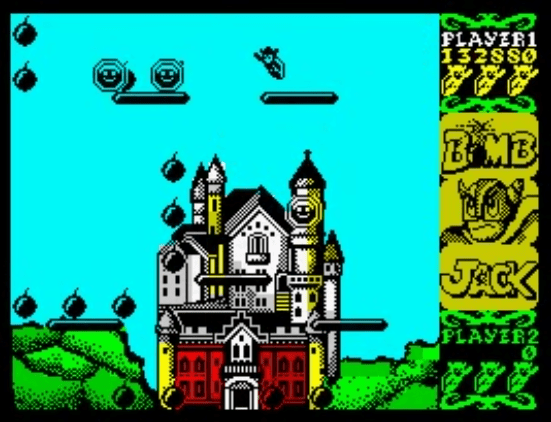
Shining Force II: The Ancient Seal – Review

Revisiting games can be fun…but it can also be disappointing. We romanticise games in our minds and revisiting them years later, especially when technology has moved on, often destroys these rose-tinted memories. Altered Beast (1988) is an example of one such game. When I revisited it, I was disappointed that it wasn’t as good as I remember. No doubt, there will be many more to come. Will Shining Force II suffer when I revisit it with older eyes and a colder heart?
(Screenshot taken by the author)

Shining Force II: The Ancient Seal is a tactical RPG developed by Sonic! Software Planning and published by Sega. It was released for the Mega Drive in 1993. It was re-released for the Wii U Virtual Console in 2008, as well as being part of Sonic’s Ultimate Genesis Collection (2009) for Xbox 360 and PlayStation 3. It is the sequel to Shining in the Darkness, and is set 40-70 years after the events of Shining Force Gaiden: Final Conflict (1995) on the Game Gear. although the stories consist of different characters.Although I did used to own the original Mega Drive cart, for this review, I played through the version found on Sonic’s Ultimate Genesis Collection for PlayStation 3.

Plot

It is a dark, stormy night. A small band of thieves led by Slade, break into an ancient shrine looking for treasure. They happen upon two coloured jewels: one blue and one red. Upon stealing the jewels, they unwittingly break a magical seal that has held the demon King Zeon captive. With the seal broken, but not yet at his full strength, Zeon orders his minions to find the Jewel of Darkness so that he can restore his power and conquer the world.
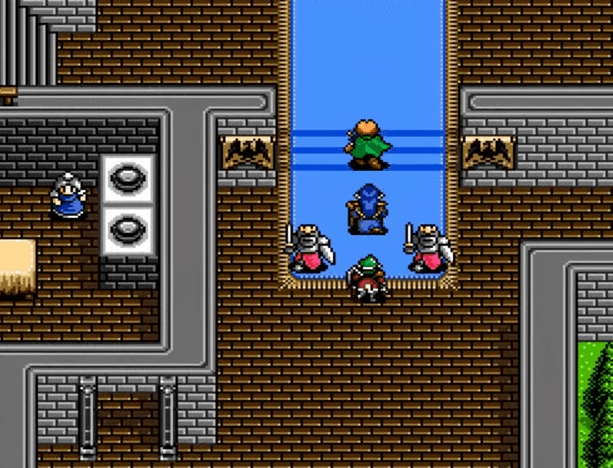
The sprites and overall design are almost identical to Shining Force (Screenshot taken by the author)

Main Characters:

Bowie is the main character (although you can choose to change his name). He is a student of Astral the Wizard, is a human and a swordsman. He is an all-rounder and can be promoted to Hero.

Jaha is a dwarf and a warrior. He is very strong but his movement is limited. He is also a student of Astral. He can be promoted to Gladiator, but with a special item, can become a Baron.

Chester is a centaur and a knight. He is also a student of Astral. He can use either a lance for short range attacks or you can equip him with a spear for longer ranged attacks. When prompted he becomes a Paladin but with a special item, he can become a Pegasus.

Sarah is an Elf and a priest. She is also a student of Astral. She is not very good in hand-to-hand combat but she is great for casting spells and healing your injured party. When promoted, she become a vicar, but with a special item, she can become a Master Monk which greatly increases her hand-to hand combat skills.

Kazin is an Elf and a mage. Once promoted he becomes a wizard.

There are many other characters who join your party along the was but I won’t discuss them here.

During battles, you must be careful to position your stronger units where they can defend your weaker units (Screenshot taken by the author)

Gameplay

The menu is exactly the same as Shining Force (1992). That is, when walking around both urban and rural areas, you begin with four boxes that are animated when your cursor is over them These options are:

Member – Check the status of member sof your party

Item – It will take you to another menu where you can choose to use an item, pass an item to someone else, equip an item or drop one.

Search – Use this when you come across chests, boxes and vases. In fact, there are lots of hidden items in odd areas, so use this option freely.

Magic – Takes you to a menu where you can cast spells. In non-battle scenarios, only the detox spell works.

During your adventure, there are plenty of opportunities to visit shops where you can buy new weapons and sell old ones. You can also buy provisions such as herbs that help regain health, an angel wing which acts like an Egress spell and an antidote for poison. There are also options to repair your weapons (I’ve never had to use this) or to ask for deals. The deal option is pretty pointless because, as far as I can tell, items only appear there when you have already sold those special items to the shops.
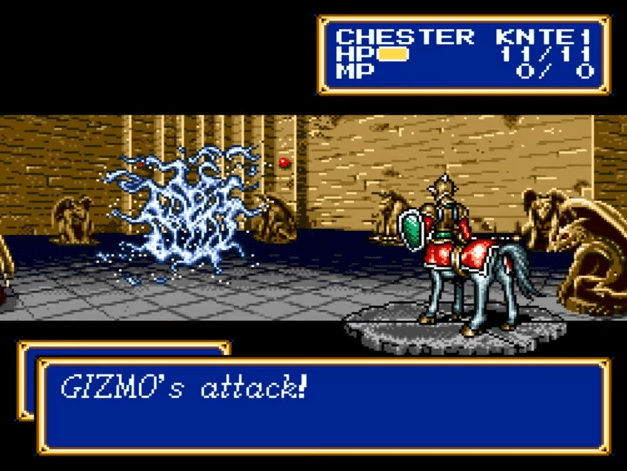
The battle scenes are beautifully illustrated (Screenshot taken by the author).

Again, the combat is exactly the same as SF (1992), in that it is a turn-based tactical affair where you must manoeuvre members of your party into good tactical positions before engaging the enemy. Depending on the type of fighter, certain members have a much larger movement range that others. When attacking an enemy, you can opt to use yor primary weapon, cast a spell or use an item. If you do not wish to attack you can simply press “stay” and that ends that character’s turn until it comes around to them again.

There is also more than one way to promote members of your party. Like SF (1992), you can promote your party when visiting a priest, once your party member has reached level 20. However, there are instances when you can promote your party member to a different class of fighter with the help of special items.

How Does It Handle?

Whereas SF (1992) was a very linear game, SFII involves more free-roaming. There are many places you need to return to in order to find special items or for the game to progress. The menu system is very intuitive and the controls are easy to learn.

Graphics

Like SF (1992), I think this game is beautiful. The environment in the overworld maps (forests and trees) have been improved, but the sprites themselves and the battle scenes are practically the same. This is not necessarily a bad thing, as they are a great improvement on games like Phantasy Star IV (1993), and better than the graphics of games like Earthbound (1994), Dark Sun: Wake of the Ravager (1994) and Final Fantasy VI (1994) (FF III in North America). Yes, I personally prefer Shining Force II‘s graphics to FFVI (1994).

Did I Complete The Game?

Yes, more than once!

What The Critics Said:

Electronic Gaming Monthly: “A worthy follow-up to the first RPG, with bigger areas to explore and characters to meet. This will definitely appeal to the fans of first one, and RPG fans in general. It assumes you’ve played the first Shining Force, but the story could use a few more twists and turns. The music is very good, as is the easy-to-follow configuration. Overall 34/50.[1]

My Verdict:

“Personally, I think this is a great sequel. I enjoyed the story, the battles, the graphics and music. Hardened RPG fans may think this too easy, but I think it’s a game for the average gamer to enjoy, and maybe a nice introduction to RPGs.”

Rating:

What are your memories of Shining Force II: The Ancient Seal? I would love to hear your thoughts, and don’t for get to follow and subscribe so that you don’t miss my latest reviews! You can also find me on Instagram: @nicklovestogame.


[1] ‘Review Crew – Shining Force II’.Electronic Gaming Monthly. (September 1994). Issue 62:36.
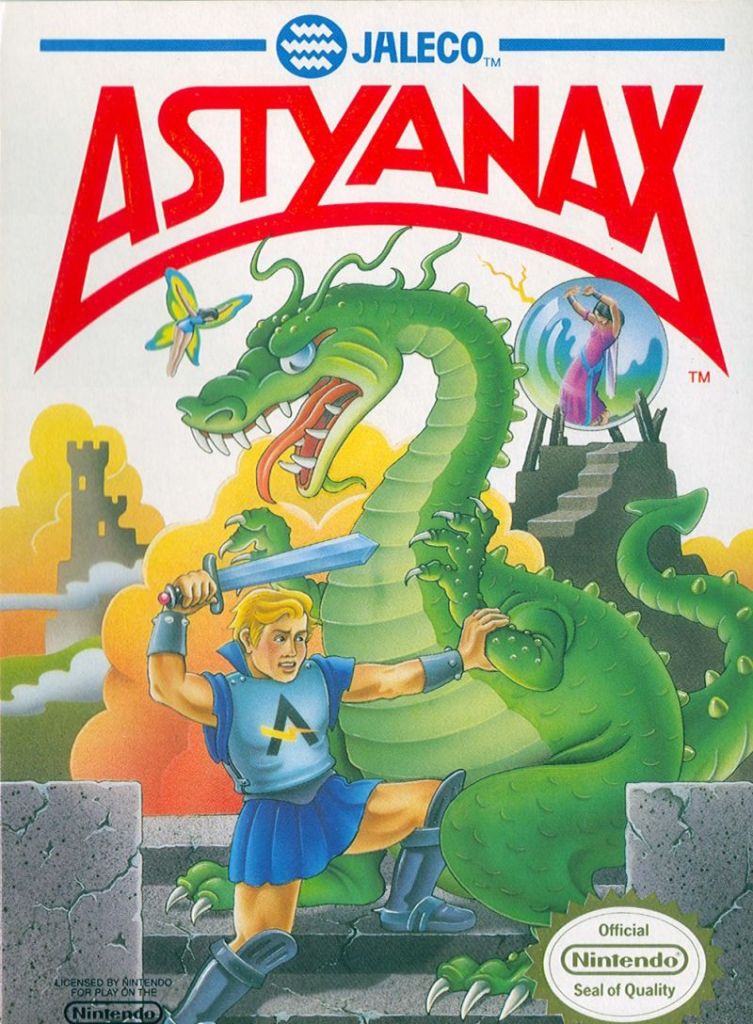
Astyanax – Review

Game creators have never been shy about using aspects of ancient mythology as a basis for their games, and why wouldn’t they? Ancient mythology is filled with stories of derring-do: defeating giants, outsmarting the Gods and rescuing fair maidens. In Greek mythology, Astyanax (also known as Scamandrius) was the son of Hector, prince of Troy, and Andromache. When Troy fell, he was either thrown from the walls to his death by Neoptolemus or killed by Odysseus (depending on your source).[1]

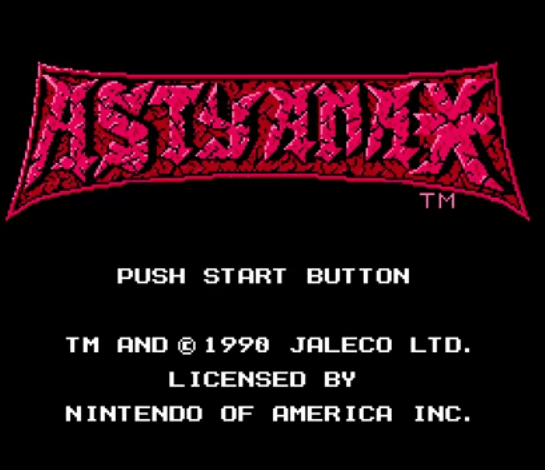
Title screen (Screenshot taken by the author)

Astyanax, known in Japan as The Lord of King, is a side-scrolling platform action game developed by Aicom and published by Jaleco. It was first released in the arcade in 1989, then later that year on the NES in Japan before getting a release in Europe and North America in 1990. For this review, I revisited the NES version.

Plot

Astyanax is a 16-year-old student from Greenview High who keeps having a recurring dream of a woman calling his name. One day, he is transported to another dimension where he meets a fairy named Cutie. She persuades Astyanax to rescue Princess Rosebud, Ruler of Remlia, from the evil wizard Blackhorn. Using either the legendary axe known as ‘Bash’, a spear or a sword, Astyanax must fight through forests, caves and a castle to reach Blackhorn.

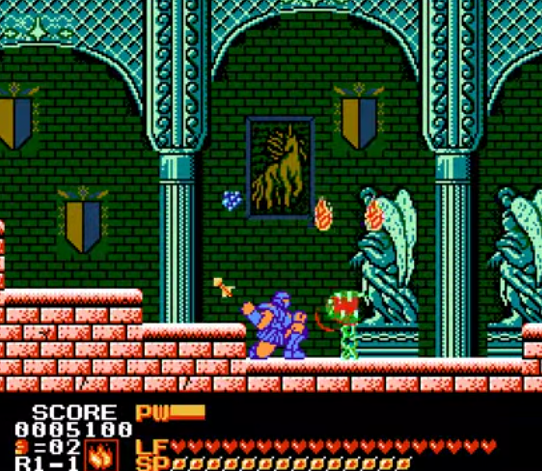
Graphics-wise, the game looks good. (Screenshot taken by the author)

Gameplay

You have energy three bars: the first is a power gauge showing how hard you hit the enemy. This descreases anytime you swing your weapon at an enemy. When you stop attacking, the bar increases again. The length of your power bar increases as you find power-ups. The second is your health bar, and the third is your magic bar. Unlike the arcade version, the NES version can only be played in one player mode.

How Does It Handle?

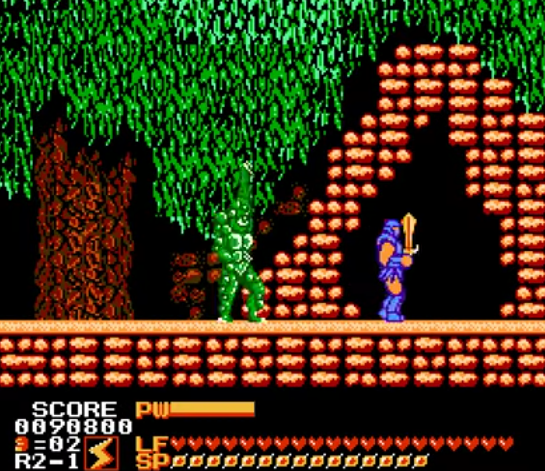
The controls, whilst easy to learn, are frustrating because you can only strike straight ahead, whilst crouching or whilst jumping. you cannot jab upwards. It is ridiculously tough too. Many enemies attack at awkward heights, and you find yourself accidentally pressing up and attack which casts a spell and uses up your magic supply. Some later levels have an insane number of monsters swarming the screen at once. Oddly enough, the end of level bosses are not that difficult to defeat.

Attack of the Green Monster type thing! (Screenshot taken by the author)

Graphics

Graphically, this game looks good, especially when compared to its contemporaries such as Iron Sword: Wizards and Warriors 2 and Clash at Demonhead, both released in 1989. It has detailed and colourful backgrounds, and well defined sprites, especially the end of level bosses. After each level, you are treated to some beautifully illustrated cut scenes which help move the story along. However, there is a bit of flicker when you attack the enemy and at times, whole blocks of detail disappear.

Replay Value

Once completed though, there is little to make you want to play through again as the game only has one difficulty setting.

I wanted to give this game a better score but due to the monotonous music, the attacking issue, and the fact that you will need a cheat code to complete this game, lowers the score for me. There are better, more enjoyable games out there. I just didn’t enjoy playing this game that much so I doubt I shall be returning anytime soon.

Did I Complete The Game?

Yes, but I had to use the invincibility cheat, as this game is too damn hard. Without the cheat, I could only get to the end of level boss on level 3.

What The Critics Said:

As of yet, I have been unable to find contemporary reviews.

My Verdict:

“This game looks good, has tight controls, and a challenge that hardened gamers look for. The issue is that the controls are limited. It is perhaps too tough for the average gamer and has little in the way of replay value. It’s worth playing, but it’s not a game you’ll return to very often, if at all.”

Rating:

What are your memories of Astyanax? I would love to hear your thoughts, and don’t for get to follow and subscribe so that you don’t miss my latest reviews! You can also find me on Instagram: @nicklovestogame.


[1] ‘Astyanax’. (22nd December 2015). Oxford Classic Dictionary. (https://oxfordre.com/classics/search?siteToSearch=classics&q=astyanax&searchBtn=Search&isQuickSearch=true Accessed 24th November 2020).

Sonic the Hedgehog 3 – Review

It must be difficult for game creators. Do they stick to a winning formula for a sequel and run the risk of the concept becoming stale, or do they gamble on new features that have the potential to disgruntle loyal fans to the franchise? It’s a hard balance to get right as many games have shown over the years. The question is, will Sonic 3 fall foul of over-zealous creators or will they get it right for a third time in a row?

Title screen (Screenshot taken by the author)

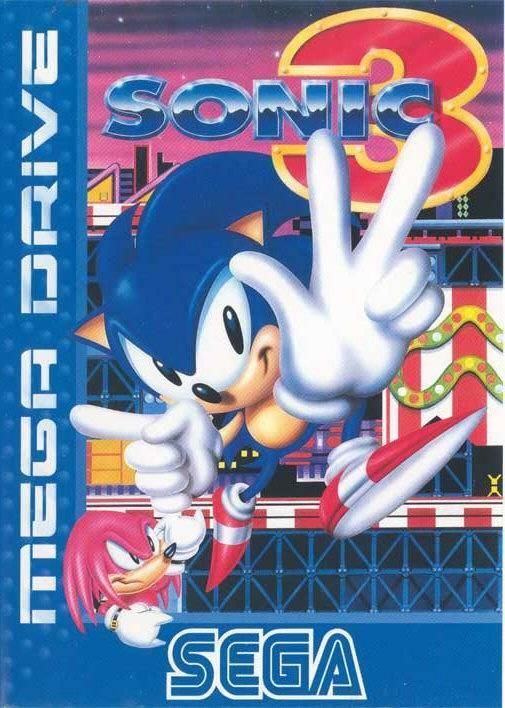
Sonic the Hedgehog 3 is a platform game developed and published by Sega. It was released in 1994 on the Sega Mega Drive/Genesis and latterly for Windows in 1997. Later, it would be made available for the Game Cube, PS3 and Xbox 360. For this review, I revisited the Sega Mega Drive version.

Visually, very little has changed between Sonic 1, 2, and 3 (Screenshot taken by the author)

Plot

After Sonic 2, Dr. Robotnik’s spaceship crashed into the mysteriously floating Angel Island. He meets and tricks the island’s guardian, Knuckles the Echidna, into believing that Sonic is trying to steal the Master Emerald. Sonic and Tails must once again defeat Dr. Robotnik who is being aided by Knuckles.

Gameplay

Once again, you can choose to play as Sonic and Tails alone, or have as Sonic but have Tails tagging along controlled by the computer. Apart from the usual gameplay of running through levels and collecting of rings in order to access bonus stages to win the Chaos Emeralds, there are several new features to this game. Firstly, access to the bonus stages are now via giant gold rings which can be found in secret locations.

The bonus stages themselves are much for interesting and fun than Sonic 2. They consist of Sonic and Tails running around a globe in third person view. The object is to collect all the blue spheres. If you hit a red sphere you fail. The more blue spheres you collect, the faster Sonic runs, adding some difficulty to the harder bonus stages.

Once Sonic gains all the Chaos Emeralds, he can become Super Sonic, making him invincible for a short period of time.

Secondly, Sonic can attain three shields: lightning, bubble and fire, each giving him a unique ability when using them.

The new bonus stages are so much more enjoyable than the tunnels of Sonic 2 (Screenshot taken by the author)

How Does It Handle?

As usual, this game plays incredibly well. Tight controls, fun to play, and the new features, although not groundbreaking or genre defining, add enough to ensure the franchise doesn’t become stagnant.

One of the issues I have with this game is that the levels are so much bigger than previous games, but are filled with slopes and shoots and other features that you feel like you’re just whizzing through the levels without actually doing much. I appreciate that the whole appeal of Sonic is that he is fast, but sometimes it feels like you’re just on autopilot because he just whizzes through the game. Along with this speed comes another issue that the creators have yet to rectify…when Sonic is going at full speed, and the screen is busy, the game lags and the sprites flicker.

Graphics

As expected, the game looks great. Lots of beautifully designed levels for you to navigate through, and plenty of unique sprites to evade or destroy. However, I feel that if you were to be shown screenshots of Sonic 1, 2 and 3, there are times you’d be hard pressed to distinguish between the three. This is certainly not the case with the Mario franchise where the graphics of each game are very distinguishable. Now, I concede that Super Mario 1, 2 and 3 were all released on the NES and Super Mario World on the SNES, and so is bound to look different. However, even when comparing Super Mario World to Super Mario World 2: Yoshi’s Island, there is a clear distinctive design to the levels and enough gameplay changes so that both games can stand on their own.

The all too familiar underwater levels…you’d have thought he would have learnt to swim by now! (Screenshot taken by the author)

Music

The intro music has changed and although it is more update and emphasises Sonic’s speed. I still prefer the original theme tune. That is a personal thing of course. The rest of the music, for me, isn’t as memorable as previous games with the exception of the Carnival Night levels where they’ve mixed in a very “carnival” sounding theme into the music.

Did I Complete The Game?

Yes, with all Chaos Emeralds captured.

What The Critics Said:

Electronic Gaming Monthly: “Sonic 3 is simply the perfect Sonic game. It beats out all previous Sonics with outstanding graphics, more hidden items and new items like many types of shields…The bonus rounds give the average player a fair chance this time, unlike “those tunnels” of part 2. It seems unlikely that Sega will be able to top this one. Overall 38/40.[1]

Gamepro: “Sonic 3 proves that you can teach the old hedgehog new and exciting tricks. Take that old Sonic magic, add fun new variations, and you have another spectacular game. Overall 19/20.[2]

Hyper: “Everything you expect from a Sonic game, nothing more. If it was just me, the score would be lower, but Sonic freaks are going to go off. Overall 90%[3]

Entertainment Weekly: “Sonic 3, by contrast, represents the apotheosis of the Sonic concept: Unlike previous games, the stages are linked cinematically (Sonic and Tails literally tumble from one scene to the next), and the characters have some stunning new techniques — I, for one, never thought I’d see a spiny blue hedgehog on a pair of skis. Ovearll A+[4]

Mean Machines Sega: “Sonic’s Back! Back! Back! This game re-establishes him as King of the Hill, Top of the Heap and Life Emperor of the Platform Universe. Huzzah! Huzzah! Overall 94%[5]

Sega Power: “No radical changes to the game, but its sheer size, super graphics, wealth of imagination and above all playability, guarantee Sonic gold status. Overall 90%.[6]

Sega Magazine: “An amazing release and serious contender for Best Platform Game ever award. Overall 95%.[7]

My Verdict:

“Sonic 3 is a very good game. If you like the solid formula of speed, ring collecting and bonus stages that the creators have been successful with in their first two outings, then this game is for you and you’ll enjoy every second of it. Personally, I worry that there aren’t enough differences between this and the previous two games and it’s in danger of going stale.”

Rating:

What are your memories of Sonic the Hedgehog 3? I would love to hear your thoughts, and don’t for get to follow and subscribe so that you don’t miss my latest reviews! You can also find me on Instagram: @nicklovestogame.


[1] ‘Sonic 3’. Electronic Gaming Monthly. (March 1994). Volume 7, Issue 3:30.

[2] ‘Proreview – Sonic the Hedgehog 3’. (March 1994). Gamepro. Issue 56:42-44.

[3] ‘Sonic 3’. Hyper. (March 1994). 4:26-29.

[4] Strauss, B., (February 11, 1994). ‘Sonic CD; Sonic Chaos; Sonic Spinball; Sonic 3’. Entertainment Weekly. (https://ew.com/article/1994/02/11/sonic-cd-sonic-chaos-sonic-spinball-sonic-3/ Accessed 23rd November 2020).

[5] ‘Mega Drive Review – Sonic 3’. Mean Machines Sega. (March 1994) Issue 17:49.

[6] ‘Mega Drive Review – Sonic 3’. Sega Power. (March 1994). Issue 52:30.

[7] ‘Mega Drive Review – Sonic 3’. Sega Magazine. (February 1994). :87-88.

Shining Force: The Legacy of Great Intention – Review

RPG fans like nothing more than to take control of a character or group of characters, and immerse themselves fully in a fantasy world where they can increase their character’s stats, find magical and rare weapons, and rescue a kingdom or two. It’s pure hero fantasy…and there’s nothing wrong with that!

Title screen (screenshot taken by the author)

Shining Force: The Legacy of Great Intention is a fantasy turn-based tactical RPG. It was developed by Climax Entertainment and Camelot Co. Ltd., and published by Sega in 1992 in Japan, and 1993 in North America and Europe. Released on the Sega Mega Drive/Genesis, it would later be released for the Game Boy Advance in 2004 (under the title of Shining Force: Resurrection of Dark Dragon), Wii Virtual Console in 2007, iOS in 2010 (discontinued in 2015), and Windows, Linux and Mac (Steam) in 2011. It can also be found as part of the Sega Smash Pack Volume 1 on the Dreamcast, Sega Smash Volume 2 for Microsoft Windows, Sonic’s Ultimate Genesis Collection for Xbox 360 and PlayStation3. For this review, I revisited the version found as part of Sonic’s Ultimate Genesis Collection for the PlayStation 3.

Plot

Millenia ago, in the Kingdom of Rune, a battle between good and evil took place. Dark Dragon, who led the forces of evil, was defeated by the Warriors of Light who cast him into an alternate dimension. Dark Dragon vowed to return in 1000 years to once more wreak havoc in Rune. 1000 years later, in which time peace and tranquillity existed in Rune, the Kingdom of Runefaust attacked Rune hellbent on helping Dark Dragon to return.

Taking to people in the towns help you progress further in the game (screenshot taken by the author)

A young man named Max, who lives in the Kingdom of Guardiana, is sent to defeat the evil warrior Kane and his army. Along with an army of his own, Max soon discovers that Darksol is behind the plot and pursues him throughout Rune to stop Dark Dragon’s ressurection.

Just so there is no confusion, Dark Sol from Shining in the Darkness (1991) is the son of Darksol and Mishaela from this game, meaning that Shining Force is a prequel to Shining in the Darkness (1991).

Meet Your Party:

Max (You): Max is human and an all-round fighter, both fast and accurate. If things are looking bleak during a battle, he can cast Egress to whisk your party away to safety. Be warned, if Max is defeated in battle, you automatically lose the confrontation, and are sent back to your last save spot minus half your gold! To prevent this, keep an eye on his health and don’t be afraid to use Egress or keep a supply of Angel Wings for each member of your party (Angel Wings have the same use as Egress).

Luke: Luke is a dwarf and a great warrior. He cannot cast spells and his movement is limited, but he is strong.

Ken: Ken is a centaur and a good fighter. Centaurs have quite a long movement range so be careful he doesn’t go too far and get separated from the group.

Tao: Tao is a young elf who is training to be a mage. As she gains experience, she will be able to cast spells from afar but she is weak in hand-to-hand combat. Make sure your protect her.

Hans: Hans the Elf is an archer, perfect for ranged attacks. Again, protect him from hand-to-hand combat.

Lowe: Lowe is a halfling priest. Although weak in attack, his skill lies in healing your party during battles.

There are nine other characters who will join your party along the but you’ll have to wait to meet them to find out who they are.

An easy to use menu system helps you keep track of the stats of your party (screenshot taken by the author)

Gameplay

For the most part, the game takes place from an almost top-down view, in the traditional Japanese-style of RPGs. There are no labyrinths, and only a few puzzles to solve. You must make your way through various towns and through the overworld map in pursuit of Darksol. In the towns, you can talk to the citizens, some of whom offer insights to help you progress. You can buy and sell weapons and items from the shops to assist you on your quest. You can also find priests who can resurrect fallen characters, cure them of various ailments, promote those who have reached level 20, and record your progress.

Unlike many other RPGs, there are no random battle encounters as such, but there are areas where you can find battles should you wish to increase your stats before progressing in the game.

Battles take place on a square-grid system. Depending on their stats, characters can only move a certain number of squares at one time. Depending on your proximity to an enemy, you can either attack with a weapon, cast a spell, use an item or choose to do nothing. If you are adjacent to a member of your own party, you can swap items. This does not class as a move, and so items can be exchanged without losing your turn.

When an attack occurs, a beautifully animated action scene appears with a blue dialogue screen explaining damage inflicted or sustained, and experience points and money earned etc. When an enemy is hit by your weapon or spell, your attacking character will earn experience points for themselves. When an enemy is defeated, a larger amount of experience points will be awarded to your attacking character and the money earned will be added to your party’s kitty. For every 100 points accrued, that character will level-up increasing their attack, defence, MP, agility etc. Once a character reaches level 20, they can be promoted to a different class of fighter.

This game has beautiful fighting animation scenes (screenshot taken by the author)

How Does It Handle?

With intuitive menu system that is identical to Shining in the Darkness (1991), you’ll have no issues learning to how to play this game. This instalment is linear in story so you won’t find yourself going back to the same areas to solve puzzles and gather dirty information which some feel make this game a bit too easy.

Graphics

What can I say other than this game looks beautiful. The overworld map and village scenes are bright and vibrant, and detailed with clear distinction between the sprites and environment. The fight scenes are beautifully illustrated and animated with incredible looking sprites, action shots and backgrounds. I really cannot compliment this game enough on its graphics. For me, they are superior to games like Final Fantasy V (1992), Treasures of the Savage Frontier (1992) and Paladin’s Quest (1992). However, by the time this game reached North America and Europe, the SNES was beginning to take the graphics up a notch with games like Secret of Mana (1993) and Illusion of Gaia (1993). Had Shining Force been released a year or two later, it would have looked a but dated.

Music

The only thing that lets this game down for me, is the music. By 1992, both Nintendo and Sega had released games with fantastic 16-bit soundtracks like Super Mario World (1990) and Sonic the Hedgehog (1991) respectively. Now I know that these are different genres from Shining Force, but it is an indication of how good the music could be in games. I just feel that Shining Force loses a few marks in this department.

Replay Value

Not all your army will gain the highest possible levels. This means you may wish to play through again and ensure characters who didn’t achieve their potential, do so a second time round just to see what they are like. This adds some replay value to this game.

Did I Complete The Game?

Yes

What The Critics Said:

Mean Machines Sega: “A beautifully crafted piece of Megadrive software with just the right balance of action and adventure to satisfy all needs. Overall 91%.[1]

Sega Power: “A beautifully produced RPG. Great tactical battle sequences. Loads of unique, cute characters, speedy gameplay and lots to see ‘n’ do. Gorgeous to play and look at. Overall 89%.[2]

Megatech: “Finely presented combination of exploration and fighting leads Shining Force to victory. Overall 90%”.[3]

Mega: “Huge, gorgeous looking, and absorbing. I’ll never scoff at an RPG again. Overall 92%”. [4]

My verdict:

“Blood, death, war, rumpy-pumpy, TRIUMPH!!! I love this game. Shining Force looks beautiful with great graphics, illustrations and animations with plenty of different characters to get to know. The chess-like manoeuvring during battles is challenging and enables you to prepare your army for strategic assaults on the enemy. However, hardened RPG players may find this game a tad easy though.”

Rating:

What are your memories of Shining Force? I would love to hear your thoughts, and don’t for get to follow and subscribe so that you don’t miss my latest reviews! You can also find me on Instagram: @nicklovestogame.


[1] ‘Mega Drive Review – Shining Force’. Mean Machines Sega. (May 1993). Issue 8: 74-6.

[2] ‘Mega Drive Review – Shining Force’. Sega Power. (July 1993). Issue 44: 58-9.

[3] Davies, P., ‘Mega Drive Review – Shining Force’. Megatech. (May 1993). Issue 17:76-8.

[4] ‘Game Review – Shining Force’. Mega. (June 1993). Issue 9:54-5.

Earthbound (Mother 2) – Review

RPGs are like Marmite. You either love ’em or you hate ’em. What tends to put gamers off is the investment needed to play through the game and many argue that the need to fight endless battles against minor minions to increase stats are a cheap way to ensure the longevity of a game. However, this is also what attracts many gamers. They fully immerse themselves in their chosen character and enter a world of pure escapism where they can be a barbarian, dwarf, mage, elf or countless other humanoid species.

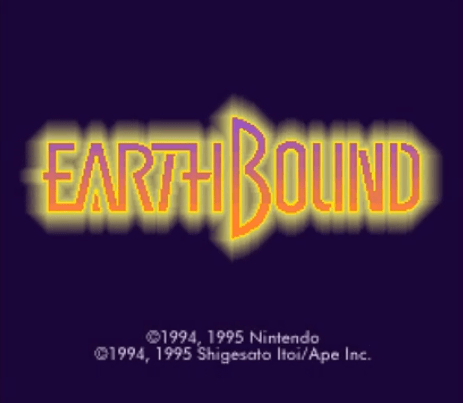
Title screen (screenshot taken by the author)

Earthbound (Mother 2 in Japan) is a single-player RPG developed by Ape Inc. and HAL Laboratory, and published by Nintendo. It is the second game in the Mother series, and was released in Japan in 1994 and North America in 1995 for the SNES and Game Boy Advance. In 2013, it was released on the Wii U Virtual Console. For this review, I played the version found on the SNES Mini.

The graphics suggest the game was designed for a younger audience (screenshot taken by the author)

Plot

A decade after the events of Mother, the alien force that is Giygas has enveloped and consumed the world with hatred, turning animals, plants and humans into monsters. With his three companions: Paula, Jeff and Poo, Ness must travel the world collecting melodies from the eight sanctuaries in order to stop the invasion.

Characters:

Ness – Just a normal kid who defeats his enemies with the use of a baseball bat

Paula – Ness’ friend who possesses psychic powers

Jeff – A young scientific genius

Poo – A mysterious Eastern prince

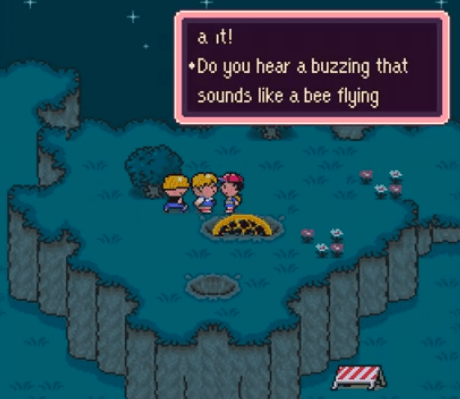
Fighting scenes sport an array of weird and whacky opponents (screenshot taken by the author)

Gameplay

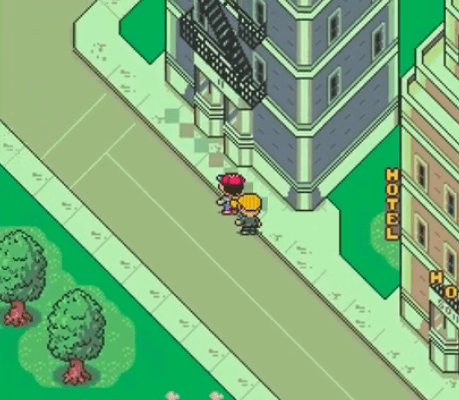
The game is viewed in 2D with the overworld view being an iosmetric design Interestingly, unlike other RPGs, there is no difference between the over-world and town/dungeon scenes, meaning the game moves seamlessly between the two.

What makes Earthbound different form other RPGs, is that it isn’t based on random encounter scenarios. In this game, you can actually see your enemies and can give them a wide berth if you do not wish to fight. Also, once your team reach a certain level, many of the lesser enemies are automatically defeated, meaning you don’t have to waste your time faffing around with pointless battles that give you little in the way of experience points. Additionally, you can gain a tactical advantage by approaching an enemy from behind. This allows you to strike first everytime. I thought that these were great features to have. I have always disliked the random encounter aspect of RPGs. I understand that they may be important for the game to ensure your characters build their stats but I’d rather have the option to fight when I wanted to because I feel random encounters just slow the game down too much.

The battle scenarios consist of standrd RPG practice in that it is a turn based affair. You can choose to attack, use an object, defend yourself, use PSI, flee etc. However, you still need to do battle with them in order to gain inexperience points, items and money.

There are a few other interesting aspects to this game. Firstly, your father regularly deposits money into your account so that you are never short of cash to buy new weapons and other items. Secondly, because you can only carry a certain amount of items, you can drop off items or have them delivered to you when you find a telephone. Thirdly, your character becomes homesick at times, which I believe affects him during battles. To remedy this, you simply need to call your mother who gives you a pep talk…very cute!

Isometric overworld view (screenshot taken by the author)

How Does It Handle?

Although the game looks to be aimed towards a younger audience with whacky and childish jokes, I thought that it was quite fun to play. The story is well thought out, if a little bizarre, and there are plenty of collectables to keep you interested. The controls are simple to learn and the game isn’t to complex and so can be easily picked up played.

Graphics

Although cartoon like, I thought the graphics were good (but not great), bright and colourful, with lots of variations amongst the sprites.

Did I Complete The Game?

Yes, with minimal help from a walkthrough

What The Critics Said:

Gamefan: If you love RPGs, you really must buy earthbound. At first glance the game may not seem like much, but a rich and involving adventure hides just beneath this game’s 8-bit veneer. While not as mind blowing as, say, FFIII, EB is just as fun to play simply because it’s so wacky, original and amusing. Overall 89%.[1]

Super Play: “An RPG that’s very much more than the sum of its parts. If you’ve got the patience to suffer its crude elements then prepare to be boggled: there’s simply nothing like it on the SNES. Overall 88%.[2]

Nintendo Power: “A great story, fun graphics, good sound effects. Frequent, sometimes tedious battles. Poorly designed inventory system limits how many items you can carry. Overall 4/5.[3]

Game Players: “The game’s biggest strength is its humour, but while there’s something here for everyone, most of the quips and strangeness are geared for the younger set – it ain’t exactly Final Fantasy or Illusion of Gaia. Overall 69%.[4]

Awards:

RPG of the Year – 1995 Game Fan Mega Awards[5]

My Verdict:

“I really wanted to give this game five stars, but I feel that the graphics let this game down a bit. When compared to the likes of Final Fantasy III and Secret of Mana, the graphics are not what one expects from a SNES. However, don’t be put off by first impressions. This game has much to offer and endears itself to you the longer your play it. Say ‘Fuzzy Pickles'”

Rating:

What are your memories of Earthbound? I would love to hear your thoughts, and don’t for get to follow and subscribe so that you don’t miss my latest reviews! You can also find me on Instagram: @Nicklovestogame.


[1] Rox, N., ‘Earthbound – Review’. Gamefan. (August 1995). Volume 3 Issue 8:70-71.

[2] Nicholson, Z., ‘Earthbound – Review.’ Super Play. (September 1995). Issue 35:38-40.

[3] ‘Earthbound – Review’. Nintendo Power. (June 1995). Volume 73:10-19 & 107.

[4] Lundrigan, J., ‘Earthbound – Review’. Game Players. (July 1995). Issue 54:60.

[5] ‘1995 Mega Awards’ Gamefan. (January 1996). Volume 4 Issue 1:106.

Mighty Final Fight – Review

Side-scrolling beat ‘em ups were huge in arcades in the 80s. However, home consoles of the 80s struggled to replicate the arcade versions, which were far superior. Although the NES and Master System produced some good quality beat ‘em ups, it wouldn’t be until the late 80s that “arcade quality” beat ‘em ups could be found on home consoles like the Sega Mega Drive, Turbografx-16 and PC Engine.

title screen (screenshot taken by the author)

Mighty Final Fight is a side-scrolling beat ‘em up developed and published by Capcom in 1993 for the NES. It is a spin-off of the 1989 arcade classic Final Fight, and was later released on the Game Boy Advance (2006) and Wii Virtual Console (2014). I chose to review the NES version.

Plot

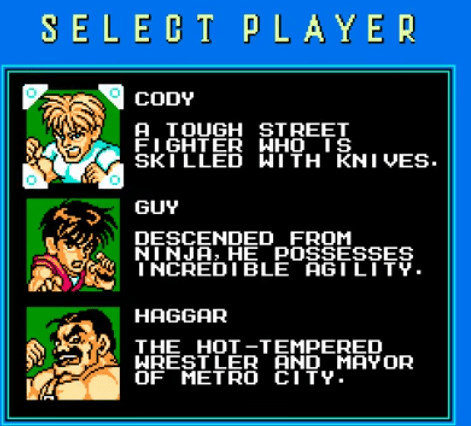
The Mad Gear Gang, the most notorious crime gang in Metro City, have kidnapped Jessica, the daughter of Haggar who is the city Mayor. Along with Cody, Jessica’s boyfriend, and Cody’s training partner, Guy, they attempt to rescue her from the gang.

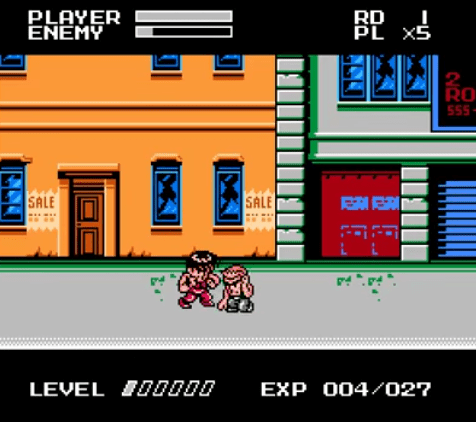
Sadly, the game can only be played in single-player mode (screenshot taken by the author)

Gameplay

You can choose to be either:

Haggar – City Mayor and former professional wrestler

Cody – A street fighter who has developed his own unique fighting style by fusing boxing and karate

Guy – A master of Ninjutsu

Each character has their own strengths and fighting styles. As the game progresses, you gain experience points which increase the strength of your character and unlock more fighting moves. Weapons can be found throughout the levels but they are dependant on the character you’re playing as (Cody – knife, Guy – shuriken, Haggar – oversized mallet).

The graphics have been adapted in the Chibi art style (screenshot taken by the author)

How Does It Handle?

The gameplay is pretty good. The controls are responsive, and the hit detection is spot on. The introduction of new moves keeps the fighting interesting too.

Graphics

The game has been redesigned in the Chibi art style which gives the characters and overall game a more childlike look. The graphics and backgrounds are a great improvement on previous games such as Double Dragon and Renegade, even if Haggar does look like he has a huge double chin. However, by 1993, the SNES and Mega Drive were already producing far superior titles such as Streets of Rage (1991), Golden Axe (1989) and Teenage Mutant Ninja Turtles IV: Turtles in Time (1991). There is also a limited number of sprites allowed on the screen at any one time, and there is a fair bit of flicker when fighting. This game is clearly pushing the NES to its limits.

Replay Value

What really let’s this game down is that it is a single-player game and there is only one difficulty setting. This is a real shame, as side-scrolling fighters are always better in two-player mode. Without a two-player mode and the chance to increase the game’s difficulty, this game will never become a staple for late night gaming with buddies. However, it is slightly redeemed by having three distinct characters that does add a bit of replay value of the game.

Did I Complete The Game?

Yes, my go to character is Cody. My older brother’s choice was always Guy.

What The Critics Said:

At present, I have been unable to locate a contemporary review.

My Verdict:

“A fun little beat ‘em up which looks great, for a NES game, and plays very well. Good differentiation between the characters but a lack of two-player mode severely limits its replay value.”

Rating:

What are your memories of Mighty Final Fight? I would love to hear your thoughts, and don’t for get to follow and subscribe so that you don’t miss my latest reviews! You can also find me on Instagram: @Nicklovestogame.

Street Fighter 2010: The Final Fight – Review

Sometimes an original game or franchise contains characters or ideas for spin-offs. Some are successful such as Super Mario Kart (1992) and Donkey Kong Country (1994)…but others are real stinkers. I’ve recently read several articles titled ‘Top Ten Spin-Offs That Sucked’ or titles to that effect. Most of the games cited in those articles I have never played and so cannot comment on them. However, Street Fighter 2010: The Final Fight did…and I’m afraid I have to agree.

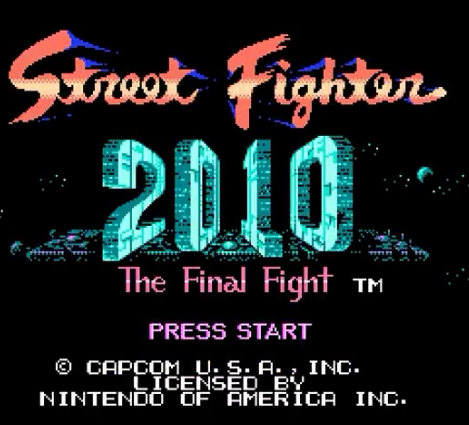
Title screen (screenshot taken by the author)

Street Fighter 2010: Final Fight is a side-scrolling platform game developed and published by Capcom and released on the NES in 1990. It was later released on the 3DS Virtual Console in 2014, and Wii U Virtual Console in 2015. I chose to review the NES version.

Plot

According to the history of this game, Ken won the original Street Fighter tournament. He later retired and became a scientist (as you do) who developed cyboplasm, a substance that gives superhuman strength to whoever uses it. Naturally, Ken has taken the substance to keep himself in tip-top shape. One day, Ken’s lab partner, Troy, is murdered and the cyboplasm is stolen leading Ken to pursue the murderer to the far reaches of the galaxy. Oh, and the future has interplanetary warp gates to assist travel between planets.

Gameplay

Each level seems to consist of Ken battling a weird alien whilst dodging lots of small aliens. he attacks using his gun.

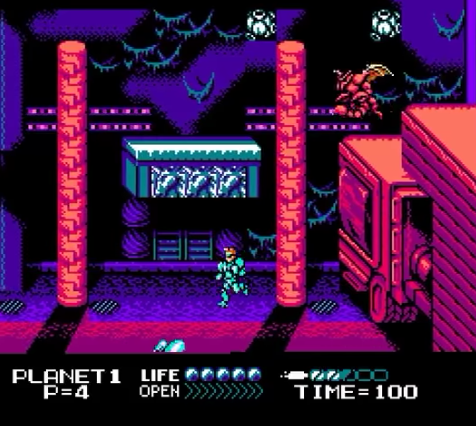
The game looks pretty good. I just couldn’t get on with the gameplay (screenshot taken by the author)

How Does It Handle?

The controls are frustrating. the difficulty is too damn hard and it’s not very enjoyable at all. You can jump, climb walls and back flip, you can fire short range projectiles left, right, up, down (when flip-jumping) and diagonally up…but for some reason you can’t crouch or fire diagonally down. This is fine but there are flying machines that seem to attack you from low down and you are unable to defend yourself. Had crouching and firing diagonally down been possible, this game would have been a lot more enjoyable. Alas, it wasn’t possible, and the frustration led to me simply getting annoyed and moving on.

Graphics

Having said that, the graphics are good with colourful levels and sprites that are nicely detailed.

Personal Thoughts

I have to say that I got the feeling that this game may have originally been a different creation and was given the Street Fighter title because the creators wanted to cash in on the franchise. It’s such a departure from the original format that I cannot understand how they thought it would tie in in a believable way.

Did I Complete The Game?

No, I only got to level 2.

What The Critics Said:

At present, I have been unable to find contemporary reviews.

My verdict:

“An odd spin-off with a totally different format to the original franchise. The controls suck as does the difficulty level.”

Rating:

What are your memories of Street Fighter 2010: The FInal Fight? I would love to hear your thoughts, and don’t for get to follow and subscribe so that you don’t miss my latest reviews! You can also find me on Instagram: @Nicklovestogame.

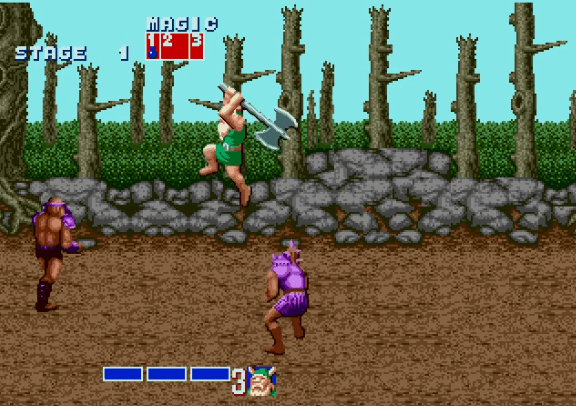
Golden Axe – Review

Video games set in fantasy lands have always been popular. There is something enthralling about controlling musclebound and bronzed barbarians, big-breasted Amazonian women and axe-wielding dwarves who can not only hack their way through masses of monsters but also use fantastical magic when the situation warrants it. I mean, who doesn’t want to play a video game like that?

Title screen (screenshot taken by the author)

Golden Axe is a side-scrolling arcade hack ‘n’ slash developed and published by Sega, and released for the arcade in 1989. Over the next few years, it was later ported to the following:

Mega Drive/Genesis

Master System

Sega CD

IBM

PC

Amiga

Atari ST

Amstrad CPC

Commodore 64

Turbo Grafix-16

Wonder Swan

ZX Spectrum

For this review, I replayed the Mega Drive version from 1990.

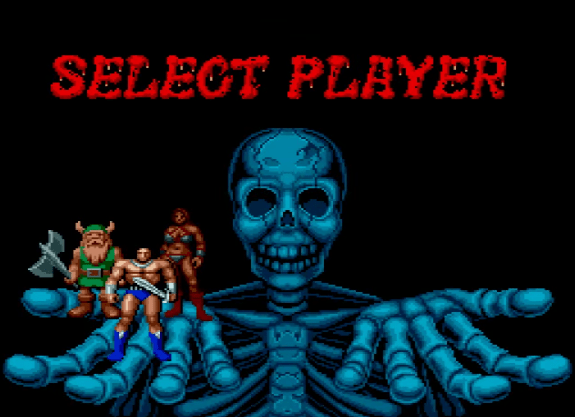
You can choose to fight as either Ax Battler, Tyrius Flare ot Gilius Thunderhead (screenshot taken by the author)

Plot

Set in the high-fantasy land of Yuria, the evil Death Adder has risen to power. His soldiers are responsible for the massacre of thousands of peaceful villagers. Soon, he kidnaps the King of Yuria and his daughter and steals the Golden Axe. Thankfully, three warriors emerge who are capable of saving the kingdom:

Ax Battler – a mighty barbarian from the far plains. He seeks to avenge the death of his mother. He is brave and strong, and wields volcanic magic.

Tyrius Flare – an Amazonian from deep within the jungles whose mother and father were killed by Death Adder. She has skill with the sword and possesses immense magical power that can rain down fire upon her enemies.

Gilius Thunderhead – a dwarf who wields a mighty axe and uses his speed and cunning to defeat his enemies. He seeks to avenge the death of his brother at the hands of Death Adder. His magic ability sees bolts of lightning strike from the heavens.

Together, they have sworn to purge Yuria of the pestilence that is Death Adder’s army and rescue the king and princess.

My personal favourite is Gilius Thunderhead (screenshot taken by the author)

Gameplay

To progress through the game, your heroes must battle their way through hordes of Death Adder’s ugly minions using only their swords and a bit of magic. Along the way, you will come across elves whom you can attack for magic and food. If things become too desperate, all three can use their individual magical powers to destroy their enemies. Gilius is limited to three bars, Ax to four bars and Tyrius to six bars. Tyrius magic is the more powerful of the three.

Arcade mode sees you play through all the stages whereas Beginner mode only takes you to level three where you fight Death Adder Jr. Duel mode sees you fight in 12 consecutive battles against increasingly harder opponents.

Some Bizzarians can come in very useful (screenshot taken by the author)

How Does It Handle?

The controls are slick and responsive, and the hit detection is spot on. The two main tactics you will use is to either to hack and slash your way through or charge at your enemies from a distance and either kick, shoulder barge or headbutt them. So, it’s not just a case of button mashing. You need to change your strategy depending on the enemy you’re facing. Occasionally, you may capture a Bizzarian. These weird creatures consist of one weird pink creature with a beak that uses its tail to swipe at your enemies, or dragons who breathe fire (blue = flame, pink = fireball). Interestingly, the tail swiping Bizzarian looks similar to the one’s seen in Altered Beast (1988). Could it be that Golden Axe and Altered Beast (1988) are in the same universe?

Graphics

The graphics look fantastic, expecially the backgrounds which are very detailed. The sprites look great and are animated well. Interestingly, Gilius Thunderhead seems to appear as a shopkeeper in Shining in the Darkness (1991). Even one of his sacks in the store contains a face of one of the elves from Golden Axe. Again, does this mean that Golden Axe, Altered Beast (1988) and Shining in the Darkness (1991) are all set in the same universe?

Replay Value

Naturally, the game can be played in one- or two-player mode. There are three difficulty settings: Easy, Normal and Hard, and you can adjust the number of life bars you begin from three to five. You also begin with three lives and three continues. Watch out though, in two-player mode as you can damage your co-op buddy.

Personal Memories

I have a lot of memories with Golden Axe playing with my siblings. I always played as Gilius Thunderhead. Again, it is a game that has given me many hours of fun, and I have returned to it year after year, even though I can easily complete the game. When I play in two-player mode, I don’t necessarily think it is about the challenge, but more trying to recapture an adventure with my younger brother.

Did I cComplete The Game?

Yes, I have completed this game many times over the years on easy. Strangely, I don’t think I have ever played this game on the Normal or Hard settings. I must remedy that.

What The Critics Said:

Electronic Gaming Monthly: “The screen graphics are perfect, with exceptional detail in in both the characters and background. The game is almost exactly like the arcade, with endless fighting filling each round. Axe moves slow, but has all the hack and slash action you could ask for. Overall 29/40.[1]

Mean Machines: “A flawless conversion that even improves on the arcade game! Superb! Overall 91%.[2]

Game Machine: “The character sprites are all big and bold, with more than a rainbowful of colours. The pounding soundtrack only adds to the involving and inviting atmosphere of the game. Fast action, superb attention to detail in the fight sequences and some breathtaking magical spells makes Golden Axe a must for all arcade action fans. Overall 92%.[3]

Zero: “Everything about this game is good; graphics, sound and playability. One-player is brill; two-player is unbeatable. Overall 94%.[4]

Wizard: “Again, another first generation Sega game. Medieval action game. Overall C.[5]

Sega Power: “Hack-‘n’-slash with all the frills of the classic coin-op. Two-player mode isn’t as smooth as expected and for one it’s easy to finish. Still, hugely playable and addictive! Overall 4/5.[6]

MegaTech: “Golden Axe is a pixel-perfect replica of the arcade machine, containing identical graphics, sound and gameplay. This is one of the best arcade conversions ever seen, and a game with no Megadrive owner should be without. Overall 94%. [7]

My Verdict:

“An excellent coin-op conversion. It looks great, plays great and the two-player mode will have you coming back again and again.”

Rating:

What are your memories of Golden Axe? I would love to hear your thoughts, and don’t for get to follow and subscribe so that you don’t miss my latest reviews! You can also find me on Instagram: @Nicklovestogame.


[1] ‘Review: Genesis – Golden Axe’. Electronic Gaming Monthly. (March 1990). Issue 8:22.

[2] ‘Mega Drive Review – Golden Axe’. Mean Machines. (October 1990). Issue 1:42-4.

[3] ‘Review: Mega Drive – Golden Axe’. Game Machine. (March 1990). Issue 28:30-1.

[4] ‘Review: Mega Drive – Golden Axe’. (April 1990) Issue 6:74.

[5] ‘Game Reviews – Golden Axe’. Wizard. (January 1993). Issue 17:24.

[6] ‘The Hard Line – Golden Axe.’ Sega Power. (October 1991). Issue 23:53.

[7] ‘Game Index – Golden Axe’. MegaTech. (May 1992). Issue 5:76.

Streets of Rage – Review

There are some games that will always remain close to my heart. Streets of Rage is one such game. For almost 30 years, I have regularly returned to this game time and time again, and am instantly transported to my youth. I decided to revisit it once more with my “reviewers” hat on and wondered if it would hold up to scrutiny. Read on to find out my verdict!

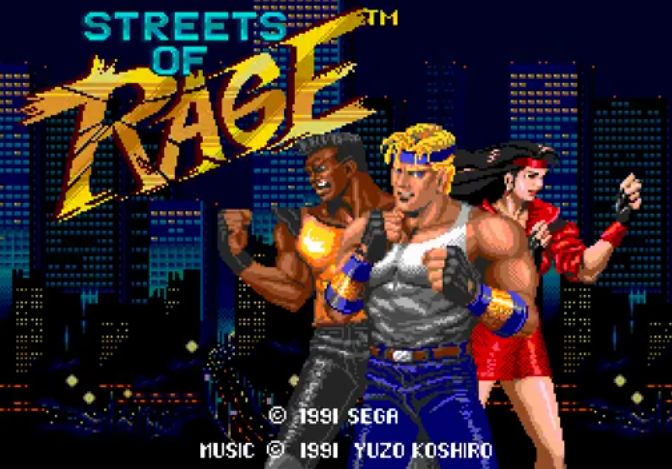
Title screen (screenshot taken by the author)

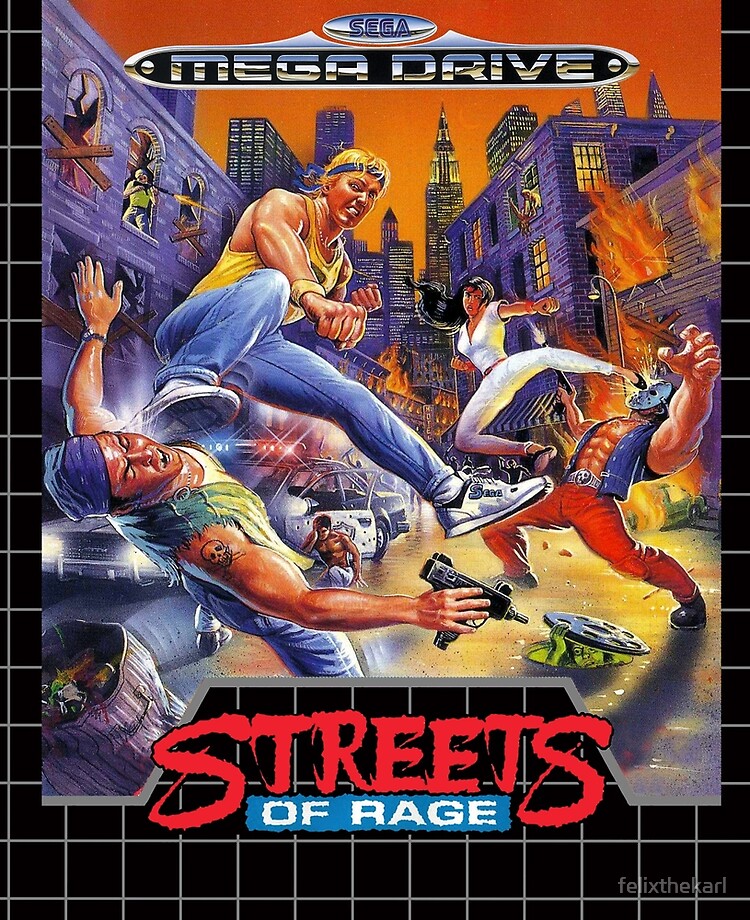
Streets of Rage (Bare Knuckle in Japan) is a side-scrolling beat ‘em up developed and published by Sega. It was released for the Arcade and Sega Mega Drive in 1991. It was later ported to the Game Gear (1992), Master System (1993), Wii (2007), iOS (2009), Microsoft Windows (2011) and Nintendo 3DS (2013). For this review, I chose to play the Mega Drive version.

You have the choice between Adam, Axel and Blaze. Each character has a unique move set (screenshot taken by the author)

Plot

A once peaceful city has been the victim of a crime wave. A secret criminal syndicate has taken over the local government and the local police force. Frustrated by the police force’s corruption, three young police officers take it upon themselves to clean up the streets and stop the crime syndicate.

Gameplay

Streets of Rage can be played in either one or two-player modes. You can choose one of three characters:

Adam Hunter – an accomplished boxer

Axel Stone – a skilled martial artist

Blaze Fielding – a judo expert

You must then battle through eight levels, which take from through mean streets and beaches, on a boat and into a hotel. Along the way, there are also a number of weapons such as bottles, knives and baseball bats that you can pick up and use against the enemies.

As you progress, you gain points for killing the enemies but you also gain extra points for picking up cash and gold bars. To gain health, you will need to find apples and beef joints. Occasionally, you may come across a 1-up icon too.

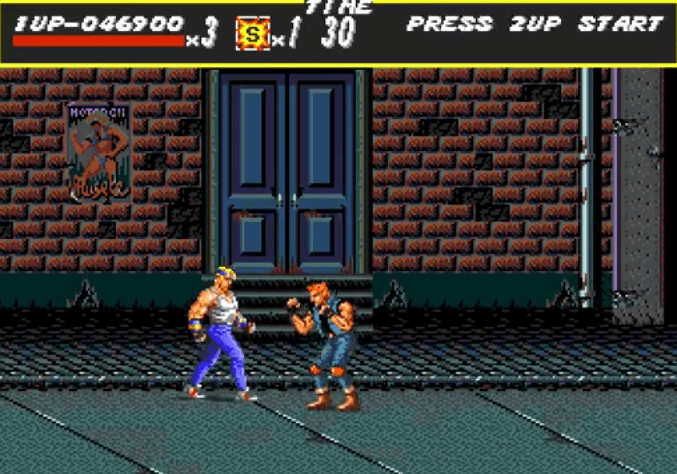
My favourite character has always been Axel (screenshot taken by the author)

How Does It Handle?

Each character has an impressive number of moves, with plenty of differentiation between the characters. Blaze is quick and can jump high and far but not as powerful as the other two. Adam is the slowest and can’t jump very high or far but is the most powerful, and Axel, my personal favourite, is quicker than Adam and just as powerful but doesn’t jump as high or as far or is as quick as Blaze. There are even a few moves with which you can use to double team the enemy. If things get too heavy, each character can use their special attack which involves calling for back-up in the form of a police car. A police officer, leaning out of the window proceeds to fire napalm or rain down fire upon the enemy in the form of a gatling gun rocket launcher hybrid. The controls are nice and responsive and the hit detection is spot on. There is also an element of strategy when fighting some of the bosses so that you can work together in a team.

Blaze can easily hold her own against a gang of baddies (screenshot taken by the author)

Graphics

Firstly, this game looks beautiful. The character sprites are clearly defined, colourful and very detailed! The level designs are awesome too and some of the best I’ve seen for 16-bit games released around this time.

Music

What a soundtrack! Memorable tunes and a nice gear change when fighting the bosses to emphasise that shit’s about to go down.

Replay Value

The game has four difficulty settings ‘easy’, ‘normal, ‘hard’ and ‘hardest’, but even if you stick to the easiest setting, I found that I returned to this game again and again, especially when playing in two-player mode with my brothers and sister.

I have so many fond memories of this game, and it’s probably why I rank it as as one of my favourite games of all time. Even after almost 30 years, I still return to it yearly with my little brother and we play through it.

Did I Complete The Game?

Yes, I have completed this game many times over the years on the ‘easy’ and ‘normal’ settings.

What The Critics Said:

Sega Power: “Double Dragon-style street fighter with arrange of 40 combat moves! Loads of enemies, frenzied activity and brilliant soundtracks. This sets new standards for urban guerrillas. Overall 5/5.[1]

Mean Machines: The greatest and most enjoyable beat ‘em up yet seen on the Megadrive. Overall 90%.[2]

Games-X: “Okay as beat ‘em ups go, but will only appeal to fans of the genre. Overall 3/5.[3]

Computer and Video Games: “Beautifully presented, the games smacks of quality from the moment you slap in the cart and prepare to slap heads. The gameplay is totally wicked. Each fighter has his or her own characteristics, but you’ll soon choose a favourite with which to kick ass. Overall 93%.[4]

Mega Tech: “This is the best beat ‘em up on the Megadrive with tons of moves, action, death and great electro soundtracks. Overall 92%.[5]

Sega Pro: “Basically this is Final Fight for the Megadrive. Great graphics and some amazing moves. This is the best beat-‘em up game yet for the Megadrive. Overall 96%.“[6]

Wizard: “Fighting game, third generation game. Not bad, still holds up well. Lots of action. Overall B.[7]

MegaTech: “Yes! The Megadrive needed a fabulous beat ‘em up, and Streets of Rage more than delivers. With excellent sprites, backdrops and brilliant music, Streets of rage is initially very appealing. Add in great gameplay and simultaneous two-player action and you’ve got an essential buy. Overall 92%.[8]

My Verdict:

“I can’t praise this game enough. It looks fantastic, it plays fantastic and the sound track is awesome. It truly is one the greatest video games ever made and I can be certain that even when I’m in my senior years, I will still return to relive the Streets of Rage adventure again and again.”

Rating:

What are your memories of Streets of Rage? I would love to hear your thoughts, and don’t for get to follow and subscribe so that you don’t miss my latest reviews! You can also find me on Instagram: @nicklovestogame.


[1] ‘The Hard Line: Mega Drive – Streets of Rage’. Sega Power. (October 1991). Issue 23:54.

[2] ‘Streets of Rage – Review’. Mean Machines. (September 1991). Issue 12:80-82.

[3] ‘Bare Knuckle – Review’. Games-X. (22nd-28th August 1991). Issue 18:38.

[4] ‘Streets of Rage – Review’. Computer and Video Games. (October 1991). Issue 119:54-6.

[5] ‘Streets of Rage – Review’. Mega Tech. (February 1992). Issue 2:30.

[6] ‘Streets of Rage – Review’. Sega Pro. (April 1992). Issue 6:29.

[7] ‘Game Reviews – Streets of Rage’. Wizard. (January 1993). Issue 17:24.

[8] ‘Game Index – Streets of Rage’. MegaTech. (May 1992). Issue 5:78.

Bomb Jack – Review

Video games do not have to be complex to be enjoyable and challenging. If they did, early video games such as Space Invaders (1978) and Asteroid (1979) would never have gained popularity. I feel it is important for modern gamers to go back and play early retro games to help them appreciate just how far video games have developed in such a short space of time.

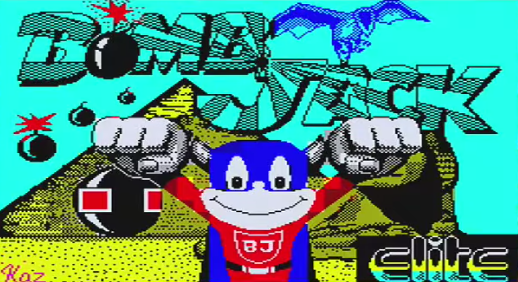
Title screen (screenshot taken by the author)

Bomb Jack is a platform game developed and published by Tehkan. It was released in the arcade in 1984, and later ported to SG100 (1985), Amstrad CPC, Commodore 64, ZX Spectrum and Commodore 16 (1986), Atari ST and Amiga (1988), Game Boy (1992), Java ME (2003) and Atari XL (2008). For this review, I chose to play the ZX Spectrum version.

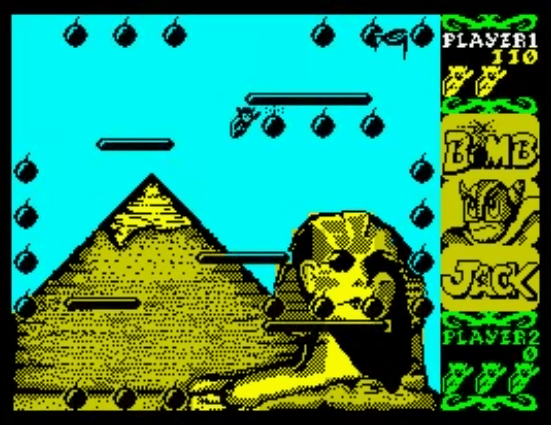
Personally, I think the backgrounds look awesome (screenshot taken by the author)

Gameplay

You play as Bomb Jack. The object of the game is to collect bombs that have been laid on each level, all the while dodging an array of monsters. Collecting the bombs also increases your score. If you collect the special power block with a ‘P’ on it, the enemies will temporarily turn into octagonal blocks with smiley faces on them. Collect these to rid yourself of these enemies and to gain extra points. Other power blocks include:

‘B’ – increases score multiplier by 5x

‘E’ – extra life

‘S’ – awards a free game (I think this was only present in the arcade version).

There are five different screens. Once you have completed the five screens, you simply go around again and again until all your lives are lost. You must try to gain the highest score possible to reach the top of the scoreboard.

Collecting the ‘P’ power block will temporarily turn the enemies into octagonal blocks (screenshot taken by the author)

How Does It Handle?

The sprite is easy to control and the controls are tight. You simply move left or right and jump. To make things a little easier, Bomb Jack can float after jumping, reducing his falling speed.

Graphics

The backgrounds to the levels are gorgeous! Although the sprites, power-ups and enemies are plain black, it is all you need for this sort of game. There is no need for over the top sprite design or animation.

Replay Value

The game is challenging and strangely addictive, and although the replay value is limited, it’s the sort of game that nowdays keeps people glued to their smart phones on public transport.

Did I Complete This Game?

I don’t think this is the sort of game you complete. You simply keep going, trying to get the highest score possible.

What The Critics Said:

Crash: “A great arcade conversion, don’t miss it! Overall 92%.[1]

My Verdict:

“A simple but somewhat addictive game. Tight controls, easy to learn and fun to play. Beautiful backgrounds too, especially for a ZX Spectrum!”

Rating:

What are your memories of Bomb Jack? I would love to hear your thoughts, and don’t for get to follow and subscribe so that you don’t miss my latest reviews! You can also find me on Instagram: @nicklovestogame.


[1] ‘Reviews – Bomb Jack’. Crash. (April 1986). Issue 27:20-1.