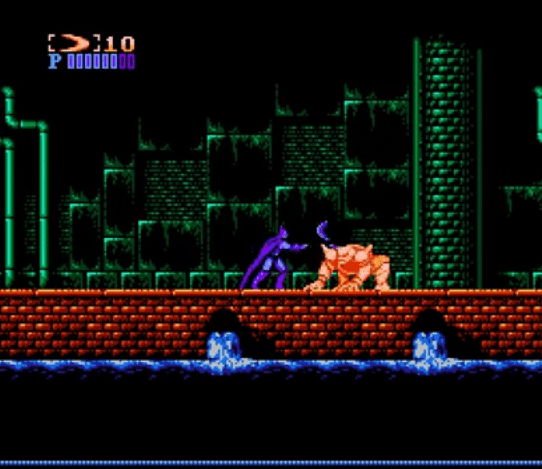
Gain Ground – Review

As you can imagine, thousands of video games have been created since they became a thing way back in the 1960s. So, it is perfectly understandable that with great regularity you may come across a game that you have never heard of. However, just because you have never heard of a game doesn’t necessarily mean that it isn’t worth playing. After all, it may be one of those “hidden gem” games that one finds every now and then. Could Gain Ground be one such game?
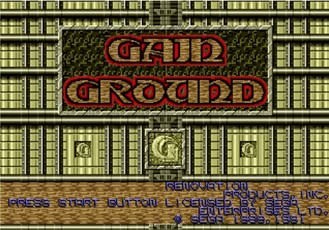
Title screen (screenshot taken by the author)

Gain Ground is an action-strategy game developed and published by Sega. It was first released for the arcade in 1988 before being ported to the Master System and Mega Drive in 1991. For this review, I played the Mega Drive version found on Sonic’s Ultimate genesis Collection (2009) on the PlayStation 3.

Plot

In the year 3000AD, there is no poverty. There is no war or discrimination. Humans finally live in a time of total peace…but…with total peace comes a price. Without the threat of violence, humans have forgotten how to defend themselves, leaving them vulnerable. To retrain humans how to fight, the United Earth Government create a war simulation run by a supercomputer called Gain Ground. During testing, an error occurs, and its creators are taken hostage. A rescue party is also captured. The government have one final chance to rescue the creators and stop the computer.
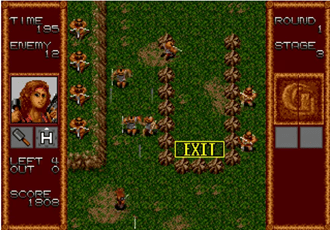
Mediocre graphics but this is a highly addictive game (screenshot taken by the author)

Gameplay

The game can be played in single and two-player mode. Even though you are competing for the highest score, the two-player mode is co-operative. There are five rounds, with each round having 10 stages. The last stage of each round being a boss level. The rounds are as follows:

Round 1 – Dark Ages

Round 2 – Middle Ages

Round 3 – Pre-Revolutionary China

Round 4 – Present day

Round 5 – Future

The on-screen information allows you to see the time limit for each stage, the number of enemies left to kill, the character you are using, how many of your soldiers you have left to escape, how many have already escaped, and your score.

There are two ways to complete each stage. You can either destroy all enemies on screen or you can guide all your soldiers safely to the exit. At the beginning of each stage, you have the opportunity to choose which soldier you wish to use. If that soldier is killed by an enemy, they will turn grey before becoming an icon on the screen. You then pick another soldier to complete the mission. You can pick up your fallen comrades and finish the level to ensure they are available in the next stage.

Each character has unique weapons, special weapons, abilities, and weaknesses, and so it is important to use each character where they will be most useful. For example, some are powerful but slow. Others are weak but fast…you know…the usual trade off.
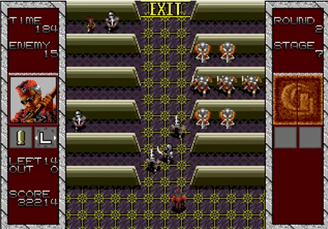
You must choose to either run the gauntlet to escape or kill all enemies on screen (screenshot taken by the author)

How Does The Game Handle?

The game is very easy to learn. You can move and fire in all directions, but when using some of the special weapons, you will automatically orientate yourself to fire up the screen. This can be a great help at times and a hinderance at others. You also have to be accurate with your shots and this will take some getting used to. It can be frustrating when you miss the enemy by a hair’s breadth and they are able to kill you.

Graphics

The graphics are just what you need for a game like this. They are mediocre but detailed enough so that the game is playable. They won’t win any awards, mind. However, this game isn’t about graphics. It is about the action and there is plenty of that!

I had never heard of this game before reviewing it. I have to say I was pleasantly surprised. This is just the sort of game that I would have played with friends for hours and hours in my teenage years. It is fun, challenging, and highly addictive like all arcade games should be.

Music

I actually enjoyed the music, especially early on. The music has a typical arcade-style upbeat tempo that gets your blood pumping for the action. Upon completion of each stage, you are rewarded with a nice little victory riff.

Replay Value

There are three difficulty settings to choose from. Easy offers you up to eight continues and the game ends after Round Three Stage 10. Normal offers up to four continues, and hard gives you no continues but you have all 20 of your soldiers available to you from the beginning. These changes with each difficulty level offer a good level of replay value.

Did I Complete The Game?

No, I couldn’t get past Round 3 Stage 4. I will, however, definitely be returning to this game.

What The Critics Said:

Sega Pro: “Great two-player action as you battle through multiple levels of complex action. You control a band of warriors from ancient times right through to the future. Detailed graphics and very addictive gameplay. Overall 89%.[1]

Raze: “…the graphics are very small, and the sound not too spectacular. But a closer inspection reveals some great animation on the characters and their weapons, and a splattering of colour and variety all through the game. Overall 92%.[2]

Computer & Video Games: “It’s very simple and very boring. You’d have to be stark raving mad to part with thirty quid for this… Overall 49%“.[3]

Mean Machines: “A very accurate conversion of an obscure and hopelessly crap arcade game which features the average graphics, rubbish sound and boring gameplay of the original machine. Overall 43%.[4]

Sega Power: “Choose the right soldiers in this intriguing flick-screen combat game. Heavy on strategy, its slower pace might make a change from alien death. Unusual two-player mode. Overall 3/5.[5]

My Verdict:

“Pleasantly surprised by this game. Although the gameplay is simple and the graphics won’t blow you away, I found it enjoyable, challenging and highly addictive.”

Rating:

What are your memories of Gain Ground? I would love to hear your thoughts, and don’t for get to follow and subscribe so that you don’t miss my latest reviews! You can also find me on Instagram: @nicklovestogame.


[1] ‘Gain Ground – Mega Drive’. Sega Pro. (December 1991). Issue 3:18.

[2] ‘Gain Ground’. Raze. (May 1991). Issue 7:64.

[3] ‘Byte Size Mega Drive Review – Gain Ground’. Computer & Video Games. (March 1991). Issue 112:72.

[4] ‘Review: Mega Drive – Gain Ground’. Mean Machines. (October 1992). Issue 1:139.

[5] ‘The Hard Line – Gain Ground’. Sega Power. (October 1991). Issue 23:53.

Ecco the Dolphin: The Tides of Time – Review

It is natural that the financial success and popularity of a video game should beg the question if a sequel (or prequel) will be wroth the investment. After all, I’m sure all game developers wish to be known for creating a successful franchise spanning generations of video gamers. The issue is that sequels are, more often than not, flops. Ecco the Dolphin was a huge success. So why not create a sequel?

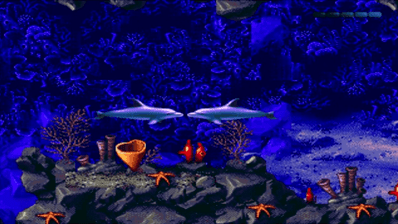
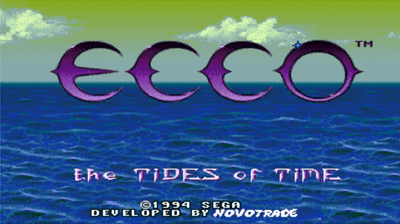
Title screen (Screenshot taken by the author)

Ecco the Dolphin: The Tides of Time is a single player action-adventure game. It was developed by Novotrade International and published by Sega for the Mega Drive, Game Gear and Sega CD in 1994, and for the Master System in 1996. The version I chose to review can be found on Sonic’s Ultimate Genesis Collection (2009) for the PlayStation 3.

Plot

Tides of Time picks up where the first Ecco game left off. Having saved his pod, and coincidently the world, from an alien vortex, Ecco retains the powers bestowed upon him by the Asterite that allow him to stay underwater indefinitely without the need for air. His sonar also produces a blast wave stunning enemy sea creatures. Things are peaceful in Home Bay.

One day, a powerful earthquake hits the underwater cave that Ecco is exploring. Unsure how, Ecco soon learns that his powers have left him and that the Asterite has been killed. Ecco soon meets an unusual dolphin named Trellia, who informs him that she is from the future and one of his descendants. She brings Ecco back to her future where he learns that the Vortex Queen survived, followed him back to Earth and killed the Asterite in Ecco’s time. After travelling back to his own time, Ecco must search for the globes of the Asterite that have been scattered throughout the ocean and bring them together. Only then can he learn how to defeat the Vortex Queen and save the Earth…again.

The graphics for the Mega Drive versions of the Ecco series are truly stunninig (Screenshot taken by the author).

Gameplay

The game play is the same as the original Ecco game. When pressing a direction, Ecco will swim in that direction. When you stop swimming, Ecco will drift, adding some realism to the game, since the sea is always moving with the tides. To increase speed, press the ‘C’ button, and Ecco will speed up, handy for when you’re almost out of oxygen or when you need to leap out of the water and over obstacles. The ‘B’ button makes Ecco dash (tap twice for double charge). This is mainly used to attack the many dangerous and deadly creatures he encounters, as well as, breaking down shelled walls.

The ‘A’ button is Ecco’s sonar ability and can be used in several ways:

  • Press and hold ‘A’ until the sonar bounces back. This opens a map segment, again very handy for when you are lost in caves.
  • Communicate with other friendly sea creatures such as other dolphins and killer whales. These friends can offer advice and hints to you.
  • Large glyphs are found dotted around the levels that offer tips or give Ecco a password so that when he comes across one that blocks his path, he can use his sonar to clear the way.
  • After the first few levels, Ecco gains the ability to use his sonar to stun enemy creatures.
  • Pressing ‘B’, followed by ‘A’, Ecco releases a sonar charge that will kill his enemies.

So What Is New About Tides Of Time?

In the first Ecco game, there were Key Glyphs that when you sang to them, would offer clues or give you a specific song to pass through Barrier Glyphs. Power Glyphs would give you invincibility for a short period of time. In Tides of Time, there are now:

Puzzle Glyphs – Join with others to help release their powers

Cracked Glyphs – Similar to Barrier Glyphs but will only open for a short period of time; Broken

Broken glyphs – Fit the pieces together to Ecco receives a gift

Milestone Glyphs – Act like save states

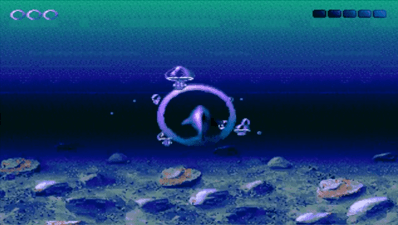
Another new addition to the game is the teleportation sub-stages. The view changes so that the camera is behind Ecco as he travels forward. Dodging seaweed and jellyfish, you must watch out for rings that Ecco must swim or jump through. If you miss too many, you will go back to the beginning of the level. It doesn’t really add that much to the game, but changes it up enough to be worth including as a new feature.

Several new features include new level types (Screenshot taken by the author)

How Does It Handle?

The game handles pretty much the same as it’s predecessor…and is just as difficult.

The Sky Tides level was tough because it is a scrolling level and there is lots of trial and error when it comes to finding the best way to navigate through the level. If you fall out of the sides of the tubes, you fall back to the ocean and back to the previous level.

On the next stage, Tube of Medusa, if you get grabbed by the Medusa’s and flung out of the tubes, you go back two stages!!! Luckily, the Barrier Glyph is still open so you can swim straight back to the Sky Tides level, but it is still incredibly frustrating.

On some of the levels, there are helium bubbles in the sky. When you leap into the air and use your sonar on them, they fling you across the screen to either a floating pool or another set of helium bubbles. On another level, when you leap out of the water to where a larger bubble is floating in the air. When you touch it, you turn into a seagull and need to fly over cliffs to another body of water. What on Earth were the creators smoking when they came up with ideas for this game?

Graphics

The graphics still look top rate. The sprites all look a little smoother and the colours and detail of the sprites and backgrounds still look incredible. Now, I may be crazy, but the game perspective feels like you have been zoomed in slightly…or am I imagining it?

Music

The music just does not fit the game. In the original you had either a soft Caribbean melody or a low-key track that almost buzzed, giving you the feeling of being along in a scary and unfamiliar environment. Some of the weird new music feels like it should fit better in a run-and-gun shooter.

Replay Value

To add to the replay value of this game, at the begining you can choose to swim in four directs. Left leads to the password screen, top left is difficult, top right is easy and right is normal. Normal adjust the game difficulty based on your ability and how well you’re doing.

Did I Complete The Game?

Not yet. At present, I am stuck on Four Islands where you need to follow a friendly dolphin who will show you the way. When following the dolphin, if it disappears off your screen, it will go back to where you found it. It is rather unforgiving.

What The Critics Thought:

GamePro: “There’s no doubt that Tides of Time offers a lot, providing a scenic variety of levels for the player to swim through and solve. Occasional control glitches do bring their share of frustration, but you still get a solid does of entertainment. This sequel proves that Ecco’s not washed up yet. Overall 85%.[1]

Electronic Gaming Monthly: “Ecco: Tides of Time really shows that Genesis games can be colourful, The backgrounds and animation are simply beautiful, with lots of eye-popping graphics. The quests are a lot harder than before, and sometimes you are left without a clue as to what to do. I like the fact that you can transform into different creatures I’d have to say that I really like Ecco and his adventures. Overall 7.25/10.[2]

Next Generation: “Taxing puzzles, RPG elements, shooting stsgaes, and some of the best Genesis graphics to date make you want to reel Ecco II in, but it’s certainly not a keeper. Overall 3/5”.[3]

My Verdict:

“I’m not sure what to make of this game. The graphics, as with the original, are glorious. The change in music doesn’t work well for me, and some of the new aspects of the game like the helium bubbles and turning into other creatures seems a bit dumb. Having said that, it’s a perfectly good game. Challenging, great to look at, and is certainly a worthy addition to the Sega Mega Drvie library.”

Rating:

What are your memories of Ecco the Dolphin: The Tides of Time? I would love to hear your thoughts, and don’t for get to follow and subscribe so that you don’t miss my latest reviews! You can also find me on Instagram: @nicklovestogame.


[1] LaMancha, M., ‘ProReview – Ecco the Dolphin: The Tides of Time’. (December 1994). GamePro. 75:86-7.

[2] ‘Review Crew – Ecco: Tides of Time’. (December 1994). 65:40.

[3] ‘Rating Genesis – Ecco: Tides of Time’. (February 1995). Next Generation. 2:100. (

ESWAT: City Under Siege – Review

Science-fiction movies have often toyed with the idea of a mechanised police officer battling huge crime syndicates in a dystopian future (1987s Robocop springs to mind). ESWAT: City Under Siege was one such game, with a storyline that felt like it came straight from a 1980s B-movie starring Jean Claude Van Damme or Dolph Lundgren.

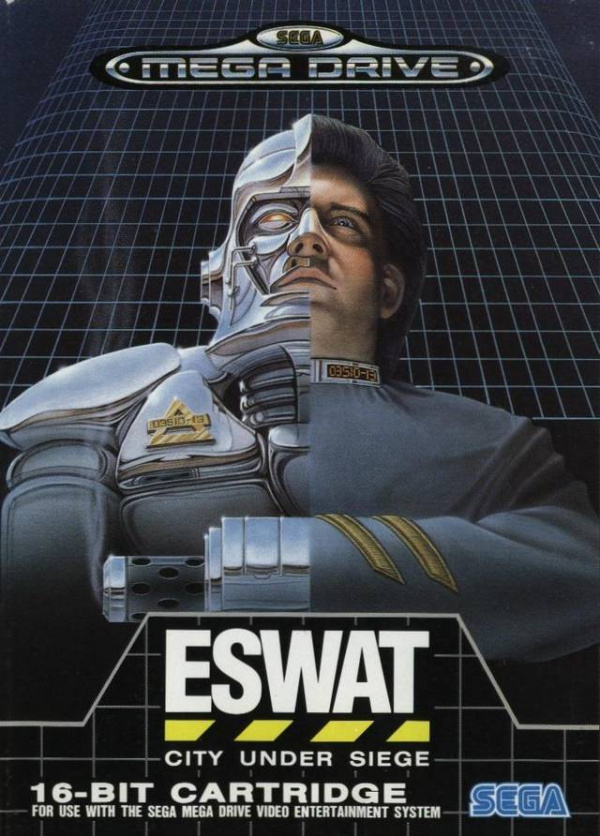
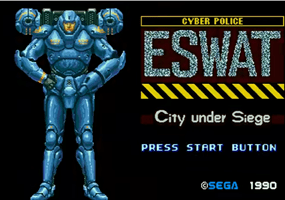
Titlescreen (Screenshot taken by the author)

ESWAT: City Under Siege (Cyber Police ESWAT in Japan) is a side-scrolling action platform game developed and published by Sega. Based on the 1989 arcade game Cyber Police ESWAT, it was released in 1990 for the Mega Drive and Master System. It was later released on the Wii Virtual Console in 2007 and as part of Sonic’s Ultimate Genesis Collection (2009) found on the PlayStation 3 and Xbox 360.

Plot

Global terrorist organisation E.Y.E is wreaking havoc throughout the world. To combat this terrorist threat, the governments of the world launch their ESWAT (Enhanced Special Weapons and Tactics) initiative. Selected from the bravest police officers and sharpest shooters, these law enforcement officers don state-of-the-art ICE combat suits with advanced armour and weaponry.

In the early missions, you are a plain clothes officer (screenshot taken by the author)

Gameplay

There are eight missions for you to battle through:

  • Guard Silent City!!
  • Infiltrate Cyber Prison!!
  • Defend Neo Three-Mile!!
  • Attack Mad Scientist!!
  • Destroy Dark Base!!
  • Penetrate Secret Sewer!!
  • Destroy Tactical Complex!
  • Break E.Y.E’s Plan!

You begin the game at the rank of Captain and are a uniformed police officer. Once you complete the first mission you gain a promotion to Chief. The completion of the second mission sees you promoted again to ESWAT and this is when you gain the ESWAT suit. The suit begins with your plain shot weapon but allows you to pick up a further four weapons:

  • Super – Shoots three shots at once instead of one, and includes rapid fire ability.
  • R.L. (Rocket Launcher) – Fire two powerful rockets in quick succession before needing a bit of time to reload.
  • P.C. (Plasma Charge) – Fires smaller shots but can charge up to fire a huge devastating ball of plasma.
  • Fire – The most powerful weapon in your arsenal, this weapon can only be used when your jetpack fuel is in the red zone (full power). You can also only use it once.
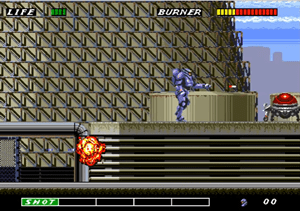
Once you reach the ESWAT rank, you gain the stat-of-the-art armour (screenshot taken by the author)

How Does It Handle?

In the first two levels, you only move a one speed: walking. As you progress and gain the ESWAT suit, you can also use your rocket pack to help evade hazards and enemy fire. My only criticism of the player’s movement is that I feel that your character walks a little too slowly for my liking and cannot shoot diagonally, which is a tad annoying at times. I also felt that the you are too zoomed in (if that makes sense). You are quite clsoe to the edge of the screen as you walk to progress. I’d have liked to have seen it zoomed out a bit more so that you can see a bit more of what’s going on around you and aren’t in a constant state of nervous surprise.

Graphics

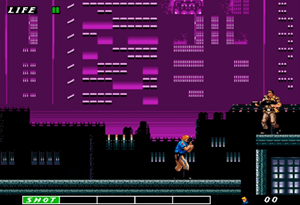
I’d like to rave about the graphics of this game. The sprites look incredible! The detail on your character’s uniform and the initial human enemies is top rate for 1990 (there is a nice little explosion once you kill the enemies too). They are bright and colourful, and they have even captured the shadows on your attire (between the legs for example). The levels themselves, are also incredibly detailed and there is plenty that to attracts the eye. They really did go all in for this game.

Music

The music sounds great too. Upbeat and funky, it’s the sort of in-game music that you’d listen to as opposed to muting the sound and putting on your own tunes.

Replay Value

This is a tough game, and certainly not for the faint-hearted. If you complete the game and are a glutton for punishment, you can increase the difficulty and number of lives you begin with. This increases the replay value of the game.

Did I Compete The Game?

No, I could not get past mission five.

What The Critics Said:

Mean Machines Sega: “ESWAT is s super-slick platform shoot ‘em up that simply oozes quality. The parallax scrolling backdrops and sprites are excellent, and the sound is great. Combine those with challenging and highly addictive gameplay and you’ve got a game that’s a must for your collection. Overall 92%.[1]

Sega Power: At first this Shinobi-style shooter isn’t too hot. Later on, though, it displays some of the moodiest scenes on the MD. Tried and trusted gameplay, plus a few shocks! Overall 4/5.[2]

My Verdict:

“Graphically, a superb example of the capabilities of the Sega Mega Drive with a knock out soundtrack to boot. This is a challenging game and you won’t simply finish it in one sitting.”

Rating:

What are your memories of ESWAT? I would love to hear your thoughts, and don’t for get to follow and subscribe so that you don’t miss my latest reviews! You can also find me on Instagram: @nicklovestogame.


[1] ‘Review: Mega Drive – Eswat’. Mean Machines. (October 1992). Issue 1:138.

[2] ‘The Hard Line – E.S.W.A.T. City Under Siege’. Rage Magazine. (October 1991). Issue 23:53.

Dynamite Headdy – Review

I’m often conflicted when rating video games. I tend to give my personal rating before I read the reviews of contemporary critics so as not to affect my personal rating. For the most part, we are in agreement. However, on occasion, I disagree with reviewers rating a game either higher or lower than expected. Dynamite Headdy is one such game.

Title screen (Screenshot taken by the author)

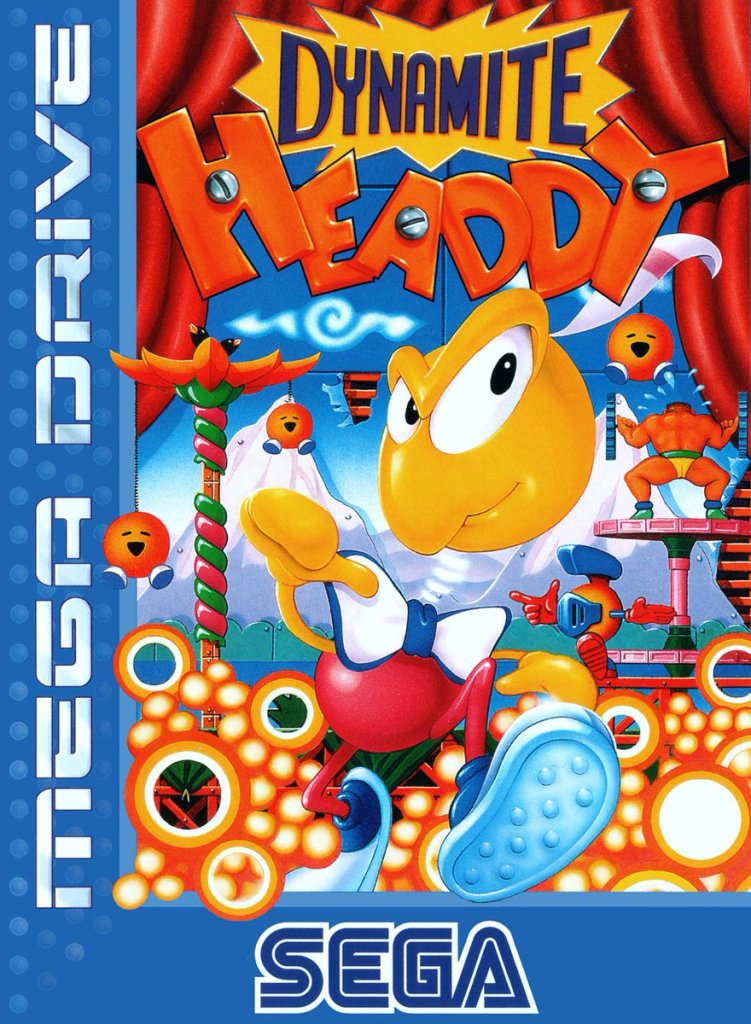
Dynamite Headdy is a single-player platform game developed by Treasure Co., Ltd and published by Sega. It was released for the Mega Drive in 1994 with an 8-bit version being ported to the Game Gear and Master System soon after. It was later released for the Wii Virtual Console (2007), the Xbox 360 and PlayStation 3 via Sonic’s Ultimate Gensis Collection, and the Xbox One, PlayStation 4, Nintendo Switch, Microsift Windows Mac OS X and Linux in 2018. For this review, I played the Mega Drive version.

(Screenshot taken by the author)

Plot

Life was fun at the Treasure Theatre Show until Dark Demon began converting its inhabitants to evil minions. It’s up to Headdy to pursue Dark Demon and defeat him in order to save his friends.

Gameplay

You play as Headdy, a puppet who has the ability to throw his own head at his enemies or to use it to grab Hangmen (round balls) to help him climb to higher parts of the level. Headdy also has the ability to change his head to other heads that give him special abilities, similar to Kid Chameleon (1992). For the most part, there are up to 14 different heads that can be utilised by Headdy. In some later levels, another three are utilised to help Headdy fly.

At the end of each level, Headdy must face a Keymaster. His friend Beau usually shows up to direct Headdy as to where he must hit the Keymaster to defeat them.  

(Screenshot taken by the author)

How Does It Handle?

The controls are tight and the gameplay relatively simple. I like the fact that Headdy can throw his head in all directions and can be utilised as a weapon or as an aid to reach higher platforms.

The numerous heads with their unique abilities make the game play quite fun. Although, I wish there they were more integral to the game. Although there are times when swapping heads is necessary, and allows your to pick your route based on the head you pick, I felt as though the game could be beaten with using minimal head swaps when the game really should be full of areas where you cannot progress without acquiring the correct head.

What spoils the game for me, is that it feels very chaotic and discombobulated. The levels seem quite short and just when you’re getting into it, it ends or changes scene. There are also seems to be endless boss battles and although some are quite quirky and ingenious, they grow tiresome as oppose to simply being a good challenge.

The so called “treasures” are not really worth the effort to get as they add very little to the game.

Graphics

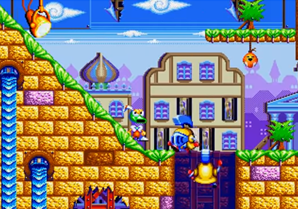
The graphics are bright and colourful. The sprites look great and there is enough variation to keep the game interesting. The animations are quite cool too, like when Headdy has been idle for a while, he’ll take off his head and bounce it like a basketball.

Music

I found the music is down right annoying and I found that soon, I’d turned the volume down.

Replay Value

The game itself is quite long, but offers little in the way of replay value.

Personal Memories

I owned Dynamite Headdy as a teenager and remember playing it over and over again but never completing it. Having revisited the game, I’m sorry to say that I just didn’t enjoy it at all. I actually found the game annoying and it felt like a half-baked idea to me.

Did I Complete The Game?

No, I couldn’t get past level 6-2.

What The Critics Said:

Electronic Gaming Monthly: “Another unique title from the folks at Treasure (the company that gave us Gunstar Heroes). The main character, Headdy, has several excellent attacks (using different “heads”), and the levels are very colorful, with some knockout visual effects (like the rotating platforms, and the giant blimp dog Boss). This is a top action title for the Genesis. Overall 7.6/10.[1]

Gamesmaster: “Is it going too far to suggest that this is Treasure’s contractual obligation game? Probably. Nevertheless, it doesn’t shine like their previous projects. Let’s hope their next one is more of a return to form. Not a disaster but should have been so much better. Overall 76%. [2]

Mean Machines Sega: “If you have your head firmly screwed on, you’ll get Headdy as soon as it comes out. No ifs, no butts! Overall 93%.[3]

Next Generation: “Unlike most games, no two levels or bosses look alike. Most importantly, Dynamite Headdy is loaded with good old-fashioned fun, and that’s what gaming is all about. Isn’t it? Overall 4/5.[4]

My Verdict:

“This game is chaotic, frustrating, and feels you’re just being carried through the game as oppose to navigating it yourself. The levels are very linear and rather small when compared to games like Sonic the Hedgehog 3. It’s a Marmite game. You’ll either love it or you’ll hate it.”

My Rating:

What are your memories of Dynamite Headdy? I would love to hear your thoughts, and don’t for get to follow and subscribe so that you don’t miss my latest reviews! You can also find me on Instagram: @nicklovestogame.


[1] ‘Review Crew – Dynamite Headdy’. Electronic Gaming Monthly. (September 1994). Volume 7, Issue 9:36.

[2] Tucker, T., ‘Review – Dynamite Headdy’. Gamesmaster. (October 1994). Issue 22:52-3.

[3] ‘Review – Dynamite Headdy.’ Mean Machines Sega. (November 1994). Issue 25:74-7.

[4] ‘Rating genesis – Dynamite Headdy’. Next Generation. (January 1995). Issue 1:99-101.

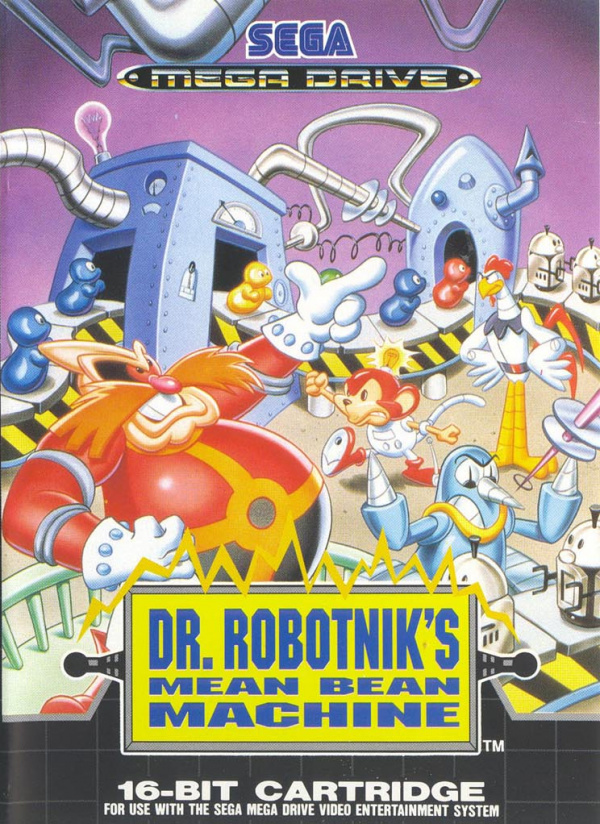
Dr. Robotnik’s Mean Bean Machine – Review

Puzzle games have always been popular. Humans clearly enjoy the mental challenge of solving a puzzle as well as the competitive challenge of solving it faster than a friend or opponent. One would presume that many puzzle games such as Tetris (1984), Columns (1989), Pipe Mania (1989) and Shanghai (1986) were cheap and easy to produce. Their popularity stems from the personal challenge as well as the fact that they are easy to learn but difficult to master. As the complexity of video games increased, how could game creators use the ideas from previous puzzle games and expand them for modern gamers of the 1990s? One answer was Dr. Robotnik’s Mean Bean Machine.

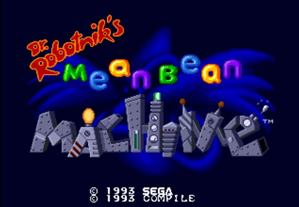
Title screen (Screenshot taken by the author)

Dr. Robotnik’s Mean Bean Machine is a falling block puzzle game and can be played in single or two-player mode. It was developed by Compile Co., Ltd. and published by Sega. It was released on the following platforms:

Mega Drive and Game Gear in 1993

Master System in 1994

Sonic Mega Collection for the GameCube in 2002

Wii Virtual Console in 2006

Sega Mega Collection Plus for the PlayStation 2 and Xbox in 2004

Sonic’s Ultimate Genesis Collection for the PlayStation 3 and Xbox 360 in 2009

Microsoft Windows in 2010

Nintendo 3DS in 2013

For this review, I played the version found on the Sonic’s Ultimate Genesis Collection (2009).

Plot

On the planet Mobius, Dr. Robotnik, Sonic the Hedgehog’s arch nemesis, has created a Mean Bean-Steaming Machine in order to turn the peaceful inhabitants of Beanville into evil robots. Once he has his army, he intends to ensure that music and fun disappear from Mobius forever…what a miserable bugger!

Gameplay

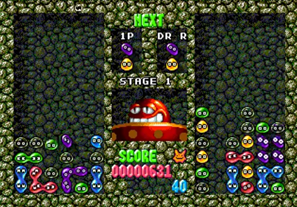
The game is similar to Tetris (1984) and Columns (1989), in that blocks, or in this case two coloured beans, fall from the top of the screen. As they slowly descend, you must decide where to place them before they reach the bottom. You can rotate them in order to place them vertically or horizontally, as well as changing which order the coloured beans are placed in.

When beans of the same colour are either on top, below or either side of another bean of the same colour, they form a link. When you link four or more beans together, they will disappear allowing earning you points and allowing beans that were above them to fall directly downward. The more beans you make disappear, the higher your score. The game ends when either you or your opponent’s dungeon is completely filled with beans.

To make this game more challenging, if you make more than one set of coloured beans disappear in a chain reaction, for example, then ‘refugee’ beans appear above your opponent’s screen. They will eventually fall and block your opponent from matching beans together. These ‘refugee’ beans can be made to disappear by matching four or more of that same-coloured beans whilst the ‘refugee’ beans are directly above, below or adjacent to the matching ones.

Ace graphics with vibrant colours (Screenshot taken by the author)

How Does It Handle?

The game is very easy to learn, and the controls are simple. A practice mode is available, but you really won’t need to bother with this unless you are a younger or more inexperienced gamer.

Graphics

The graphics won’t blow you away, but they don’t need to. They are perfect for what this game is. They are bright and colourful, and beans are easily distinguishable.

Music

The in-game music is very good. I particularly like the descending riff. I don’t know whether this riff was intentionally created to accentuate the fact that the beans are falling or whether this is a coincidence. Either way, I liked the music for this game.

Replay Value

Be warned, this game is not walk in the park! It is a tough game, and will take time and a multitude of continues to beat it. Luckily, the creators give you infinite continues and offer a password system so that you don’t need to keep going back to the beginning.

I’m not really a fan of these types of games but the more I played it, the more I enjoyed it. Its fun and really comes into its own in two-player mode.

Did I Complete The Game?

No, I couldn’t get past the 8th stage.

What The Critics Said:

Computer & Video Games: “…is as addictive and frustrating as the game it’s based on, the famous puzzler Tetris. The beans are a lot cuter and colourful than a bunch of bricks, and you also have to compete against the computer, which plays on a screen next to you; this makes the game even more difficult to complete. The graphics are bright and colourful, although not too adventurous, but it’s all good, obsessive fun. Overall 90%.[1]

GamePro: “Despite a lot of similarities to Tetris, Columns, and other classic puzzlers, this game is no has-bean. The offensive strategy makes it especially fun when playing against a friend. Games of this kind seem few and far between for the Genesis, so fans of this genre should find Mean bean Machine a match made in heaven. Overall 4.375/5.[2]

Mega: “Don’t let the seemingly innocuous exterior and simplistic appearance put you off. Mean Bean Machine is a devilishly addictive game which even haters of all stings Sonic-related will love.Overall 90%”.[3]

My Verdict:

“Bright, colourful with quirky music, this game is a lot of fun and particularly comes into its own in two-player mode. However, it is just too darn difficult in single player mode for the casual gamer. If you’re a fan of these sorts of puzzle games will love this game. If not, it is still worth a place in your collection.”

Rating:

What are your memories of Dr Robotnik’s Mean Bean Machine? I would love to hear your thoughts, and don’t for get to follow and subscribe so that you don’t miss my latest reviews! You can also find me on Instagram: @nicklovestogame.


[1] Tipping, A., Computer & Video Games. (January 1994). Issue 146:93.

[2] Andromeda, ‘Genesis ProReview – Dr. Robotnik’s Mean Bean Machine’. (January 1994). Volume 6, Number 1:58.

[3] Dyer, A., Dr. Robotnik’s Mean Bean Machine. Mega. (January 1994). :48-9.

De-Cap Attack – Review

The early 1990s were a great time for me. I was too young to be distracted by girls but old enough to be able to hang out with friends without the supervision of parents. I was also old enough to be half decent at video games. My friends and I regularly exchanged games (and cheat codes) but sadly we just didn’t have the money to buy many games. Having an older brother has its benefits. He may be mean and leave you out in the cold when his older, cooler friends are around, but he may also have access, and money, to borrow or buy more video games. One such game that my brother brought home one night was De-cap Attack.

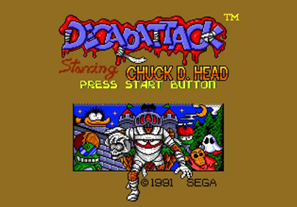
Title screen (Screenshot taken by the author)

De-cap Attack is a single-player platform game. It was developed by Vic Tokai and published by Sega for the Mega Drive in 1991. For this review, I played the version found on Sonic’s Ultimate Genesis Collection (2009).

Plot

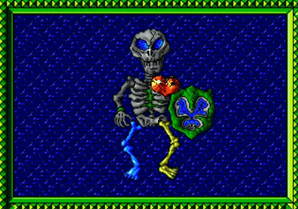
Max D. Cap has returned from the Underworld to wreak havoc with his army of evil monsters. His devastation has caused the island where you live, shaped in the form of a skeleton, to break apart. Chuck D. Head, that’s you, is the creation of Dr. Frank N. Stein and his loyal assistant Igor. They created you, a headless mummy, and sends you to defeat Mad D. Cap and his minions and return to the island to its original state.

The Skeleton Island (screenshot taken by the author)

Gameplay

Chuck can attack his enemies in three ways. He has a weird face in his chest that extends out and punches the enemy, he can jump on their heads and squash them into the ground, or he can acquire a skull that can be thrown at the enemy but will return like a boomerang. Chuck also has the added ability of slowing his descent by kicking his legs. This little feature has saved my life, and my sanity, on more than one occasion.

Along the way, Chuck can pick up several different potions to assist him. These give him abilities such as harnessing a lightning ball, speeding up his run, slowing down the enemy etc. You can also pick up gold coins to use in a post-level bonus game.

Your health unit, quite ingeniously, is measured by pumping hearts. Each heart is the equivalent of two hits. However, if you fall into lava you will die instantly.

Chuck can use his head to throw at his enemies (screenshot taken by the author)

Although this is technically a side-scrolling platform game, and mostly that’s left to right, there are several levels where you either climb or descend the screen and at least one or two where you go from right to left. Which is quite novel considering most platformers seem to go from left to right. Like most side-scrolling plaforms, there are higher parts to each level where more goodies and power-ups can be found.

Each “island” has three stages to complete. At the end of each island you will face a boss. To add an extra challenge to each island, there is a special object to collect so even if you defeat the end of island boss, you cannot progress without finding this object.

After you complete an “island” you are rewarded with a bonus stage. Each coin you gathered allows you to place a clone of Chuck on a path. You can place as many or as little as you want on each path. Everytime they reach a bridge they will cross it either to the left or right. When they reach the end of the paths, you need to stop a set scrolling bridges. If you place your clones correctly and timed your stop of the correctly Chuck will be rewarded with lives and potions. If not they fall down a hole and you win nothing.

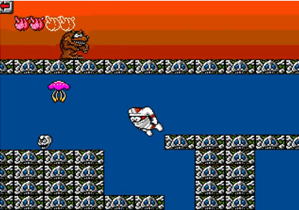
Obligatory swimming level (screenshot taken by the author)

How Does It Handle?

The controls are tight and responsive but when Chuck changes direction whilst running, he skids in a very cartoony way which takes a bit of getting used to. This is an incredibly fun game to play!

Graphics

I think the graphics are fab! The levels are incredibly detailed and sprites are well animated. There is no flickering or slowing down when there are several sprites on screen and end of level bosses look great too.

Music

The intro music to this game is pretty cool. Sadly, the in-game music is fitting but forgettable. However, the clever part of the music lies when Chuck dies. It plays a bar or two of Bach’s Toccato and Fugue in D Minor (skip to the 2.40), which is one of the creepiest pieces of classical music you’ll hear and works well in this game.

Replay Value

The difficulty of the game can be changed by altering the number of hearts you begin with. Don’t be fooled by the first few levels however, this game gets tough later on. I found this game held up incredibly well and I had as much enjoyment out of it as I did when I was younger. I will definitely be returning to it again.

Did I Complete The Game?

Yes, on the easiest setting, but I will certainly play it again in the future.

What The Critics Said:

Game Informer: “There’s enough originality to keep a gamer’s interest and the characters are really a scream (pun intended). If you like Mario and Bonk type games, You’ll love De-Cap Attack”. Overall 7.5/10.[1]

Game Informer: “The game is addictive. There’s enough to keep even the best player busy for weeks. Overall 8.5/10.[2]

Game Pro: “Decapattack breathes life into the worn out action/adventure theme. – you gotta admit, head tossing is a pretty innovative for of self-defence. It’s got all the makings of a superior game: great graphics, manageable challenge, ear-pleasing tunes, and , yahoo, endless continues. It’s well worth losing your head in Decapattack. Overall 4.6/5.[3]

Mean Machines Sega: “A fun-filled platform game which is basically identical to the old import game, Magical Flying Hat Turbo Adventure, except it has different sprites and backdrops. Platform fans will love it… Overall 82%.[4]

My Verdict:

“I love this game! Its fun yet challenging. It looks great, plays great, sounds great, and certainly is a cut above most other 16-bit platform games. It holds help well, even 30 years after its original release.”

Rating:

What are your memories of De-Cap Attack? I would love to hear your thoughts, and don’t for get to follow and subscribe so that you don’t miss my latest reviews! You can also find me on Instagram: @nicklovestogame.


[1] Rick, The Video Ranger. ‘Review – De-Cap Attack’. Game Informer. (Fall Issue 1991) :9.

[2] Andy, The Game Dandy. ‘Review – De-Cap Attack’. Game Informer. (Fall Issue 1991) :9.

[3] ‘ProRreviews – Decap attack’. Game Pro. (October 1991). Volume 3 Number 10:46.

[4] ‘Review: Mega Drive – Decapattack’. Mean Machines. (October 1992). Issue 1:138.

Comix Zone – Review

By 1995, the lives of the 16-bit consoles such as the Sega Genesis and Super Nintendo were coming to an end. However, Sega still had a few tricks up their sleeve before ceasing production of Mega Drive games.

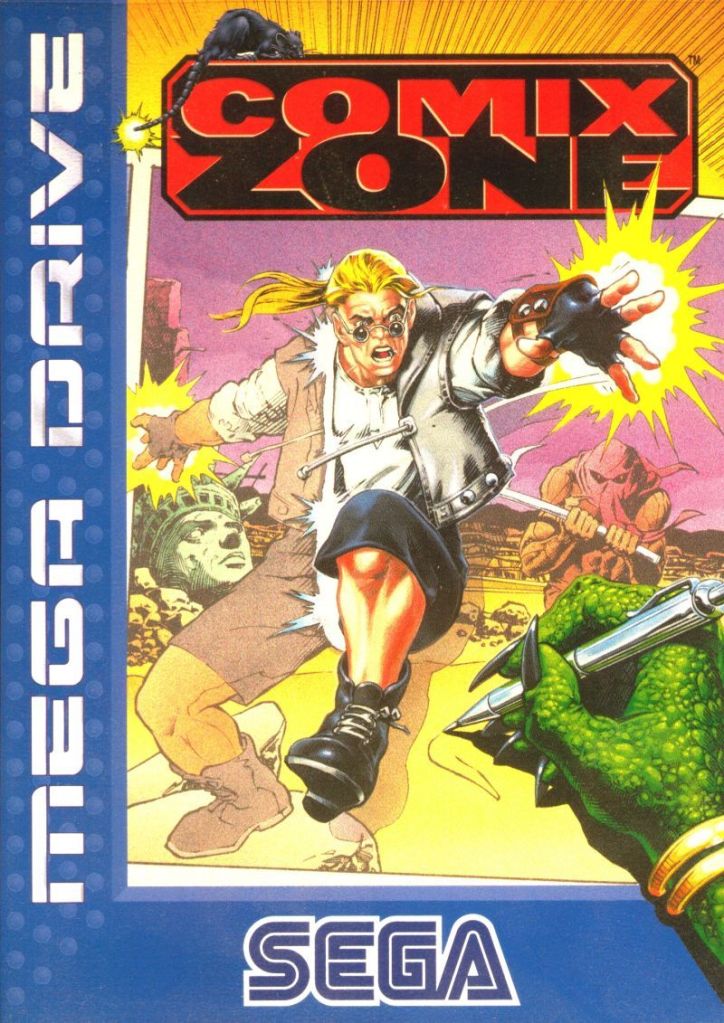
Title screen (Screenshot taken by the author)

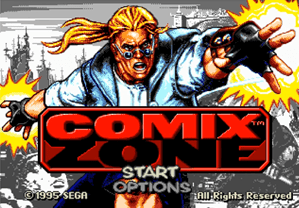
Comix Zone is a single-player beat ‘em up developed and published by Sega. It was released for the Mega Drive and PC (North America) in 1995, and for the PC (Europe) in 1996. Later releases include:

Game Boy Advance (2002)

PlayStation 2 and PlayStation Portable as part of the Sega Mega Drive Collection (2007)

Wii Virtual Console (2009)

Xbox Live Arcade (2009)

PlayStation 3 and Xbox 360 as part of Sonic’s Ultimate Genesis Collection (2009)

iOS as part of the Sega Forever collection (2017)

Android as part of the Sega Forever collection (2017)

Plot

The manual contains a black and white comic strip offering a more in-depth backstory the game:

General Alissa Cyan and Topol are fighting an army of monsters and in dire need of rescuing. Sadly, Topol is killed before they can be rescued. Later, back in HQ, Cyan is arguing with the emperor, urging him to provide her with back-up to help take down the evil Mortus and his renegade army. As the emperor explains his reluctance to agree to her request, messengers inform them that another army of mutants is attacking Tibet City and that a “Doomsday Device” has been located near New Zealand. General Cyan decides that enough is enough. They need a “special operative” to help them defeat Mortus.

Sketch Turner is a comic strip artist (and freelance rock musician) who lives in New York City with his pet rat, Roadkill. One evening, whilst working hard at his desk, he is drawn into his comic strip where General Cyan explains that if they cannot stop Mortus, his form will become real, and he will be able to conquer the Earth.

Speech bubbles appear regularly throughout the game (Screenshot taken by the author)

Gameplay

Sketch must fight his way through a number of comic scenes using hand to hand combat. Along the way, you are joined by your pet rat, Roadkill, who can help attack the baddies, assist in solving puzzles (I use this term very lightly), and can even sniff out power-ups.

Throughout the game, there is a running commentary. Either General Cyan gives you instructions, or speech bubbles appear as your character and the baddies engage in repartee.

One nice innovation is that there are occasions in the game where you need to decide which direction to go next. Once you decide, you cannot backtrack. One of the paths is more difficult than the other and can offer better power-ups.

How Does It Handle?

The array of attacks and movements you can perform is quite impressive for a Mega Drive beat ‘em up. However, even though there are multiple punches, kicks, jump attacks and even throws, there is very little finesse to the fighting. It quickly becomes a button masher.

Another gripe I have with this game is how easy it is to lose energy. Punching crates, doors etc. that you need to break for power-ups or to progress makes you lose energy, which I think is a bit dumb considering the lack of ways there are to regain your health.

Tip:

Don’t be afraid to use your power-ups because when you finish the level, you will lose them anyway.

Graphics

The levels are designed in a the style of a comic strip which I thought was ingenious when it was released. The graphics are fantastic, and the game blew me away when I first saw it all those years ago. The sprites and backgrounds are very detailed and colourful, and sprite animations look fab. I love how the baddies are drawn by and artists hand rather than just appear on the screen, adding to the authenticity that you are in a comic strip.

When engaging in fighting, “wacks” and “pows” appear again adding to the comic strip feel. Another nice touch, comes when there are times that you can kick you enemies through the comic border into the next scene. It look quite dramatic!

I use the term “puzzle” lightly, but there are occasions when you need to use your loaf (Screenshot taken by the author)

Music

The music lets this game down. I found it dull and easily forgettable.

Replay Value

The above mentioned ‘choose your path’ feature and the fact that there are two endings, adds some replay value to the game. Sadly, there is only one difficulty setting.

Did I Complete The Game?

No, I could not get past the boss at the end of Episode 2. This game is very hard!

What The Critics Said:

Electronic Gaming Monthly: “This is a very original game. Sure, it’s basically a side-scroller, but the comic look and frame concept works very well. Also, the graphics are very colorfuI, especially for the Genesis. There isn’t any exceptional fighting, but the look of the game carries it. The only drawback is the fact that you can get hit a lot, so you die a bit too often. Still, it has a fresh look to it, with a very original way of traversing to the next level. Comix Zone is a definite must-try. Overall 7.875/10.[1]

Next Generation: “A very cool idea for a game that wasn’t executed properly, Comix Zone is better than most. Overall 3/5.”[2]

My Verdict:

“A fun concept for a game that still looks very cool today. Let down by the music and the repetitive nature of the fighting, this game just falls short of what could have potentially been a legendary game. It is also incredibly difficult.”

My Rating:

What are your memories of Comix Zone? I would love to hear your thoughts, and don’t for get to follow and subscribe so that you don’t miss my latest reviews! You can also find me on Instagram: @nicklovestogame.


[1] ‘Review Crew – Comix Zone’. Electronic Gaming Monthly. (August 1995). Issue 73:35.

[2] ‘Rating Genesis – Comix Zone’. Next Generation. (August 1995). Issue 8:75.

Bonanza Brothers – Review

Revisiting retro video games can be perilous. Over the years, our gaming prowess increases (or decreases for some of us), our tastes change and many games simply don’t age well. This week, I revisited Bonanza Bros., a game that I thought was lots of fun in the early 1990s…after almost 30 years, does the game still hold up?

Title screen (Screenshot taken by the author)

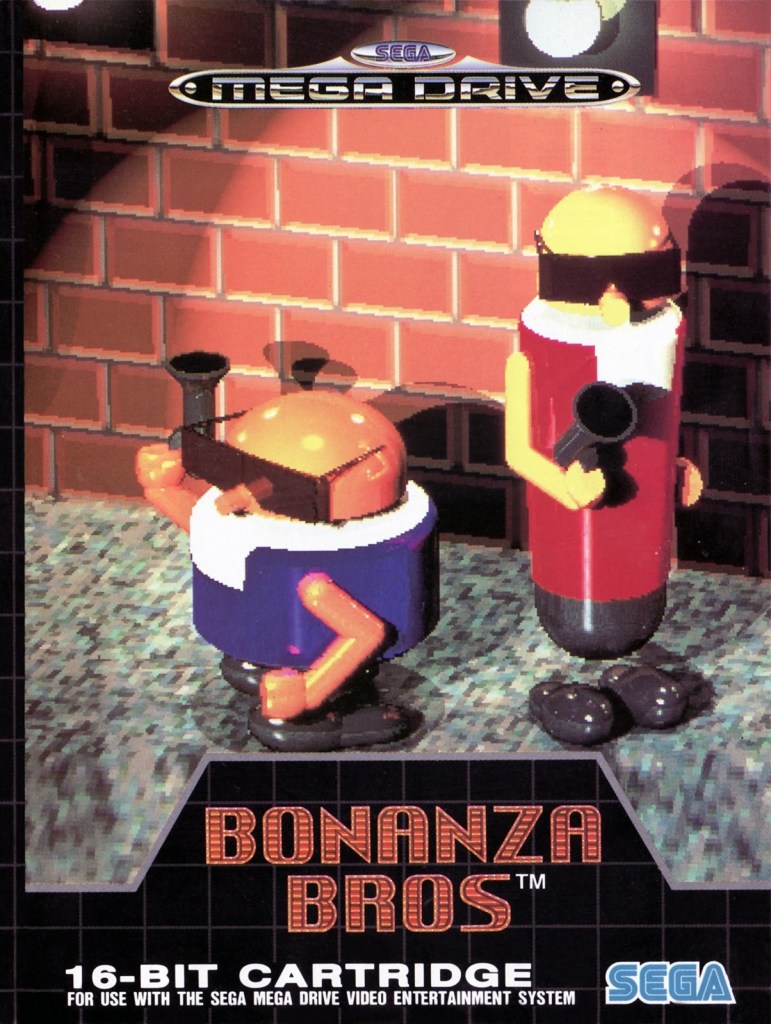
Bonanza Bros. is a 2D shooter platform game created in a 3D style. It was developed and published by Sega for the Arcade in 1990 (U.S. Gold published the game for home computer systems). In 1991, it was released on the Amstrad CPC, Atari ST, Commodore 64, Amiga, Master System, TurboGrafix-CD, Mega Drive, Sharp X68000 and ZX spectrum. For this review, I played the Mega Drive version found on Sonic’s Ultimate Genesis Collection (2009).

Plot

In the game, you are hired by the Police of Badville to test the security of buildings around the town where some very valuable objects are housed. These include a mansion, yacht, bank and a casino.

Gameplay

To steal the objects, you must use your stealth skills and your wits to evade the security stationed to protect the valuables. Once you have all the valuables, you must reach the roof so that you can be whisked away in a hot air balloon.

Bonanza Bros. can be played in both one and two-player modes. The characters consist of Robo (red) and Mobo (blue). In the European version, they are named Mike and Spike. The two-player mode is co-operative, with the screen split horizontally, allowing both players to explore each level individually.

The controls are very simple. You can walk, jump and shoot your gun…that’s it. To make the game a little more interesting, you can move back and forth by one square from the foreground to the background. This enables you to hide behind walls and objects, as well as dodging shots from the guards. When you shoot the guards, they do not die, they are simply stunned for a few seconds. The guards are alerted to your presence when you either walk into their field of vision or if you make a noise near them, such as kicking a soda can. Some guards are armed with riot shields, protecting them from your gunshots. If you are hit by a bullet or if the guards are close enough to hit you with their truncheon, then you lose a life. Running out of time also causes you to lose a life and you must restart the level.

The graphics are a bit too basic when compared to its contemporaries (Screenshot taken by the author)

How Does It Handle?

The game is very easy, even for less experienced gamers, and the gameplay is so simple that it becomes boring very quickly. Frustratingly, you cannot duck which becomes frustrating particularly in the later levels. Also, for a game that is supposed to be designed around stealth, there is little finesse to it. There are very little consequences to alerting the guards to your presence as all you need to do is stun them and run off screen and they seem to forget you were even there.

So does the game hold up? Sadly no. I also think it is a game best played in two-player mode, perfect for a parent and child or for an older sibling playing with a younger one.

Graphics

The graphics, although quite cute, are below standard, even for 1991. When compared to contemporary games such as Sonic the Hedgehog (1991) and Quackshot (1991), the graphics were found wanting. However, some nice little touches to the game come in the form of being able to splat a guard against the wall when you open a door, and a fly buzzing around and landing on you if you stay still for too long.

Music

I think the music is great! Its upbeat, funky a fun, and fits well with the game.

Replay Value

The game contains three difficulty settings and allows you to increase or decrease the number of lives you are assigned. This adds a lot of replay value to a game that is pretty short and easy to complete for any gamer with half a brain cell. There is also a time limit of three minutes for each level.

Personal Memories

I first played Bonanza Bros. back in the early 1990s when my older brother either borrowed it from a friend or rented it from the local Blockbusters. At the time, I thought it was one of the best games I’d ever played (bearing in mind I was only about nine years old), and was really looking forward to revisiting the game. Sadly, I think this is a game not worth revisiting.

Although more enjoyable in two-player mode, the game is too easy and becomes repetitve very quickly (Screenshot taken by the author)

Did I Complete The Game?

Yes, but I don’t think I will be revisiting it very often.

What The Critics Said:

Mean Machines: “Fans of the coin-op will love this – but others might find the action a little too repetitive. If in doubt, check it out. Overall 82%.[1]

Mean Machines Sega: “Like Alien Storm, this is another superb conversion which is let down by the fact that it is just too easy. The two-player action is fun, but at the end of the day what you need is a challenge, and unless you’re a games novice, this simply fails to deliver. Overall 73%.[2]

Sega Power: “The graphics are faithfully reproduced, the split- screen two-player mode is included and the gameplay, if a bit repetitive, is all there. Overall 4/5.[3]

My Verdict:

“This game is not without its charm. Its cute, and quite fun in two-player mode. However, the graphics are below standard when compared to its contemporaries, and the gameplay becomes too repetitive too quickly. Definitely one for younger gamers.”

My Rating:

What are your memories of Bonanza Bros.? I would love to hear your thoughts, and don’t for get to follow and subscribe so that you don’t miss my latest reviews! You can also find me on Instagram: @nicklovestogame.


[1] ‘Mega Drive Review – Bonanza Brothers’. (July 1991). Mean Machines. Issue 10:86-8.

[2] ‘Review: Mega Drive – Bonanza Bros’. Mean Machines. (October 1992). Issue 1:137.

[3] ‘The Hard Line – Bonanza Brothers’. Sega Power. (October 1991). Issue 23:53.
The Story of Thor: A Successor of the Light/Beyond Oasis – Review

Nintendo’s The Legend of Zelda: A Link to the Past (LTTP) really changed the way gamers think about action-adventure games. The story line, the music, the graphics, the shear size of the game set the standard for action-adventures going forward into the 1990s. As far as I can tell, the only offering Sega had in this category was A Faery Tale (1991). There may be others, but none spring to mind. As far as I can tell, it took Sega until 1994 to create a reply to LTTP. The question is, would it be any good?
Title screen (Screenshot taken by the author)

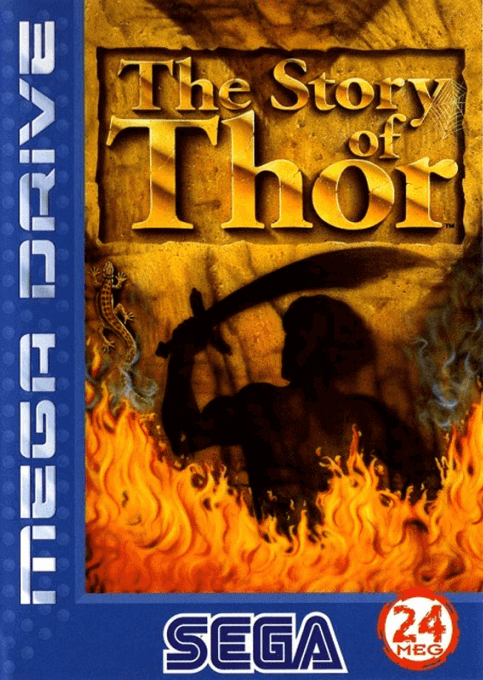
The Story of Thor: A Successor of the Light is an action-adventure game developed by Ancient Corp. and published by Sega. It was released in Japan in 1994, and Europe and North America in 1995 for the Sega Mega Drive. It would later be released on the Wii Virtual Console in 2007 and on the PlayStation 3 as part of Sonic’s Ultimate Genesis Collection (2009). Interestingly, it was released in North America under the title Beyond Oasis. For this review, I played the version found on the Sonic’s Ultimate Genesis Collection.

The intro is beautifully illustrated (Screenshot taken by the author)

Plot

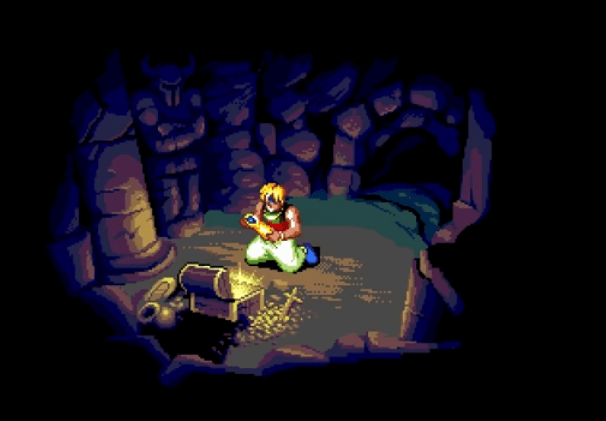
Prince Ali is a treasure hunter, living on the land of Oasis. One day, whilst exploring a cave on a nearby island, he discovers a golden armlet. When he tries on the armlet, a ghostly face appears and re-tells the story of a magical war between two sorcerers. One of the sorcerors, Reharl, wore the golden armlet and used it to control four spirits: Dytto the Water Spirit; Efreet, the Fire Spirit; Shade, the Shadow Spirit; and Bow, the Plant Spirit. The other, Agitio, wore the silver armlet and used it for evil, causing death and destruction everywhere within his reach. Ali must search Oasis and gain the power of the four spirits and prevent the silver armlet from being used to destroy the world.

Gameplay

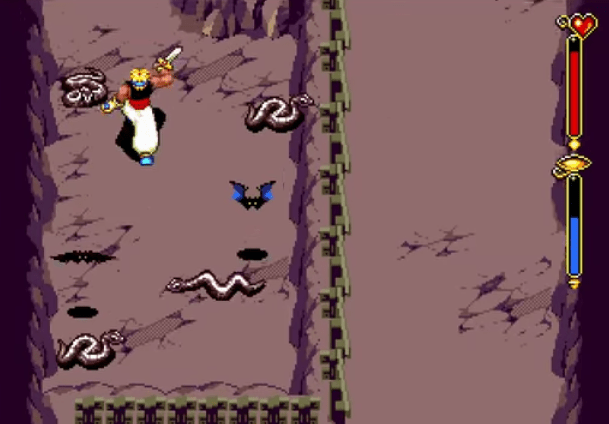
Like LTTP, as you explore the map, you will encounter numerous baddies that you can engage in battle and kill. You can attack these enemies using your dagger, swords, bow and arrow, and bombs. The dagger is the only weapon that you can use infinitely. Occasionally, these fallen foes will leave behind items that will help restore your health or magic bar. As the game progresses, you gain the ability to control the four spirits to get to previously in accessible areas and to defeat your enemies or help you regain health.

Battle your way through caves full of monsters to find the four spirits to aid you in your quest (screenshot taken by the author)

How Does It Handle?

The controls are easy to learn, and the game interface is intuitive and easy to use. The only difficulty is jumping, which takes some practice as it’s not always easy to gauge where you will land, even with a shadow to assist.

What makes the battles with foes more interesting than LTTP is that you have to crouch to hit foes such as snakes, and have to jump in order to hit bats. This adds an extra challenge to the game. The bosses are challenging but not too difficult, even for a younger gamer.

One annoying aspect of the gave is that Efreet is difficult to control. When trying to get him to ignite lanterns, for example, he must be facing them but he is often moving around and facing the wrong direction.

Graphics

The game begins with a beautifully illustrated cutscene giving the back story of the game. The in-game graphics are bright, colourful and much more detailed and interesting than in LTTP. The sprites are clearly defined and there is a good array of different foes to fight.

Music

Sadly, the music sucks and really can’t hold a candle to LTTP. In LTTP, the music is inspiring with hints of danger and intrigue. It encourages you to be brave and venture forth into the unknown. Beyond Oasis just falls flat and doesn’t inspire the same feelings.

Replay Value

As for replay value, although the game only has one difficulty setting, it is worth revisiting again, but there is nowhere near the amount of secret objects (if there are any at all) to find and the game is so much shorter than LTTP. In fact, you could easily beat it in the half the time it’d take to finish LTTP.

Efreet, the fire spirit, is one of four you need to find and gain control of (Screenshot taken by the author)

Did I Complete The Game?

Yes

What The Critics Said:

Electronic Gaming Monthly: “This one is pretty enjoyable…with the standard fare of menacing enemies and creative boss characters. The best element is probably the gigantic area you cover, and the plot twists throughout the game. Overall 38/50.”[1]

GameFan: “The game excels in almost every category. The music gets a tad repetitive, but it’s high quality… Overall 94.7%.[2]

Next Generation: “The use of magic, whether it be the fireball or meteor storm; a user-friendly interface, and an ever-ready map put Beyond Oasis beyond others of its type. But ultimately, poor fighting and an uninspired storyline leave this title looking more like a mirage. Overall 2/5.[3]

Awards:

Action RPG of the Year – GameFan’s Mega Awards 1995[4]

My Verdict:

“This game looks fantastic and incorporates some very interesting features such as the different abilities of the four spirits and the imaginative bosses. What let’s this game down is the music and game length. It’s well worth playing though!”

My Rating:

What are your memories of The Story of Thor: A Successor of the Light/Beyond Oasis? I would love to hear your thoughts, and don’t for get to follow and subscribe so that you don’t miss my latest reviews! You can also find me on Instagram: @nicklovestogame.


[1] ‘Review Crew – Beyond Oasis’. Electronic Gaming Monthly. (March 1995). Issue 68:36.

[2] ‘Viewpoint Beyond Oasis’. GameFan. (March 1005). Volume 3 Issue 3:18.

[3] ‘Rating Genesis – Beyond Oasis’. Next Generation. Issue 4:94.

[4] ‘GameFan’s Mega Awards 1995’. GameFan. (January 1996). Volume 4, Issue 1:106.

Batman: The Video Game – Review

In the sphere of TV and films, Tim Burton’s 1989 Batman film was a stark contrast to the colourful and campy 1960s TV show. The choice of Michael Keaton for the role of the Caped Crusader was controversial to say the least, but he acquitted himself admirably and, in my opinion, rivals Christian Bale as the definitive Batman.

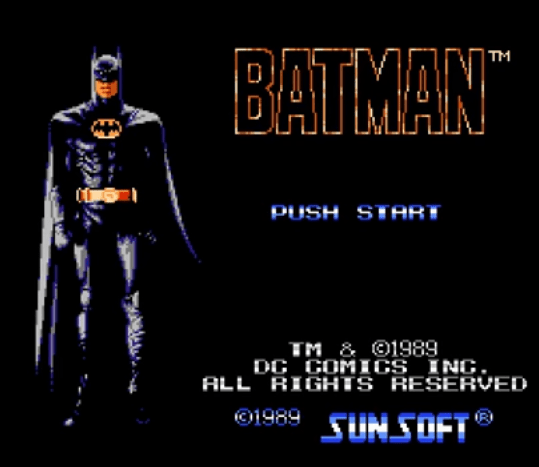
Title screen (screenshot taken by the author)

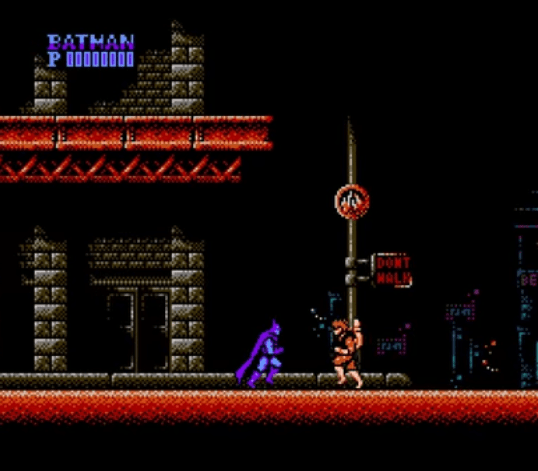
Batman: The Video Game is a side-scrolling platform game developed and published by Sunsoft. It was released on the NES in Japan in 1989, and North America and Europe, as well as for the Game Boy, in 1990 (oddly both games are actually different). I chose to review the NES version.

Fight your way through the City of Gotham (screenshot taken by the author)

Plot

The bicentenary of Gotham City is fast approaching, and the city’s officials are hard at work planning festivities for the event. However, the city is engulfed by a crime wave orchestrated and encouraged by the Joker. It is up to the Caped Crusader to stop the Joker’s evil plans and save the city.

Although based on the 1989 Tim Burton movie Batman, there are a few differences. Yes, you are pursuing the Joker and trying to save the City of Gotham, but the game contains enemies with rocket packs or that are mutants. These definitely do not appear in movie. However, these differences take nothing away from the game.

The in-between level animations look fantastic (screenshot taken by the author)

Gameplay

The game contains five levels (each level has four or five sub-levels):

Gotham City

AXIS Chemical Factory

Underground Conduit

Ruins of Laboratory

The Cathedral

Whilst battling his way through the levels, Batman utilises hand-to-hand combat as well as weapons such as a spear gun, Batarang and dirk (which is more like a shuriken) to defeat his enemies. The levels contain no time limit allowing your to take your time through the levels.

Beautifully detailed with an understated, dark colour scheme suits this game well (screenshot taken by the author)

How Does It Handle?

The controls are simple but they don’t need to be complicated. You can punch whilst standing and crouching, and select one of three weapons to use. You can jump to different heights, depending on how long you hold the ‘jump’ button for, and you can even use the walls to help you jump even higher and to avoid some nasty floor spikes.

Graphics

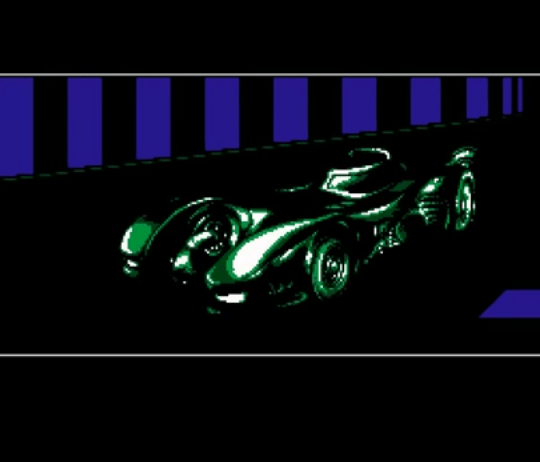
The game looks great! It begins with an awesome and intimidating looking title screen containing the figure of Batman looking menacing, and the game title in the same font used for the 1989 movie. Between each level, there is a short animated cutscene which again looks very cool.

For the in-game graphics, yes, Batman is coloured purple but that is purely so that you can see him clearly as the levels have a dark colour scheme. The levels themselves are very detailed. They help create a dark atmosphere for the game which fits well with Tim Burton’s vision. The sprites are beautifully illustrated, detailed and colourful. Throughout the game, I noticed that there was practically no flicker in the graphics at all.

Music

The music, although not from the movie, fits the game well and certainly has an arcade feel to it. It’s great for getting the adrenaline pumping.

Replay Value

Although this is an incredibly tough game, I had a lot of fun playing through it. The difficulty level is my only real gripe with this game. You are unable to change the difficulty level which is a pity as this would have given the game a bit more replay value.

Did I Complete The Game?

No, I was unable to get past level 3-1

What The Critics Said:

Mean Machines: “A classy license through and through. If you own a NES you’d be bats to miss this – so there! Overall 87%[1]

Awards:

Best Movie to Game – Electronic Gaming Monthly’s ‘Best and Worst of 1989’[2]

My Verdict:

“It looks great, sounds great, has tight controls and a challenge to test even the most hardened of gamers. The game proves that not all superhero games suck.”

Rating:

What are your memories of Batman: The Video Game? I would love to hear your thoughts, and don’t for get to follow and subscribe so that you don’t miss my latest reviews! You can also find me on Instagram: @nicklovestogame.


[1] ‘Nintendo Review – Batman’. (December 1990). Issue 3:78-9.

[2] ‘Best and Worst of 1989’. Electronic Gaming Monthly – 1990 Video Game Buyer’s guide. Issue 5:22.