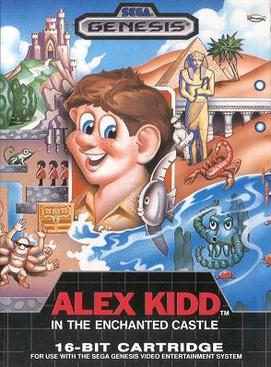
Alex Kidd proved to be a hit on the Sega Master System throughout the eighties, and was arguably the console’s mascot. The question was, could he continue to be their main draw for Sega’s latest console, the Mega Drive? Clearly not, as this was his only outing on the 16-bit console.
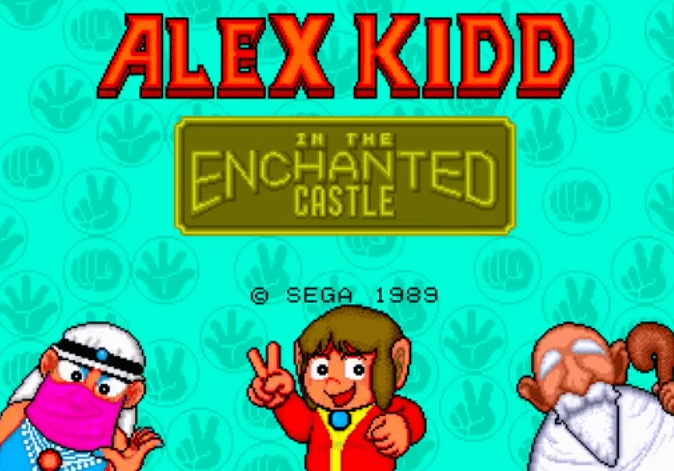
Title screen (screenshot taken by the author)
Alex Kidd and the Enchanted Castle is a single-player platform game developed and published by Sega. It was released for the Mega Drive in Japan in 1989, Europe in 1990, and the US in 1991. It was later released on the Wii Virtual Console, Mega Drive Handheld, Cloud Online, and Steam. I chose to review the original Mega Drive version.
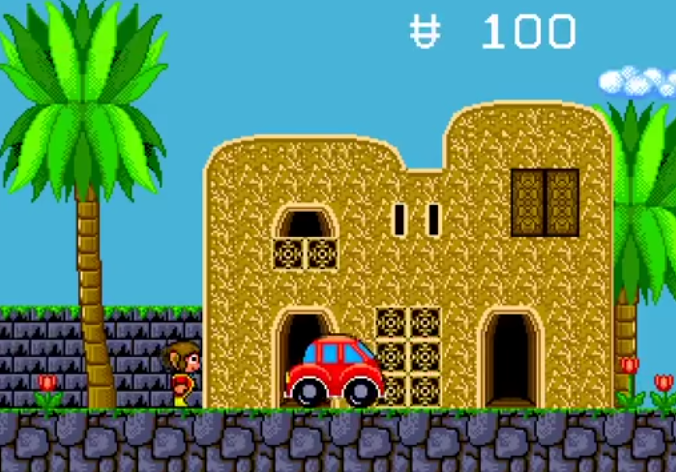
Rookie Town (screenshot taken by the author)
Plot
On the planet Aries, Alex Kidd’s father, King Thor, has been kidnapped by Ashra, the ruler of planet Paperrock. Alex travels to Paperrock in a bid to rescue his father. He must navigate through 11 stages:
1. Rookie Town
2. The Prairie
3. The Splashy Sea
4. Scorpion Desert
5. The Pyramid
6. The Hiho Forest
7. Tropics Town
8. Rocky Mountain #1
9. Rocky Mountain #2
10. In the Sky
11. Sky Castle
Gameplay
The gameplay is simple: Run, jump, punch, kick, crawl and swim. When breaking into red treasure chests, coins will spill out for Alex to collect. Grey treasure chests contain lives and power-ups. Beware, however, as some chests, some contain bombs that explode and will kill Alex.
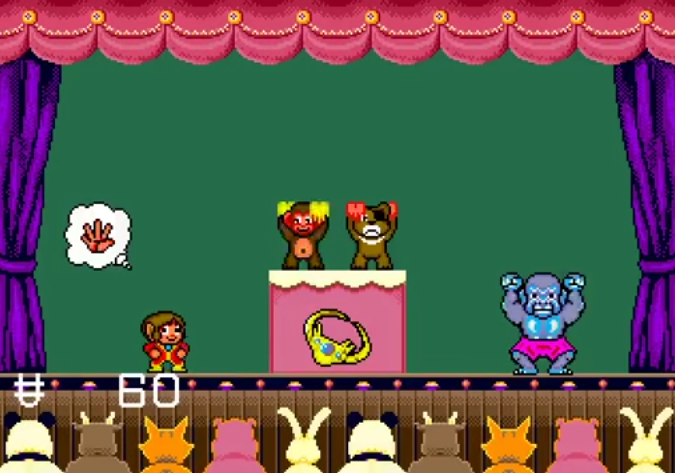
Jan-Ken-Pon (screenshot taken by the author)
Along the way, Alex can pay to compete in Janken fights (paper, scissor and rock) with shopkeepers to win equipment and power-ups. These include motorcycles, helicopters, a pogo stick, a wizard’s cane, a cape, and a necklace that helps Alex to see the thoughts of his opponent. This item gives you a better chance at winning Janken. At the end of every level, Alex must collect a piece of cake to progress.
Alex can swim and, thankfully, seems to be able to breathe underwater (screenshot taken by the author)
The power bracelet is very useful and allows alex to shoot a crescent-shaped band of light that kills the baddies.
Spoiler alert!!!
You need to have the power bracelet equipped after beating Ashra at Janken so that you can fire at him from a distance. This is the only way to defeat him.
How Does It Handle?
The physics of the game take a bit of getting used to. Alex will slide around a bit when quickly changing direction, and is a bit floaty when jumping, which takes a bit of getting used to, so be careful near enemies.
Graphics
Graphically, the Mega Drive is capable of so much more. The sprites are nicely drawn, if a little cutsie, suggesting this game was meant for a younger audience. Sadly, the levels and backgrounds are rather basic.
Music
The music, however, is very catchy and will get stuck in your head. When revisiting this game after 20 odd years, I still remembered the tunes instantly and began to hum along.
Replay Value
There are three difficulty settings: easy, medium and hard. With increased difficulty, you are given less lives to start with and the Janken opponents are harder to defeat, adding to the game’s replay value.
Did I Complete The Game?
Yes, but I have only played through on easy mode.
What The Critics Said:
Mean Machines Sega:“The graphics and sound are almost Master System Standard, and while it’s fun to play, with plenty of secret rooms and things to work out, it lacks that really addictive spark that makes the 8-bit Sega Alex Kidd games so much fun to play. For ardent Alex Kidd fans only. Overall 68%”[1]
Sega Pro: “Alex’s only appearance on the Mega Drive is not a bad attempt…although it can get repetitive. Overall 77%”.[2]
The Games Machine:“It goes without saying that Alex Kidd highly playable and incredibly addictive. Overall 82%”.[3]
Sega Power:“Alex goes 16-bit in this colourful platform exploration romp. As with previous Alex Kidd games, the jolly atmosphere belies the testing gameplay. Fun and very polished. Overall 3/5”.[4]
My Verdict:
“Definitely one for the younger gamer. It can be completed very easily without too much hassle, but there is little to keep you coming back for more. Catchy music, nice sprites and bright colours, but the level design and backgrounds are a bit basic and could be more visually pleasing. However, I do have a softspot for this game and feel it’s been harshly judged by critics. I certainly keep it in my collection and revisit it every year or so. It’s also handy to keep around for my niblings.”
Rating:
What are your memories of Alex Kidd in the Enchanted Castle? I would love to hear your thoughts, and don’t for get to follow and subscribe so that you don’t miss my latest reviews! You can also find me on Instagram: @nicklovestogame.
[1] ‘Game Index: Mega Drive – Alex Kidd and the Enchanted Castle’. Mean Machines Sega. (October 1992). Issue 1:137.
[2] ‘Sega Showdown – Alex Kidd and the Enchanted Castle.’ Sega Pro. (November 1991). Issue 1:18.
[3] ‘Alex Kidd and the Enchanted Castle’. The Games Machine. (June 1989). Issue 19:18-9.
[4] Jarrett, S., ‘The Hard Line – Alex Kidd and the Enchanted Castle’. Sega Power. (April 1991). Issue 23:52.
After six years and four games, Phantasy Star IV sees the conclusion of the original Phantasy Star series. In the Phantasy Star universe, the games have spanned several thousand years and players were introduced to many different characters including Alis, one of the first female protagonists in computer game history. I have thoroughly enjoyed playing through the series but as George Harrison wrote, “All things must pass”.
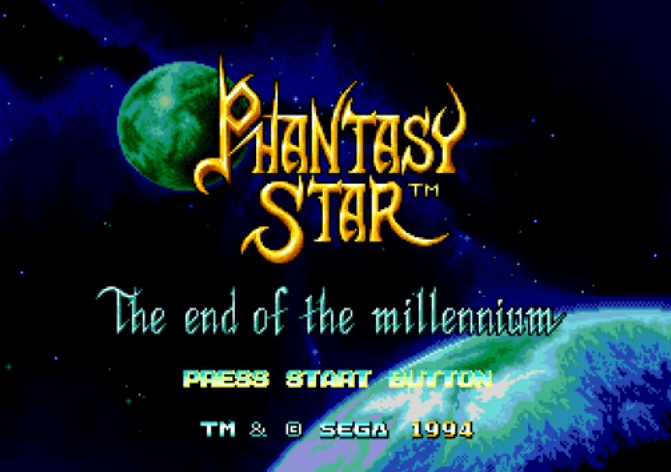
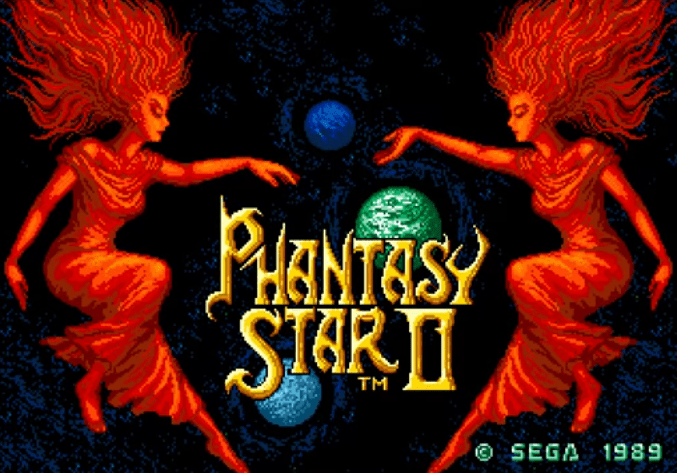
Title screen (screenshot taken by the author)
PSIV is a role-playing game that was developed and published by Sega and released for the Sega Genesis in Japan in 1993. It would not make an appearance in North America and Europe until 1995. It was later released on the Wii U Virtual Console in 2008. For this review, I played the version found on the Sonic’s Ultimate Genesis Collection (2009) for the PlayStation 3.
Plot
Taking place 1000 years after the events of Phantasy Star II (1989), a cataclysmic event known as the Great Collapse has turned Motavia back into a desert planet, and once again there is an increase in biomonsters appearing throughout the world. Chaz Ashley, a young hunter, learns of the link between the biomonsters and the ecological crisis on the planet. The computer system put in place to control the climate is malfunctioning, and the planet is reverting back to its original desert-like state. It also seems that Dark Force is back, hellbent on destroying the Algol system once and for all.
Gameplay
The gameplay has been kept the same as previous instalments – that is, top down view with the exception of battle mode. As you walk around you will have random battle encounters that allow you to earn money and gain experience points. The more points you earn, the higher each player’s stats will become. The view changes to a third person view fir the battles.
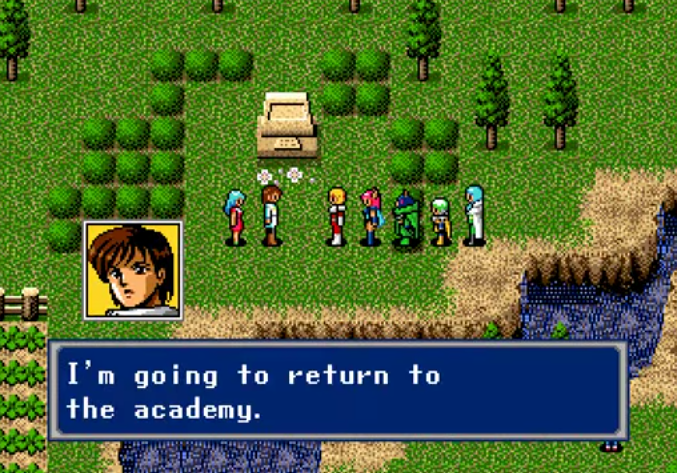
Sadly, the overworld graphics seem to have reverted back to the PSII model making it look a little dated (screenshot taken by the author)
How Does It Handle?
Firstly, the story is more fleshed out than it’s previous instalments, and a lot more engaging. The dialogue in general feels like there was a better translation of the original script. Additionally, during dialogue moments, character profile boxes appear which are beautifully illustrated. It also clarifies exactly who is speaking. During cutscenes, more illustrated boxes are added giving the illusion that you’re reading a comic book. There are also a few nice surprises in the form of characters from previous games reappearing, but I won’t spoil it by telling you who.
There is a significant increase in walking speed for the characters, meaning you can get from A to B a lot quicker. You are also able to increase the speed of the battles and text to help hurry the game along. One annoyance was that when you approach a person and/or object, whilst still pressing that direction, you walk around the target as oppose to stopping in front of it. When you play it, you’ll know what I mean.
The menu system is easy to access and straight forward to navigate. What made me particularly happy is that you no longer need to manually go into your menu and pass items between characters in order for them to equip or use them. The weapons and armour will automatically be available to those who can wield them.
Originally the game came with a very comprehensive 40-page manual explaining every aspect of the game including: Information on each character, what the main items are for, what all the spells and techniques do when used, what injuries you can incur, a map of Motavia, and information on weapons and armour.
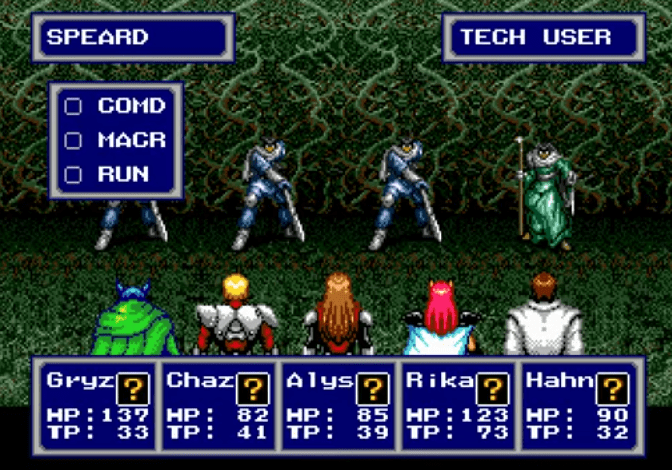
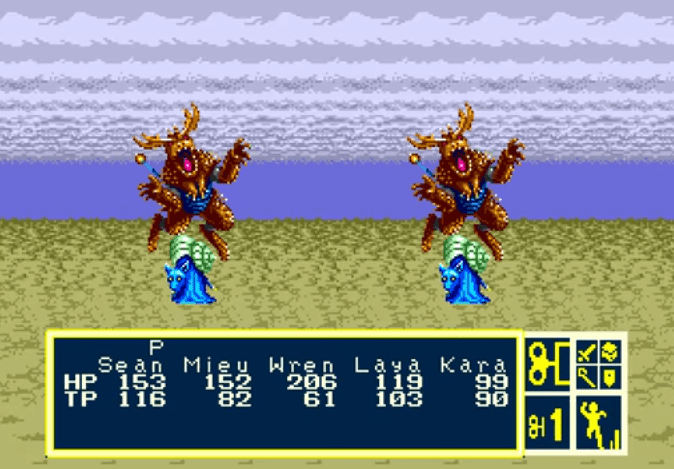
The graphics in battle mode have also reverted back to a similar style to PSII (1989), with the addition of illustared backgrounds (screenshot taken by the author)
Graphics
Oddly, the sprites in the overworld seem to have reverted to PSII (1989) style graphics as oppose to PSIII (1990) or creating newer, more improved graphics. Comparing the two, one could be forgiven for thinking PSIII (1990) was a later instalment. Sadly, these graphics look dated for the mid-90s, especially when compared to RPGs such as Al-Qadim: The Genie’s Curse (1994) and Shining Force 2 (1993). Also, the PlayStation had been released in 1994, upping the expected standard for games in general. When the PlayStation could produce RPGs like Suikoden (1995), what chance did the Mega Drive have?
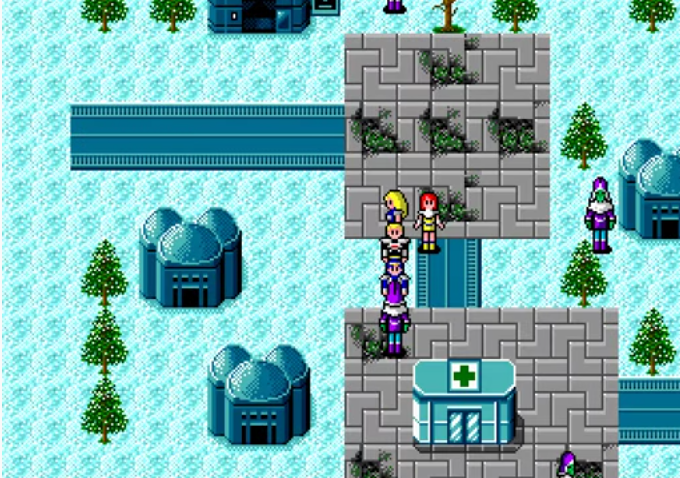
On Dezo – added snowy effects give the impression that you are in a blizzard. However, this effect is heavy on the eyes. (screenshot taken by the author)
Buying and equipping weapons and armour has been simplified, and for the better. When you buy a new weapon or piece of armour, arrows appear by the name of the individual who can wield it. Sadly, you cannot see if an item will improve the stats of that character until you buy it and equip it.
PSIV reintroduces fighting animations back into battle mode, similar to that of PSII. However, this time the backgrounds have also been kept. The animations of the physical attacks of the characters are the same as they were in PSII which is a little disappointing. The backgrounds during the battles are more detailed and, in some cases, animated. Additionally in PSIV, you can now use your transport vehicle during battles instead of using your characters.
A nice new feature is that two or more characters can combine their spells and techniques to create bigger and more powerful attacks. Sadly, this is very trial and error and it doesn’t always work (screenshot taken by the author)
The enemies are beautifully illustrated and animated. There are some real ugly bastards in this game. A nice little extra is that sometimes, when two or more fighters use a certain technique or spell, it can combine to produce a stronger attack. Sadly, this doesn’t happen everytime you attempt it.
One added bonus is that you no longer need to pay to restore a fallen comrade. You simply go to a hostel, and bed down for the night. In the morning, said comrade will be right as rain.
Finally, and thank Christ, the battle menu is now wonderfully intuitive. It is very easy to learn, and they have finally simplified the way you can chose which enemy to attack. This makes strategic attacks a hell of a lot easier.
Did I complete the game?
Yes, a walkthrough was needed on several occasions though.
What the critics said:
Electronic Gaming Monthly: “This is the fourth instalment in the Phantasy Star series with an improved magic system that allows you to combine spells for more power. Overall 7.75/10”[1]
GameFan: “The graphics are gorgeous, the music is some of the best I’ve heard in a while on the Genesis., full of batchin’ samples, and the game exudes nothing but pure, joyous power. Overall 93/100”.[2]
Mean Machines Sega: “The best pure RPG for the Megadrive…” Overall 88%”.[3]
Sega Saturn Magazine:“The gameplay – controlling inventories, arming combatants, and using spells – is not to everyone’s taste. But the game succeeds by creating climactic moments, introducing new characters and powers, and taking many weird and wonderful plot turns. Overall 90%”.[4]
Game Players:“Newer RPGs like Final Fantasy III make this game look ancient…this still feels like every other Phantasy Star Game…The game offers plenty of items while staying clear and user-friendly. Fighting every other step drives you crazy. Overall 70%”.[5]
My verdict:
“Although the graphics are beginning to look a bit dated, they are still pleasing to look at for the most part. The story is compelling with some nice surprises, and they have simplified the menu systems making them easier to navigate. Personally I feel this is the best Phantasy Star in the series.”
Rating:
What are your memories of Phantasy Star IV? I would love to hear your thoughts, and don’t for get to follow and subscribe so that you don’t miss my latest reviews! You can also find me on Instagram: @nicklovestogame.
Ah, role-playing games. The opportunity for real adventure. Battle ugly-ass monsters, fill your pockets with treasure, and wield magic weapons. Cast spells of fire, lightning, as well as healing. Journey through mystical and fantastical lands, through deadly dungeons, dark forests, and creepy castles. Build your fighter’s stats until they are strong enough to defeat the demonic rulers of the evil armies.
Title screen (screenshot taken by the author)
Phantasy Star III: Generations of Doom is an RPG developed and published by Sega and is the sequel to Phantasy Star II. It was released in Japan in 1990 for the Sega Mega Drive and reached Europe and North America in 1991. For this review, I played the version found on Sonic’s Ultimate Genesis Collection (2009) on the PlayStation 3.
Plot
1000 years before the start of the game, which seems to be set in a medieval setting as oppose to a science-fiction setting, two factions are engulfed in a bitter feud. Orakio, a swordsman, and Lava, a sorceress, meet for an armistice and both mysteriously disappear. Both factions blame each other for their leader’s disappearance, and all communication and travel between the two worlds cease. War seems inevitable…
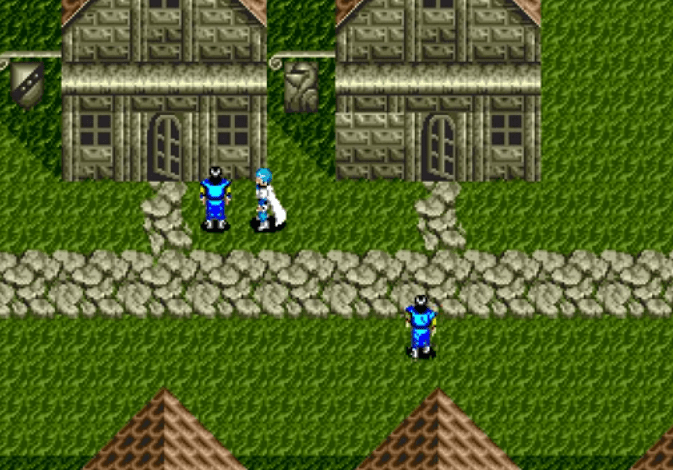
The colours are less headache-inducing, and the graphics are more detailed than previous instalments (screenshot taken by the author)
Firstly, you get a nice intro with some beautiful illustrations, and text explaining the back story. The game then begins with Rhys, Prince and heir to the Orakian kingdom of Landen. He is due to marry Maia, whom Rhys found washed up on a beach two months earlier (a bit odd, but ok). The ceremony is interrupted by a dragon, identified as a Layan, who abducts Maia in what is seemingly a deliberate act of war. During his search for Maia, Rhys recruits a number of fighters to assist him.
Strangely, PSIII doesn’t resolve what happened at the end of PSII (1989). What happened to your fighters? What happened to Rolf, Rudo and company? Were they defeated? Did they survive? Me may never find out!
Gameplay
Continuing in the tradition of most RPGs, PSIII involves the player exploring a 2D world, recruiting characters, random enemy encounters, and a turn-based battle system. You can attack the enemy in three ways: with a weapon, using magic spells, and/or using special techniques. I know in PSIV (1993) you can use dynamite to attack the enemies, but I don’t recall seeing that option in this game…I may be wrong of course. Once enemies are defeated you gain Meseta (money) and experience points. Experience points are necessary to increase your fighter level which in turn, increases their stats.
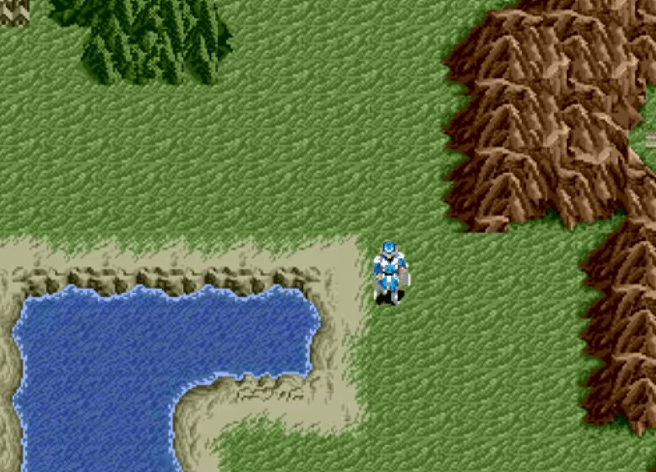
The overworld is more detailed and realistic than previous instalments (screenshot taken by the author)
The overworld gameplay hasn’t changed. It is still a near top down view and you must wander from town to town whilst buying new weapons and armour, gleaning information from local villagers, and fighting a multitude of different creatures.
The blue grid system has been done away with in favour of scene-setting backgrounds (screenshot taken by the author)
How Does It Handle?
The battle menu is still more complicated than it needs to be. In PSIV (1993), they rectify this to create an intuitive, and simple battle menu.
Graphics
The overworld graphics are less vibrant, but more detailed, and realistic in my opinion. It certainly gives me less of a headache looking at it anyway.
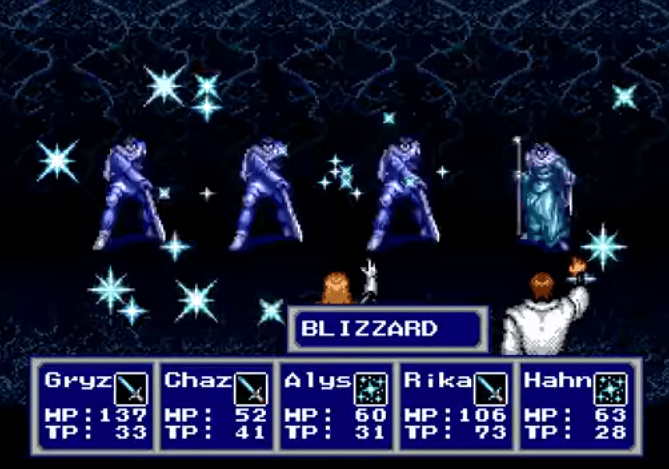
When battling enemies, for some reason they have done away with seeing your fighters attack the enemies which is disappointing because it looked great in PSII (1989). The enemies are more detailed, and some, in the later levels, just look really peculiar and I have no idea what they are supposed to be. Thankfully, they have brought back the backgrounds, and done away with the blue grid. Controversially, I prefer the backgrounds from PSI (1987) as I think they are more interesting to look at.
Why is Guile from Street Fighter II appearing as if he belongs in an 80s new romantic band? (screenshot taken by the author)
Replay Value
What is unique about PSIII, compared to other games in the franchise, is that the story spans three generations. At the end of each generation, you have the option to choose who you wish to marry. This determines who you will take control of in the next generation storyline. As I understand it, the only difference it makes is that it will affect the offspring’s ability to use their techniques. There are potentially 10 different generational choices, which affect the game’s ending. Although this adds to the replay value, I don’t imagine many people would wish to play through such a gargantuan game a second or third time…but then again, I may be wrong.
Did I Complete The Game?
Yes, but with the help of a walkthrough at times.
What The Critics Said:
Mean Machines:“Another enormous role-playing game, but this one has far more depth and variety than its predecessor. It’s by far the best RPG on the Megadrive…Overall 89%”.[1]
Electronic Gaming Monthly: Martin – “One of the best RPGs ever! Phantasy Star 3 blows away the previous games, although it isn’t necessarily more challenging overall. The game throws in a lot of new features like different generations who each will encounter their own quests to overcome. Awesome RPG! Overall 8/10”.[2]
Dragon:“Though we didn’t like it as much as Phantasy Star II, Phantasy Star III is creative in many ways. First, you have the ability to marry a person and then become the offspring of that union to continue the quest. The various endings in the game are a definite plus as well. The graphics are excellent, except for combat (Phantasy Star II is better here)…Overall, this game will definitely keep you fixed to the television for weeks. Overall 4/5”.[3]
Games-X: “The game is graphically excellent but above all, the control system is easy to use. A highly enjoyable cartridge that will appeal to most RPG fans. Overall 4/5”.[4]
My Verdict:
“Another great game for the Phantasy Star universe. Improved graphics, a great story with a new generational storyline, and alternate storylines. They still need to decide what they are doing with the battle scene animations and battle menus.”
Rating:
What are your memories of Phantasy Star III? I would love to hear your thoughts, and don’t for get to follow and subscribe so that you don’t miss my latest reviews! You can also find me on Instagram: @nicklovestogame.
[1] ‘Review: Mega Drive – Phantasy Star III’. Mean Machines. (October 1992). Issue 1:140.
Before the 1990s, RPGs were a niche genre in the video game world. They take a lot of time and effort to play, and not everyone has the patience or desire to attempt such gargantuan games. However, those that do play RPGs cherish every moment of their journeys through fantastical universes. They take great care in building up their warriors and magic users in order to defeat hordes of enemies. Phantasy Star was one such RPG which was highly praised by critics, even though it did push the Sega Master System to its limits.[1] The successor to the Master System, the Mega Drive, offered the creators of Phantasy Star II more to work with.
Title screen (screenshot taken by the author)
Phantasy Star II is a single-player RPG developed and published by Sega. It was released for the Mega Drive in 1989, but it wouldn’t reach North America and Europe until 1990. It was later re-released on the Sega Saturn and Game Boy Advance as part of the Phantasy Star Collection, and the Dreamcast as part of the Smash Pack Volume 1. In 2005, an updated remake was released in Japan for the PlayStation 2 and PlayStation Portable. For this review, I played was the Mega Drive version on Sonic’s Ultimate Genesis Collection (2009) on the PlayStation 3 (also available on the Xbox).
Walking around the overworld (screenshot taken by the author)
Plot
The game is set 1000 years after the events of Phantasy Star and takes us back to the Andromeda galaxy and the Algo star system. Orbiting the Algo sun are three planets: Palma – where the government reside; Mota – once an arid desert planet that has since been transformed into a tropical paradise; and Dezo – an inhospitable ice planet.
The Algo star system has prospered under the control of Mother Brain, a computer that regulates the climate, and is responsible for terraforming Mota. However, Mother Brain has started malfunctioning, producing increasingly strong monsters. One night, Rolf (our main protagonist) awakes from a nightmare, where a young girl whom he doesn’t recognise is battling a demon. It is suggested that this girl is Alis from Phantasy Star. After being informed of Mother Brain’s malfunction, Rolf, along with Nei, a humanoid with cat-like features, sets off to investigate why Mother Brain has seemingly turned against its creators.
Gameplay
Phantasy Star II is first video game to use a mega 6-bit cartridge. This enabled the designers to create the largest world yet seen in a video game.[2] They have dispensed with the dungeon crawling parts of the game (much to the chagrin of many who love dungeon crawlers), and have focussed on the overworld views when trawling through the dungeons.
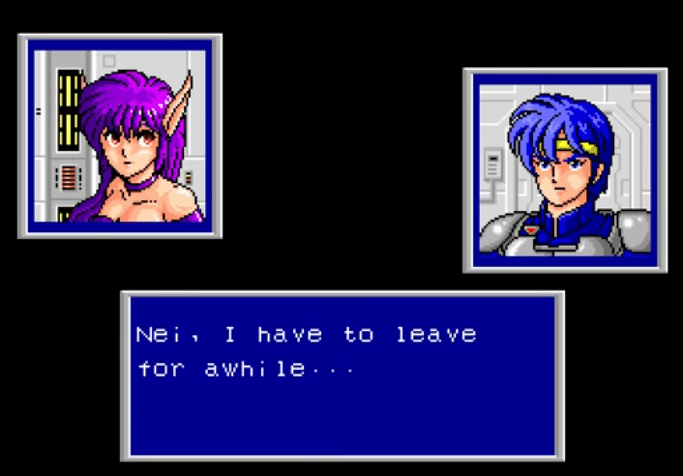
The screens for dialogue have been greatly improved (screenshot taken by the author)
How Does It Handle?
They have still yet to fix the fighting menu. Annoyingly, you still need to scroll through the menus to target individual monsters which is tiresome.
There are two further irritating aspects to this game which I would have hoped they’d have resolved by now. The first is that many of the names of the plethora of spells you are able to use do not indicate what type of spell it is. The manual doesn’t have any information on this either, so you need to experiment during battles to find out what the oddly named spells do.
“That’s part of the fun!”, I hear some of you cry. Not really. One would assume that a magic user would know what the spell was they were using. Hopefully this will be resolved in Phantasy Star III.
The second irritating aspect is that you do not have a combined inventory, so you need to constantly scroll through the menus in order to exchange items between your fighters. Its exasperating!
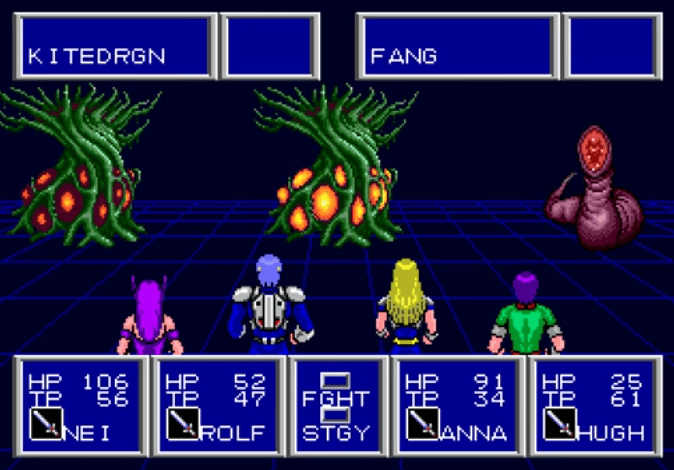
Where did the beautiful backgrounds go? (screenshot taken by the author)
Graphics
As expected, the overall graphics have been improved, creating three very distinct worlds. The sprites in the overworld maps are more individualised and are brightly coloured. The dialogue screens have also been greatly updated to anime-style character screens.
The battles screens are greatly improved. Firstly, you can now see your characters attacking animations, and the enemies are more varied and detailed. Sadly, they decided to take away the scenic backgrounds and replace them with a blue grid. I’m not sure what the thinking was behind that decision.
Overworld view on Dezo world (screenshot taken by the author)
Music & SFX
I don’t really recall much about either. They clearly aren’t very memorable.
Did I Complete The Game?
Yes, it felt like a slog at times, and needed a walkthrough on occasion.
Dragon: “The animation, especially for battles, is superb. There are over 50 spells available. Even weapons and armor can give benefits to characters beyond their normal effects. For example, special armor found in one dungeon allows the wearer to cast a healing spell every so often. The battle system enables more than one type of creature to attack and allows the characters to attack specific creatures instead of idiotically going after one creature at a time. This game is definitely a winner. Overall 5/5”.[3]
Electronic Gaming Monthly: Martin – “RPG’s aren’t my thing., but this one has a monstrous quest anyone can get involved with and lost in…I wish the battle scenes were on landscapes instead of boring blue grid, but all in all PS2 is presented well. Overall 8/10”.[4]
Raze: “Large combat sprites, wonderful scenes and backdrops. Great in-game effects and unobtrusive background music. A challenging quest packed with gameplay. Overall 90%”.[5]
Video Games and Computer Entertainment: “It’s very user friendly, with a simple but extensive menu system, and a battery back-up that allows you to save numerous games in progress. The plot advances quickly, providing a constant stream of new subplots…Phantasy Star II is a complex and eminently enjoyable game that will give you more variety and challenge for your buck than any other video game. Overall 9/10”.[6]
Zero: “Phantasy Star II is definitely not just any old thing. In fact, it’s just about everything you could want from this kind of game – big (very big), involved, exciting and challenging. Overall 89%”.[7]
Sega Power:“Long-awaited sequel to the MS RPG. With a massive quest set over different worlds and four characters to control, you should be thankful for your battery back-up! Overall 5/5”.[8]
My Verdict:
“Graphically, a great improvement on the first, with an engaging story and plenty of action to keep you quiet for many hours. They just need to sort out that poxy battle menu! RPG fans will love this game!”
Rating:
What are your memories of Phantasy Star II? I would love to hear your thoughts, and don’t for get to follow and subscribe so that you don’t miss my latest reviews! You can also find me on Instagram: @nicklovestogame.
You stand in the tunnel and hear the chants from the stands echo all around you. Your supporters expect glory. Can you immortalise yourself and your team by winning silverware and reigning supreme? Tie up the laces of your football boots and adjust your shin pads. It’s not just Kick Off, it’s Super Kick Off!
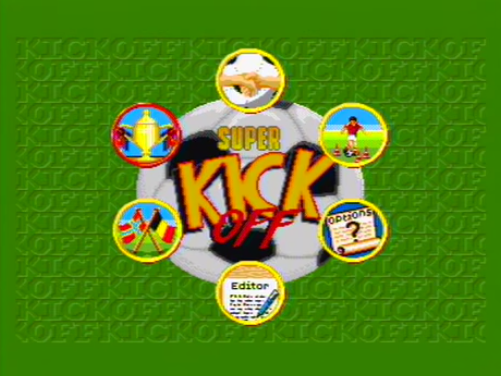
Title screen (screenshot taken by the author)
Super Kick Off is the sequel to Kick Off 2. It was developed by Anco Software, Tiertex Design Studios and Enigma Variations, and published by US Gold, Imagineer, and Misawa Entertainment in 1991. It was released on the Mega Drive, Master System, Game Gear, and SNES. I chose to review the Mega Drive version.
Gameplay
The main menu has six options. In the picture below starting at the top and moving clockwise you have: Friendly, Practice, Game Settings, Editor, International Friendly, or Cup Competitions. There are four competitions to compete for: The League, The Cup, European Cup, and the International Cup. To win these trophies, you simply need to win all you matches.
The gameplay consists of pass, shoot, trap the ball, and tackle. An overlay on the pitch with coloured dots allows you to see where your players are who aren’t on screen.
In-game menu (screenshot taken by the author)
How Does It Handle?
The in-game menu icons are not labelled but are fairly self-explanatory. One league and three cup competitions, plus a two-player mode. It is also possible to increase the overall speed of the game and adjust the difficulty setting of the opponent, to add more of a challenge.
The teams are a random array of Europe’s better teams from the early 90s. The names of the players are not real but are close enough to distinguish who they really are (Griggs = Giggs etc.). Oddly, some players begin out of position. For example, when playing with Man Utd, Spruce (Steve Bruce), starts upfront instead of in defense, so a little tinkering is needed to amend such insanity.
Controlling the ball takes a bit of getting used to. You have to either manoeuvre the player around the moving ball or press the ‘trap’ button before changing direction. The ‘trap’ button also acts as the pass button and so many times the ball gets kicked wildly out of play. Tackling is pretty much non-existant other than running into the opposition to steal the ball, and the offside rule tends to happen at odd times during the match. Once you can beat the computer regularly on the hardest setting (14-0 if you must know), you know it’s time to stop playing the game.
Although an improvement on most previous football games, I am still at a loss as to how computer designers were consistently unable to produce a realistic football game in the 80s and early 90s. You only need three buttons: For attacking – 1) short pass, 2) long pass, and 3) shoot. For defense – 1) standing tackle, 2) sliding tackle, and 3) control nearest player to the ball. It’s that simple!
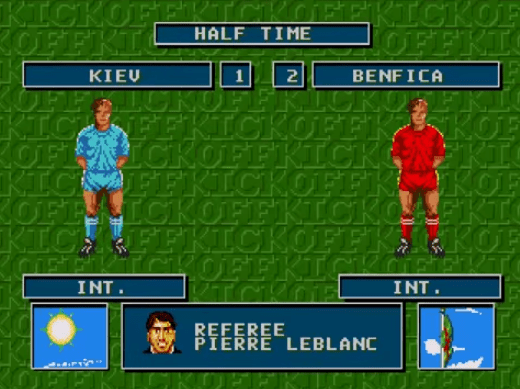
Half-time (screenshot taken by the author)
Graphics
The game is played with a top down view, similar to that of World Cup Italia ’90, but the overall graphics are more detailed, especially where the sprites are concerned. The game has added footballers with different skin tones, making the game more realistic. The pitches are also prettier and the crowd is brightly coloured.
Music& SFX
The music is forgettable and not as catchy as World Cup Italia ’90 which had a very cool Latino feel to it. There are a few SFX but the gasps from the crowd every time the ball is either saved by the goalkeeper or goes out of play is rather annoying.
Replay Value
Most sport games have plenty of replay value as there is always another team to play as and there is always a two-player mode.
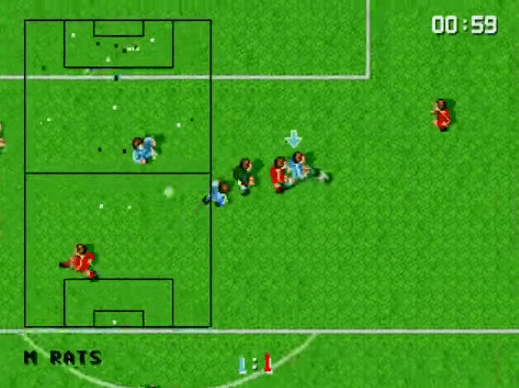
In-game action (screenshot taken by the author)
Did I Complete The Game?
Yes, I won all leagues and trophies in this game.
What The Critics Said:
Mean Machines Sega:“The best football game going, and one which every Mega Drive owner, regardless of their interest in sport, should leap out and purchase. Overall 95%”.[1]
Sega Power:“You wanted a decent football game and you’ve got one! You’ll need patience to get used to controlling the players, but it’s more than worth the effort. Overall 5/5“.[2]
My Verdict:
“An improvement on most previous football games, and certainly worth playing. However, there is still a long way to go where football games are concerned. I still prefer World Cup Italia 90 to this.”
Rating:
What are your memories of Super Kick Off? I would love to hear your thoughts, and don’t for get to follow and subscribe so that you don’t miss my latest reviews! You can also find me on Instagram: @nicklovestogame.
[1] ‘Review: Mega Drive – Super Kick Off’. Mean MachinesSega. (February 1993). 5:18-21.
[2] ‘The Hard Line: Mega Drive – Super Kick Off’. Sega Power. (September 1993). 46:98.
The lightning quick blue ball of spikes has returned, and this time he has speedy side-kick. Yes, Sonic is back with a faster, bigger, and more challenging game for those with quick reflexes.
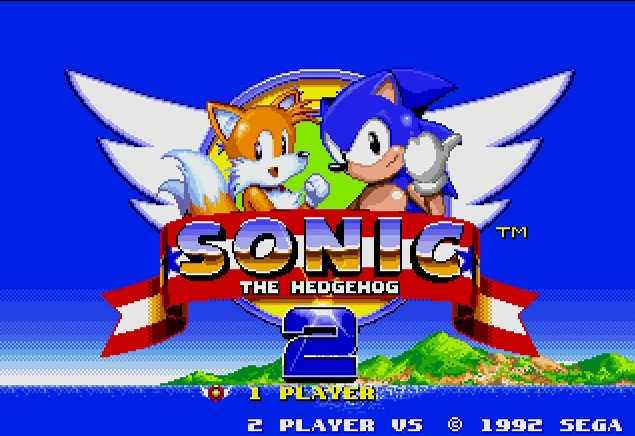
Title screen (Screenshot taken by the author)
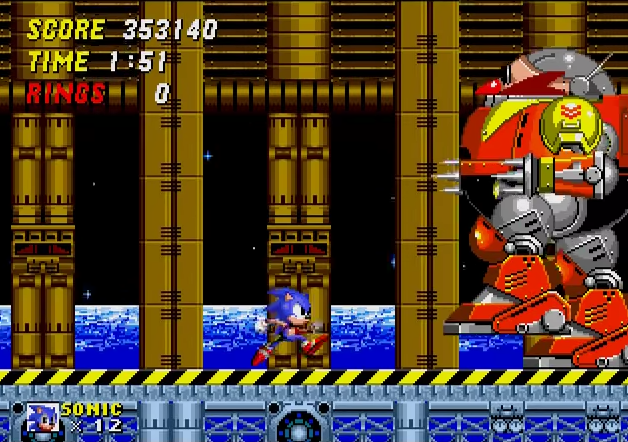
Sonic the Hedgehog 2 is a platform game developed and published by Sega for the Megadrive in 1992. It is the sequel to Sonic the Hedgehog with 8-bit versions being released on the Master System and Game Gear. In recent years, versions were released for multiple mobile platforms as well as part of a number of Sega collection packages for the PlayStation and Xbox systems. I chose to review the Mega Drive version of Sonic 2.
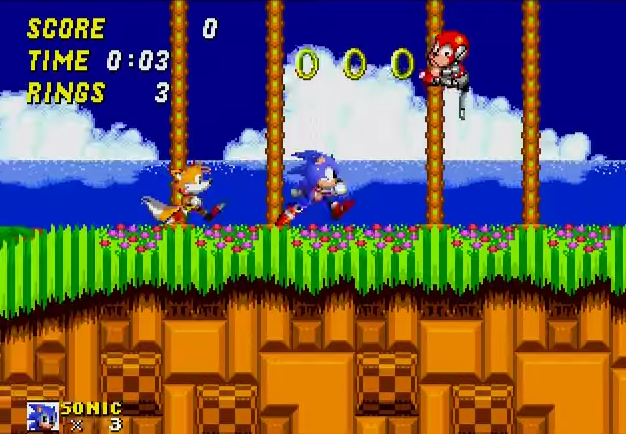
Sonic is accompanied by Tails (Screenshot taken by the author)
Plot
Sonic is back, and this time he has assistance from his trusty sidekick Miles “Tails” Prower, a two-tailed fox. Dr. Robotnik is also back, and again plans to steal the Chaos Emeralds to power his space station known as the Death Egg. Sonic must make his way through an array of different levels evading the robotic minions of Dr. Robotnik. Like the first instalment, Sonic has the option to destroy the minions to release the animals that Dr. Robotnik has trapped inside them.
Gameplay
At the start you can choose to play as Sonic, Tails, or as Sonic with Tails (a second player can control Tails but the camera will always follow Sonic). There is no real difference between Sonic and Tails.
The zones you will travel through are:
Emerald Hill Zone
Chemical Plant Zone
Aquatic Ruin Zone
Casino Night Zone
Hill Top Zone
Mystic Cave Zone
Oil Ocean Zone
Metropolis Zone
Sky Chase Zone
Wing Fortress Zone
To traverse the levels, Sonic (and Tails) can run at incredibly high speeds, jump, and spin. Along the way you can collect as many coins. These act as a life bar. If you get hit whilst holding coins, they will spill out and you have only a second or two to recover them before they disappear. When jumping, our protagonists will curl into a ball allowing them to attack and destroy the enemies. However, enemies with spikes will cause them to lose their coins or die if they aren’t holding any. If you pass the Star Post and it turns from blue to red, you will return to this point if you die. If you have 50 coins of over when you pass one, a horizontal circle will appear and expand. Jump into this and it will take you to a Special Stage for a chance to win a Chaos Emerald. If you collect 100 coins, you will gain an extra life.
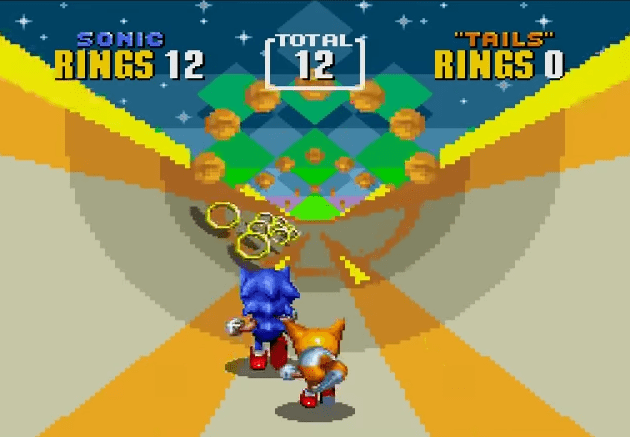
The Special Stages are now designed like a half-pipe run and are broken into stages. You must gain ‘X’ amount of rings to progress to the next stage, all the while dodging obstacles that will make you lose rings if you hit them. I would recommend playing as one or the other alone because if you have Tails with you, he will often get hit by an obstacle and will lose you rings.
As with the original Sonic the Hedgehog (1991), there are goodies to look out for:
Power Sneakers – These allow Sonic and Tails to run and even faster speeds for a short time
Super Rings – Earn 10 rings
One-Ups – Gain a life
Invincibility – Sonic becomes impervious to harm for a short time
Shield – Protect Sonic for one hit
A new feature is the introduction of the Spin Dash. This allows sonic and Tails to curl into a ball and build up a head of speed on the spot before an explosive release where he is propelled forward at high speed.
The new half-pipe special stages (Screenshot taken by the author)
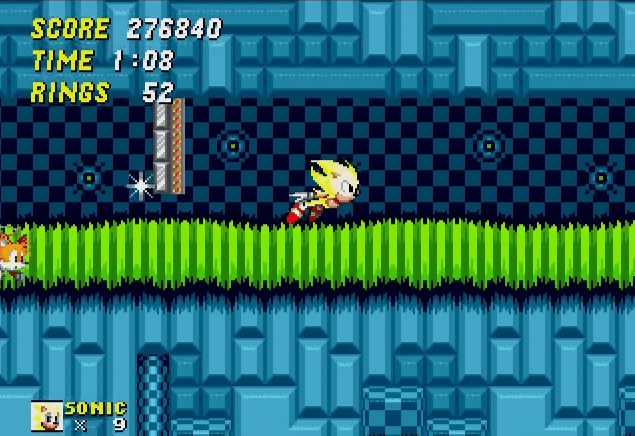
Once you have won all the Chaos Emeralds, Sonic gains the ability to transform into Super Sonic by gaining 50 rings and jumping into the air. As Super Sonic you are invincible, can run faster and jump higher. However, it uses up your rings at a rate of one per second. Once they are gone, Sonic reverts back to his normal self.
After you collect all the Chaos Emeralds, Sonic will be able to temporarily transform into Super Sonic (Screenshot taken by the author)
The addition of a competitive two-player mode where you can race another player through certain levels and special stages adds an extra element of fun which I know myself and my buddies found particularly diverting.
With the release of Sonic and Knuckles (1994), the two cartridges could be interlocked, enabling you to play through Sonic 2 as Knuckles the Echidna. Knuckles can glide and climb walls, enabling you find alternative routes through the levels. However, he cannot jump as high as Sonic and Tails, making some of the boss fights a bit more difficult.
Sonic and Tails must fight their way through an array of new machines built by Dr. Robotnik (Screenshot taken by the author)
How Does It Handle?
The controls are tight, no complaints there, and the game feels faster than it’s predecessor. The levels are longer, less linear (you sometimes have to go back on yourself to find the correct route) and more intricately designed, making traversing the levels more challenging. Some of the evil minions are harder to destroy and the end of level bosses are certainly more challenging and inventive too.
Having revisited the game I noticed that in both one and two-player mode, the game has a tendency to slow down and the sprites flicker a bit when Sonic and Tails are going top speed, and in particularly when you are hit by an enemy and lose lots of rings.
Graphics
The graphics haven’t changed that much since the first Sonic game. The Sonic sprite is a slightly darker shade of blue, and the enemy sprites are designed to have a more mechanical look. Lots of colour, great looking levels, and beautifully designed sprites. The game still looks awesome.
Music& SFX
The music is still great, but I don’t think its quite as memorable as the first game for me. I don’t think I would be able to tell you the stage the music comes from like I can with the first. In fact, I mostly remember the Special Stages music.
The SFX are also in keeping with the Sonic sound from the original. When doing a Spin Dash, you can really rev up the speed and the sound that accompanies it really emphasizes the speed at which Sonic is going.
Personal Memories
The two-player mode is what my friends and I played alot when we got this game. I remember distinctly arriving at my buddy’s house and eagerly turning the game on for the first time. We played for hours.
I did feel that the way you have no rings or means to get them for the last two bosses is a cheap way to make the bosses harder, and I found that frustrating.
Did I Complete The Game?
Yes, I have completed this game a few times through whilst winning all the Chaos Emeralds.
What The Critics Said:
Gamepro: “Its tough to follow a classic but Sonic the Hedgehog 2 earns top honours. There’s enough stuff that’s new and different in Sonic 2 to make it a must-have cart for fans of the original. Overall 19.5/20”.[1]
Gamesmaster:“The changes are there, but they’re just not profound enough to transform the game into an essential buy for owners of the original. Overall 65%”.[2]
Computer & Video Games: Paul Anglin – “At first glance Sonic may not look radically different to the original, but it packs a lot more punch than Bluey’s first outing. The levels are absolutely massive, with so much to do and so much to find that you’ll bust a gut trying. Overall 94%“.[3]
Computer & Video Games: Tim Boone –“For a start it’s all a tad faster, and the addition of Tails is a real master stroke to beef up the gameplay. Graphics are no great improvement over the original, but seeing as the first game’s were about the best you’ll find that’s no bad thing! Sound is ace too. Overall 94%”.[4]
Gamer Fan:“Sonic 2 is amazing, faster and nastier than ever spinning through awesome new zones that will make your eyes bug out! The creativity and attention to detail is remarkable and to finish with all the chaos emeralds is a worthy challenge for even the best players. Overall 98.5%”.[5]
Mean Machines Sega:“Sonic has outdone itself. An absolute gem of a game which your Megadrive will be screaming out for. Overall 96%”.[6]
Mega: “Sonic 2 is pure, top grade video game entertainment. No one should miss it. Fight for a copy. Overall 94%”.[7]
Megazone:“Sonic 2 is a brilliant sequel, and does what most sequels don’t do – improve and expand on the original. Overall 96%”.[8]
Sega Force: “One of the best games of the year and definitely worth the wait! Overall 97%”.[9]
Electronic Games: “Sonic the Hedgehog 2 offers the same exciting play as the first, but the welcome additions of two-player simultaneous play and more levels only enhance this exciting title. Sonic shows no signs of slowing down! Overall 91%”.[10]
Awards:
Best Game of the Year (Sega Genesis) – Electronic Gaming Monthly Best and Worst of 1992[11]
Game of the Year – Megazone Games of the Year 1992[12]
Hottest New Character in a Video Game (All Systems) – Electronic Gaming Monthly’s Best and Worst of 1992[13]
My Verdict:
“There was something about this game that I didn’t like, but I can’t quite put my finger on what it was. I just didn’t enjoy it as much as I did the first. That being said, this is a solid sequel, and I did have fun revisiting the game. There are plenty of new features, to make it worth playing, and the addition of a two-player mode adds to the overall enjoyment of the game”
Rating:
What are your memories of Sonic the Hedgehog 2? I would love to hear your thoughts, and don’t for get to follow and subscribe so that you don’t miss my latest reviews! You can also find me on Instagram: @nicklovestogame.
[1] The Unknown Gamer. ‘Pro Review: Megadrive – Sonic the Hedgehog 2’. Gamerpro. (January 1993). 43:46-50.
[2] Lowe, A., ‘Game Review: Mega Drive – Sonic the Hedgehog 2’. Gamemaster Magazine. (January 1993). Issue 1:56-8.
[3] Anglin. P., ’Review: Mega Drive – Sonic the Hedgehog 2’. Computer & Video Games. (November 1992). issue 132:22-3.
[4] Boone, T., ‘Review: Mega Drive – Sonic the Hedgehog 2’. Computer & Video Games. (November 1992). Issue 132:22-3.
[5] ‘Viewpoint: Mega Drive: Sonic the Hedgehog 2’. Gamer Fan. (December 1992). Volume 1 Issue 2:9.
[6] ‘Review: Mega Drive – Sonic the Hedgehog 2’. Mean Machines Sega. (November 1992). Issue 2:60-3.
[7] ‘Review: Mega Drive – Sonic the Hedgehog 2’. Mega. (November 1992). Issue 2:36-41.
[8] Clarke, S., ‘Review: Mega Drive – Sonic the Hedgehog 2’. Megazone. (December 1992/January 1993). Issue 25:31-33.
[9] ‘Review: Mega Drive – Sonic the Hedgehog 2’. Sega Force. Issue 12:14-16.
[10] Carpenter, D., ‘Video Game Gallery: Genesis – Sonic the Hedgehog 2’. Electronic Games. (December 1992). Volume 1 Issue 3:72-4.
[11] ‘EGM Best and Worst of 1992 Video Game of the Year’. Electronic Gaming Monthly1993 Video Game Buyer’s Guide. (1993). :14.
[12] ‘Game of the Year Awards 1992 – Sonic the Hedgehog 2’. Megazone. (December 1992/January 1993). Issue 25:21.
[13] ‘EGM’s Best and Worst of 1992: Hottest New Character in a Video Game (All Systems) – Sonic The Hedgehog 2‘. Electronic Gaming Monthly’s 1993 Video Game Buyer’s Guide. (1993). :20.
In 1989, Nintendo released Tetris on the Game Boy, and it proved to be an instant hit. By its 25-year anniversary Tetris had sold over 70 million copies worldwide.[1] Sega, eager to compete, needed a puzzle game of their own. Blockout (1989) has failed to be a success like Tetris (1989) so Sega tried a different tack with Columns. Similar enough not to deter Tetris fans, but different enough to try and attract a new audience. Sadly, Columns couldn’t imitate Tetris’ success.
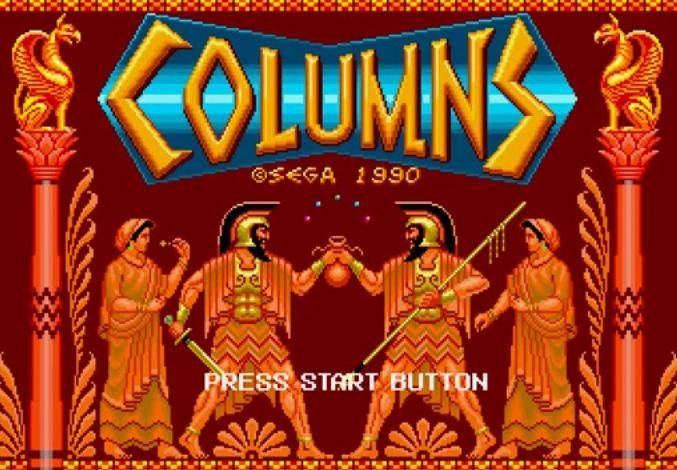
Title screen (screenshot taken by the author)
Columns is a puzzle game created by Jay Geertsen for the arcade in 1989 and was originally developed and published by Sega in 1990. Its success led to it being ported to many other platforms. The version I chose to review was from the Sonic’s Ultimate Sega Collection (2009) on the PlayStation 3.
Gameplay
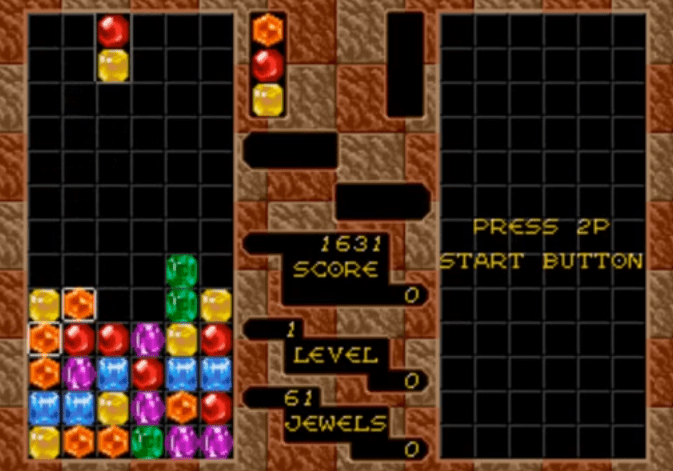
The game consists of three coloured jewels being dropped to the bottom of a rectangular screen, similar to Tetris. However, instead of aiming to complete horizontal lines, you must match three or more of the same coloured jewels in either a vertical, horizontal or diagonal line. Once lined up, the jewels will disappear allowing any jewels above to fall down to the lowest point possible. You will also be awarded points. You are able to cycle the order of the jewels to aid in your organisation of landed jewels. If a multi-coloured, flashing set of jewels appears, you can land any colour of jewel that you wish and all of that type of jewel will disappear. The higher your score, the faster the jewels will fall.
The jewels are all unique and easily discernible from the others (screenshot taken by the author)
How Does It Handle?
The controls are very straight forward and easy to just pick up and play. By the time the game becomes harder, you will have a full understanding of how to play the game.
Graphics
I have a real soft spot for this game and prefer it to Tetris, possibly because of the beautifully coloured jewels. The overall graphics in general have a classical Greek/Roman feel to them, and each jewel is brightly coloured and easily distinguishable from the others.
Music& SFX
The music is rather basic. There are three themes to choose from: Clotho, Lathesis, and Atropos. Clotho is my favourite and does have a tendency to get stuck in your head, but mostly you will find that you’ll turn the sound down and listen to your own music, podcast or an audiobook.
The SFX mainly consist of a thud when block of jewels are placed and a sort of sparkly sound when you get a set of three or more and they disappear. It can become a bit jarring after a while.
Replay Value
Columns can be played in one-player and multiplayer modes, flash-modes and a time trial mode which add to the replay value of such a seemingly simple but highly addictive game. There are also three difficulty settings.
Personal Memories
I used to play this game a lot and got pretty damn good at it. As you can see from the photograph below, the highest score I achieved was 5408848 at level 121. I would have continued but I had been playing for a while and was due to go out for the evening. I could have paused and come back to it but I feel that I had proved my aptitude for the game.
A photograph of my highest ever score (photo taken by the author)
Did I Complete The Game?
No one seems to know how high the score or levels go, and I don’t know of anyone who has “completed” this game, so I’m going to assume this is a game that cannot be completed.
What The Critics Said:
Mean Machines Index:“Sega’s answer to Tetris, this puzzle game is excellent. There’s a huge variety of options, including arcade-style time trials, three different difficulty settings, nine different starting levels, and a two-plater head-to-head made which adds to the game’s lasting appeal. Overall 88%”.[2]
Sega Power: “A Tetris clone with a superb challenge mode. Simple and addictive. Overall 4/5”.[3]
Sega Power:“A Tetris clone with superb one-on-one challenge mode. More of an end-of-blast relaxer than a main game. Simple, addictive , but expensive for what it is. Overall 4/5”.[4]
Wizard: “Good puzzle game, drop jewels, like Tetris but a bit better. Overall B+”.[5]
My Verdict:
“It’s like Tetris, but better in my opinion. Colourful, challenging and surprisingly addictive.”
Ratings:
What are your memories of Columns? I would love to hear your thoughts, and don’t for get to follow and subscribe so that you don’t miss my latest reviews! You can also find me on Instagram: @nicklovestogame.
In the voice of the great Formula 1 commentator Murray Walker, “And there he goes! Look at that! Senna has passed him! Senna has won the Brazilian Grand Prix!“.
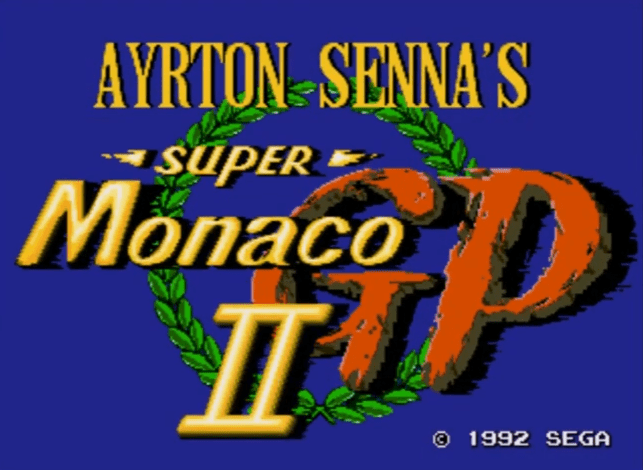
Title screen (Screenshot taken by the author)
Ayrton Senna’s Super Monaco GP II is a single-player Formula One racing game developed and published by Sega. It was released on the Mega Drive, Master System and Game Gear in 1992, and is the follow up to Super Monaco GP (1989). The game’s development was also assisted by Senna, who supplied his own advice about the tracks featured in the game. I chose to review the Mega Drive version.
Objective
Naturally the object of the game is to win the Driver’s World Championship and/or the Senna GP. To win the World Championship, you must race 15 other drivers on tracks from the 1991 Formula One season. You gain points depending on the position that you finish. The higher the finish, the more points you accrue.
Gameplay
In Practice Mode, you can choose to train freely or simulate a race. This enables you to familiarise yourself with the sharp turns of each track, and allows you to perfect your racing line. You can also select the number of laps you wish to complete, your starting position and sometimes, the weather.
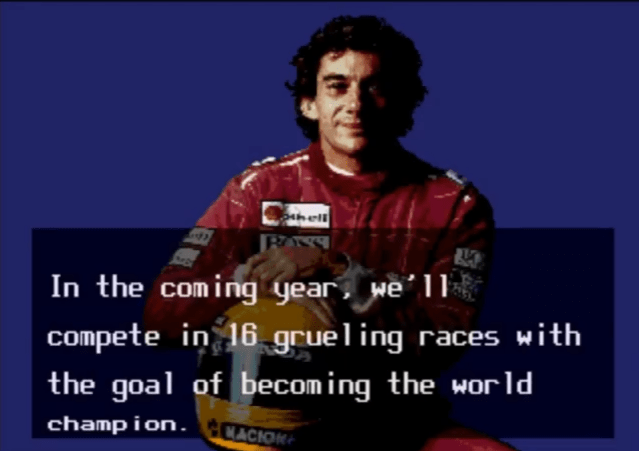
The late, great Ayrton Senna died tragically from injuries sustained during a crash whilst competing in the 1994 San Marino Grand Prix (Screenshot taken by the author)
In Beginner Mode, you first enter your name and select your nationality. You are then given the choice to run a few practice laps before the main race. When you select Race Mode, you can choose your preferred type of gear box (automatic, 4-speed manual and 7-speed manual). Before the main race starts you must complete a lap in the quickest time possible. Your time compared to the times of the other drivers will dictate your starting position. Your aim is to be the Polesitter.
Master Mode is pretty much the same as Beginner Mode with the exception that you may get the opportunity to drive better race cars by challenging rivals during races. If you beat the rival, you race their car from then on. There are five different car companies to achieve. Personally, I’ve never understood this. Why would you want to own the car you’ve just beaten? Surely, the fact that you have just beaten it suggests that your car is superior.
For the Senna GP, you simply compete in one race. You can choose from three tracks, and your lap times are given after each race.
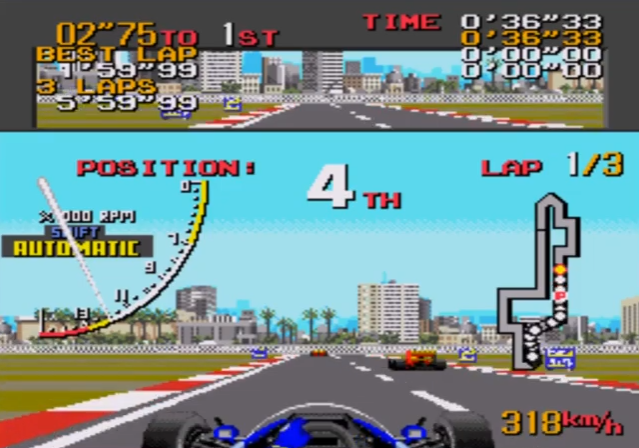
In-game screen offering all the views and information you need (Screenshot taken by the author)
How Does It Handle?
The game is challenging and much practice is needed to understand the physics of the game. Frustratingly, when a collision with another racer occurs, you always seem to come off worse than the other racer. No serious damage occurs, it just slows you down. However, if you hit a sign or barrier at high speed, you will crash and your race is over.
As mentioned, when reviewing Super Hang-On, I’m not a fan of racing games. There’s nothing wrong with them, they just don’t do it for me, so I am reluctant to spend too much time on them. However, I did enjoy playing it this one the more I played it.
Graphics
The graphics are bright and colourful, and should be praised for their realism. I’d argue that they are superior to F1 (1993). I really liked that you could look in the rear view mirror to see who was coming up behind you. This enable you to manoeuvre your car to block your opponent from overtaking you.
Music& SFX
The music is very basic and easily forgettable, but then again you’re not playing a racing game for the music are you!
The SFX mainly consist of the beeping at the start of race, and the low thrum of the engine and a weird annoying sound that indicates skidding, I assume. There is also a very muffled “Final Lap”. I found the SFX rather annoying in this game.
Replay Value
The 16 tracks plus the Beginner, Master, and Senna GP modes increase the replay value considerabley, and fans of racing games will find that this is not a game that will be completed within a few hours. Alas, it is a pity there is not a two-player option.
Did I Complete The Game?
Sadly no. The best result I achieved was fourth overall in the World Championship.
What The Critics Said:
Mean Machines: “A very good racing game – but if you’ve already got Super Monaco GP, this simply isn’t different enough to be worth buying. Overall 87%”.[1]
Mean Machines:“If you already have the original Super Monaco in your cart collection, take a look before you buy because it is very similar. However, if you’ve just got your Mega Drive and fancy owning one of the greatest road racers money can buy, take a look at Ayrton Senna’s Super Monaco GP II – it leaves the others on the starting grid. Overall 94%”.[2]
Computer & Video Games:“Super Monaco still ranks one of the best racers on the Mega Drive, right up there with the likes of Road Rash and Super Hang-On. However, it has to be said that this sequel is quite a disappointment because it’s too close to the original game! Overall 84%”.[3]
Sega Power: “Bigger and Badder sequel to the original game, this time with the golden touch of Ayrton Senna himself. Hit the gas and burn some rubber, baby. Groovy! Overall 5.5”.[4]
My Verdict:
“Becomes more enjoyable the more you play it. Fans of racing games with love the realism, and the challenge.”
Rating:
What are your memories of Ayrton Senna’s Super Monaco GP 2? I would love to hear your thoughts, and don’t for get to follow and subscribe so that you don’t miss my latest reviews! You can also find me on Instagram: @nicklovestogame.
[1] ‘Review: Mega Drive – Ayrton Senna’s Super Monaco GP II’. Mean Machines. (June 1992). Issue 21:20-1.
[2] Leadbetter, R., ‘Review: Mega Drive – Ayrton Senna’s Super Monaco GP II’. Mean Machines. (October 1992). Issue 1:126.
[3] Boone, T., ‘Review: Mega Drive – Ayrton Senna’s Super Monaco Grand Prix 2’ Computer & Video Games. (July 1992). Issue 128:68.
[4] ‘The Hard Line – Review: Mega Drive – Super Monaco GP II’. Sega Power. (September 1993). Issue 46:99.
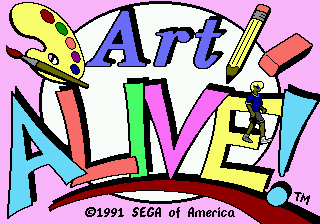
Remember when you were bored in computer classes in the pre-internet days of the early 90s? You had the choice of playing Solitaire or, if you were artistically minded, trying to create a some art with Microsoft Paint. Sega decided to make an alternative version for the Mega Drive. Did it inspire a generation of pick up their proverbial paintbrush and express themselves, or was Sega’s attempt to bring “Paint” to their console a smudge on the face of electronic easels around the world?
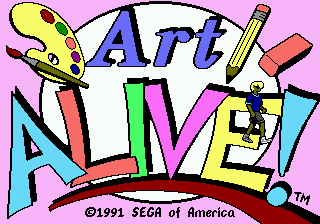
Art Alive is a paint program developed by Western Technologies and Farsight Technologies, and published by Sega, and Tech Toy for the Megadrive. It was released in 1991 in North America, and Europe and Japan in 1992. The Mega Drive version I chose to review was lent to me by a friend.
My wife is a professional illustrator and so I asked if she would give up some time in her busy schedule to review the game for me. This is what she said:
(Screenshot taken by the author)
“I didn’t read the instructions, but the game was easy to learn and fairly intuitive. Even though there was a limited palette, the ability to use patterns was neat, even if they were only 16-bit. The SFX became very annoying very quickly, especially when accessing the menu. It was disappointing too that music was only played when certain tools were used. Having music throughout would have made the game more enjoyable. The limited nature of the title would make the modern gamer become bored very quickly. However, I’m sure it would have been more engaging when it was released.”
Entertainment Weekly: “More of a toy than a game, Sega’s draw-and-paint program is pretty colourless compared with what you can accomplish on some mid-range personal computers, but it’s still a welcome alternative to those burnt out on mindless shoot-’em-ups. Overall C+”[1]
My Verdict: “It’s basically Microsoft Paint…but for the Mega Drive. It might be worth picking up if you’re a collector, but other than that, I doubt it is even worth acquiring for your children, if you have any.”
Rating:
What are your memories of Art Alive? I would love to hear your thoughts, and don’t for get to follow and subscribe so that you don’t miss my latest reviews! You can also find me on Instagram: @nicklovestogame.
Hold on to your hats guys, its time to rev that engine, feel the horsepower, and leave your competitors to eat your dust. Glory awaits!
Screenshot taken by the author
Super Hang-On is a single-player motorcycle racing game developed and published by Sega. Originally released in the arcade in 1987 as a sequel to Hang-On, it would later be released for the following:
1987 – Amstrad CPC, Arcade, Commodore 64, and ZX Spectrum.
1989/1990 – Atari ST, Commodore Amiga, Macintosh, DOS, Sega Megadrive, and Sharp X68000.
2003 – Game Boy Advance (Sega Arcade Gallery)
2010 – Wii’s Virtual Console (2012 in North America)
2012 – Xbox Live Arcade (Sega Vintage Collection)
I chose to review the Sega Mega Drive version found on the Mega Games I (1992) package.
Gameplay
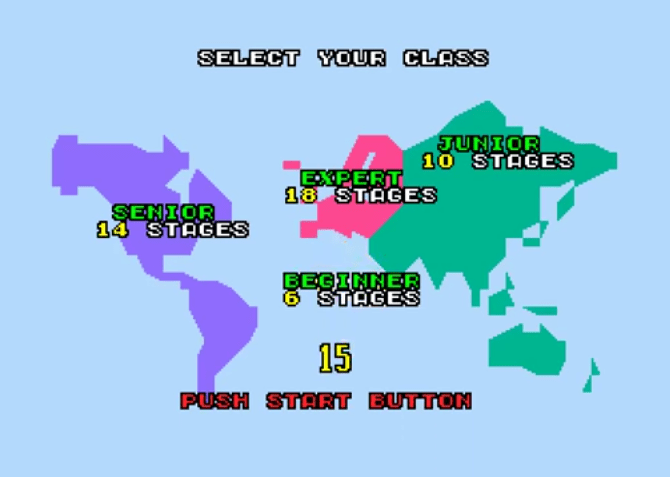
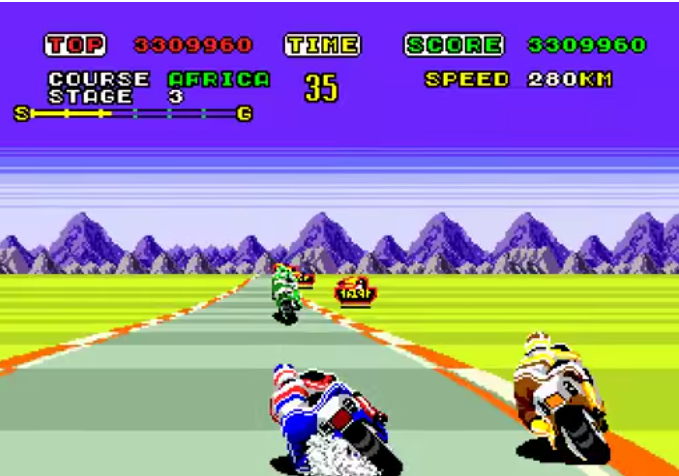
Whilst still similar to Hang-On, there is now a choice of four new tracks, based on the continents of the world. Each continent contains a different number of stages to increase difficulty (Africa = 6 stages, Asia = 10 stages etc.). A turbo button is also available should you need an extra boost. For those that are interested, the motorbike you are riding is the SGR-500(R).
Screenshot taken by the author
The Mega Drive version contains both the full Arcade Mode, and an Original Mode. In the Arcade Mode, you race against the clock. You have a limited amount of time to clear each stage. If you fail to reach the checkpoint within the allotted time, it is game over. The Original Mode is a bit more in-depth and allows you to gain sponsorship and earn money to upgrade your motorbike. Any time you crash, you damage your motorbike which affects its performance until you end the race and you mechanic can fix it. Like in real life, your bike is also subject to wear nd tear and so parts will need to be replaced anyway. You continue to compete against other racers until you have beat every opponent.
Screenshot taken by the author
How Does It Handle?
The bike is easy to control, and the game is easy to learn. However, the game can become frustrating when you crash in Arcade Mode as there is no way to make the time up again, so you may as well restart the game. I also dislike the time countdown in Arcade Mode too. In the arcade one can understand a time limit as you want games that are “quarter guzzlers”, but for gaming at home, it’s just plain annoying. Admittedly I didn’t spend that much time on this game as I’m not a racing fan, but if you are, I am sure that you will enjoy the challenge of this game.
Graphics
The graphics are clean, with brightly coloured sprites making it easy to distinguish yourself from other riders. The backgrounds and time of day change as you move through the stages of the races giving you a real sense of location and distance. At the top of the screen you have information telling you your score, speed, what course and stage you are on, and a countdown dial.
Music and SFX
Interestingly, the music only begins when you select a mode to play. You then get the option of four tracks to listen to whilst you play. The music does fit the game but is not very memorable for me.
SFX are limited to the beep of the changing lights on the starting line, the low thrum of the motorbike’s engine, and crashing. A nice little touch is that if you overtake another bike closely, you can hear their engine.
Replay Value
It is a pity there is no two-player mode for this game as racing against a friend is always fun. The Original Mode adds a lot of replay value to the game though.
Personal Memories
I have vague recollections of playing this in the arcade at Folkestone Rotunda Amusement Park when I was a pre-pubescent imp. It had the full arcade set up complete with a replica motorbike that you could sit on and use your weight to lean left or right. Being small at the time, my father would stand at the back of the bike and help me lean it, ensuring I didn’t go flying off.
I’m unsure if this is the exact one I played as a kid, but this was the sort of machine I remember form the arcades.
Did I Complete The Game?
Nope, nowhere near.
What The Critics Said:
Mean Machines: “A high quality racing game which is a must for speed freaks. Overall 86%”.[1]
Mean Machines:“This cart manages to contain all of the playability of the coin-op, coulpled with slick audio-visuals. Definitely worth getting if you enjoyed the coin-op, or if you’re after a decent Mega Drive game at a bargain price. Overall 90%.”[2]
Sega Power: “Brilliant biking coin-op conversion. Terrific sensation of speed and movement, with good graphics and smooth 3D update. Thrilling to play and lasts for ages. Overall 5/5“.[3]
Sega Power “Another coin-op classic of yesteryear. Fine, but a bit mouldy. Overall 4/5.”[4]
MegaTech:“Converted from the Sega coin-op, this is an excellent copy and has all the features of the original machine plus an extra challenge game thrown in for good measure! The graphics and sound are both excellent, and with playability to match, this is a race game that no Megadrive owner should be without. Overall 89%”.[5]
My Verdict:
“I’m not a fan of racing games but if you are, this may prove a challenge. Beautiful graphics and scenery too, and enough replay value to make it worth adding to your collection.”
Ratings:
What are your memories of Super Hang-On? I would love to hear your thoughts, and don’t for get to follow and subscribe so that you don’t miss my latest reviews! You can also find me on Instagram: @nicklovestogame.
[1] ‘Mega Drive Review – Super Hang-On’. Mean Machines. (October 1990). Issue 1:82-4.
[2] Leadbetter, R.,’Review: Mega Drive – Super Hang-On’. Mean Machines. (October 1992). Issue 1:127.
[3] Jarrett, S., ‘The Hard Line – Super Hang-On’. Sega Power. (April 1991). Issue 23:54.
[4] ‘The Hard Line – Review: Mega Drive – Super Hang-On’. Sega Power. (September 1993). Issue 46:98.
[5] ‘Game Index – Super Hang-On’. MegaTech. (May 1992). Issue 5:78.











#/media/File:Columns.jpeg)






 Nick Loves to Game