De-Cap Attack – Review

The early 1990s were a great time for me. I was too young to be distracted by girls but old enough to be able to hang out with friends without the supervision of parents. I was also old enough to be half decent at video games. My friends and I regularly exchanged games (and cheat codes) but sadly we just didn’t have the money to buy many games. Having an older brother has its benefits. He may be mean and leave you out in the cold when his older, cooler friends are around, but he may also have access, and money, to borrow or buy more video games. One such game that my brother brought home one night was De-cap Attack.
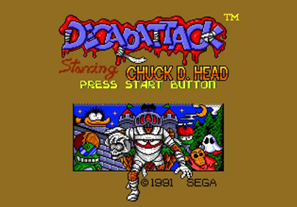
Title screen (Screenshot taken by the author)

De-cap Attack is a single-player platform game. It was developed by Vic Tokai and published by Sega for the Mega Drive in 1991. For this review, I played the version found on Sonic’s Ultimate Genesis Collection (2009).

Plot

Max D. Cap has returned from the Underworld to wreak havoc with his army of evil monsters. His devastation has caused the island where you live, shaped in the form of a skeleton, to break apart. Chuck D. Head, that’s you, is the creation of Dr. Frank N. Stein and his loyal assistant Igor. They created you, a headless mummy, and sends you to defeat Mad D. Cap and his minions and return to the island to its original state.
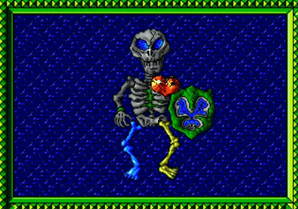
The Skeleton Island (screenshot taken by the author)

Gameplay

Chuck can attack his enemies in three ways. He has a weird face in his chest that extends out and punches the enemy, he can jump on their heads and squash them into the ground, or he can acquire a skull that can be thrown at the enemy but will return like a boomerang. Chuck also has the added ability of slowing his descent by kicking his legs. This little feature has saved my life, and my sanity, on more than one occasion.

Along the way, Chuck can pick up several different potions to assist him. These give him abilities such as harnessing a lightning ball, speeding up his run, slowing down the enemy etc. You can also pick up gold coins to use in a post-level bonus game.

Your health unit, quite ingeniously, is measured by pumping hearts. Each heart is the equivalent of two hits. However, if you fall into lava you will die instantly.

Chuck can use his head to throw at his enemies (screenshot taken by the author)

Although this is technically a side-scrolling platform game, and mostly that’s left to right, there are several levels where you either climb or descend the screen and at least one or two where you go from right to left. Which is quite novel considering most platformers seem to go from left to right. Like most side-scrolling plaforms, there are higher parts to each level where more goodies and power-ups can be found.

Each “island” has three stages to complete. At the end of each island you will face a boss. To add an extra challenge to each island, there is a special object to collect so even if you defeat the end of island boss, you cannot progress without finding this object.

After you complete an “island” you are rewarded with a bonus stage. Each coin you gathered allows you to place a clone of Chuck on a path. You can place as many or as little as you want on each path. Everytime they reach a bridge they will cross it either to the left or right. When they reach the end of the paths, you need to stop a set scrolling bridges. If you place your clones correctly and timed your stop of the correctly Chuck will be rewarded with lives and potions. If not they fall down a hole and you win nothing.
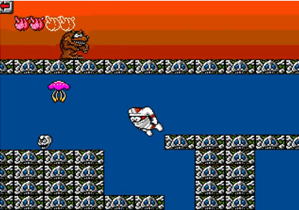
Obligatory swimming level (screenshot taken by the author)

How Does It Handle?

The controls are tight and responsive but when Chuck changes direction whilst running, he skids in a very cartoony way which takes a bit of getting used to. This is an incredibly fun game to play!

Graphics

I think the graphics are fab! The levels are incredibly detailed and sprites are well animated. There is no flickering or slowing down when there are several sprites on screen and end of level bosses look great too.

Music

The intro music to this game is pretty cool. Sadly, the in-game music is fitting but forgettable. However, the clever part of the music lies when Chuck dies. It plays a bar or two of Bach’s Toccato and Fugue in D Minor (skip to the 2.40), which is one of the creepiest pieces of classical music you’ll hear and works well in this game.

Replay Value

The difficulty of the game can be changed by altering the number of hearts you begin with. Don’t be fooled by the first few levels however, this game gets tough later on. I found this game held up incredibly well and I had as much enjoyment out of it as I did when I was younger. I will definitely be returning to it again.

Did I Complete The Game?

Yes, on the easiest setting, but I will certainly play it again in the future.

What The Critics Said:

Game Informer: “There’s enough originality to keep a gamer’s interest and the characters are really a scream (pun intended). If you like Mario and Bonk type games, You’ll love De-Cap Attack”. Overall 7.5/10.[1]

Game Informer: “The game is addictive. There’s enough to keep even the best player busy for weeks. Overall 8.5/10.[2]

Game Pro: “Decapattack breathes life into the worn out action/adventure theme. – you gotta admit, head tossing is a pretty innovative for of self-defence. It’s got all the makings of a superior game: great graphics, manageable challenge, ear-pleasing tunes, and , yahoo, endless continues. It’s well worth losing your head in Decapattack. Overall 4.6/5.[3]

Mean Machines Sega: “A fun-filled platform game which is basically identical to the old import game, Magical Flying Hat Turbo Adventure, except it has different sprites and backdrops. Platform fans will love it… Overall 82%.[4]

My Verdict:

“I love this game! Its fun yet challenging. It looks great, plays great, sounds great, and certainly is a cut above most other 16-bit platform games. It holds help well, even 30 years after its original release.”

Rating:

What are your memories of De-Cap Attack? I would love to hear your thoughts, and don’t for get to follow and subscribe so that you don’t miss my latest reviews! You can also find me on Instagram: @nicklovestogame.


[1] Rick, The Video Ranger. ‘Review – De-Cap Attack’. Game Informer. (Fall Issue 1991) :9.

[2] Andy, The Game Dandy. ‘Review – De-Cap Attack’. Game Informer. (Fall Issue 1991) :9.

[3] ‘ProRreviews – Decap attack’. Game Pro. (October 1991). Volume 3 Number 10:46.

[4] ‘Review: Mega Drive – Decapattack’. Mean Machines. (October 1992). Issue 1:138.
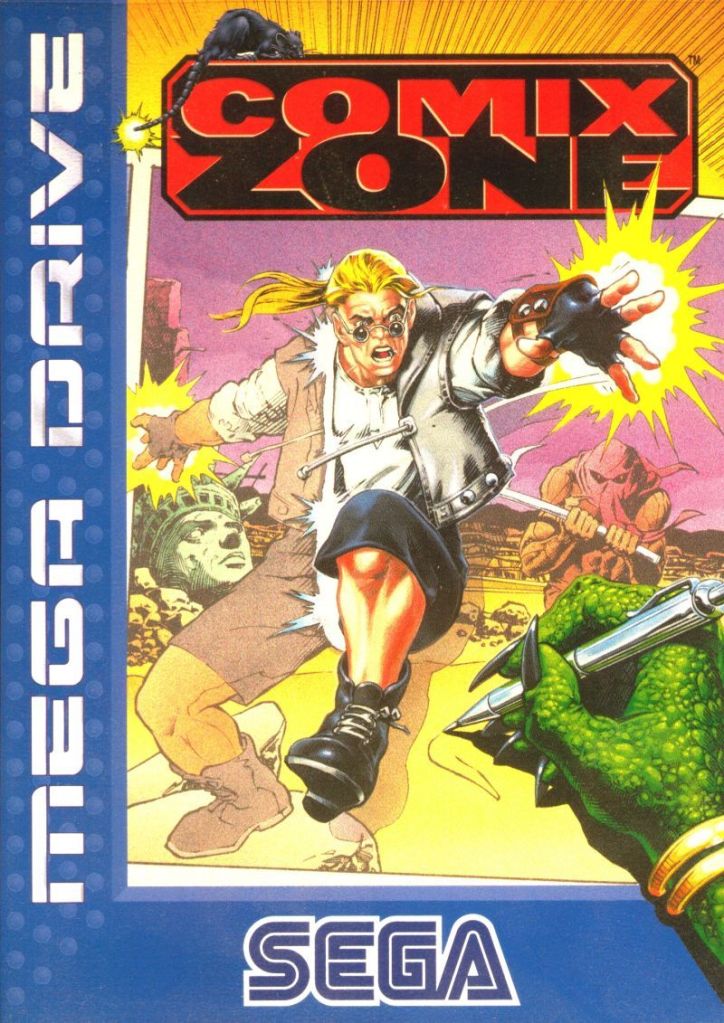
Comix Zone – Review

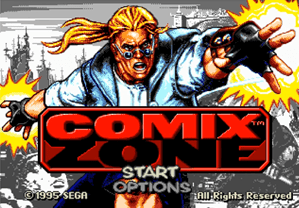
By 1995, the lives of the 16-bit consoles such as the Sega Genesis and Super Nintendo were coming to an end. However, Sega still had a few tricks up their sleeve before ceasing production of Mega Drive games.

Title screen (Screenshot taken by the author)

Comix Zone is a single-player beat ‘em up developed and published by Sega. It was released for the Mega Drive and PC (North America) in 1995, and for the PC (Europe) in 1996. Later releases include:

Game Boy Advance (2002)

PlayStation 2 and PlayStation Portable as part of the Sega Mega Drive Collection (2007)

Wii Virtual Console (2009)

Xbox Live Arcade (2009)

PlayStation 3 and Xbox 360 as part of Sonic’s Ultimate Genesis Collection (2009)

iOS as part of the Sega Forever collection (2017)

Android as part of the Sega Forever collection (2017)

Plot

The manual contains a black and white comic strip offering a more in-depth backstory the game:

General Alissa Cyan and Topol are fighting an army of monsters and in dire need of rescuing. Sadly, Topol is killed before they can be rescued. Later, back in HQ, Cyan is arguing with the emperor, urging him to provide her with back-up to help take down the evil Mortus and his renegade army. As the emperor explains his reluctance to agree to her request, messengers inform them that another army of mutants is attacking Tibet City and that a “Doomsday Device” has been located near New Zealand. General Cyan decides that enough is enough. They need a “special operative” to help them defeat Mortus.

Sketch Turner is a comic strip artist (and freelance rock musician) who lives in New York City with his pet rat, Roadkill. One evening, whilst working hard at his desk, he is drawn into his comic strip where General Cyan explains that if they cannot stop Mortus, his form will become real, and he will be able to conquer the Earth.

Speech bubbles appear regularly throughout the game (Screenshot taken by the author)

Gameplay

Sketch must fight his way through a number of comic scenes using hand to hand combat. Along the way, you are joined by your pet rat, Roadkill, who can help attack the baddies, assist in solving puzzles (I use this term very lightly), and can even sniff out power-ups.

Throughout the game, there is a running commentary. Either General Cyan gives you instructions, or speech bubbles appear as your character and the baddies engage in repartee.

One nice innovation is that there are occasions in the game where you need to decide which direction to go next. Once you decide, you cannot backtrack. One of the paths is more difficult than the other and can offer better power-ups.

How Does It Handle?

The array of attacks and movements you can perform is quite impressive for a Mega Drive beat ‘em up. However, even though there are multiple punches, kicks, jump attacks and even throws, there is very little finesse to the fighting. It quickly becomes a button masher.

Another gripe I have with this game is how easy it is to lose energy. Punching crates, doors etc. that you need to break for power-ups or to progress makes you lose energy, which I think is a bit dumb considering the lack of ways there are to regain your health.

Tip:

Don’t be afraid to use your power-ups because when you finish the level, you will lose them anyway.

Graphics

The levels are designed in a the style of a comic strip which I thought was ingenious when it was released. The graphics are fantastic, and the game blew me away when I first saw it all those years ago. The sprites and backgrounds are very detailed and colourful, and sprite animations look fab. I love how the baddies are drawn by and artists hand rather than just appear on the screen, adding to the authenticity that you are in a comic strip.

When engaging in fighting, “wacks” and “pows” appear again adding to the comic strip feel. Another nice touch, comes when there are times that you can kick you enemies through the comic border into the next scene. It look quite dramatic!

I use the term “puzzle” lightly, but there are occasions when you need to use your loaf (Screenshot taken by the author)

Music

The music lets this game down. I found it dull and easily forgettable.

Replay Value

The above mentioned ‘choose your path’ feature and the fact that there are two endings, adds some replay value to the game. Sadly, there is only one difficulty setting.

Did I Complete The Game?

No, I could not get past the boss at the end of Episode 2. This game is very hard!

What The Critics Said:

Electronic Gaming Monthly: “This is a very original game. Sure, it’s basically a side-scroller, but the comic look and frame concept works very well. Also, the graphics are very colorfuI, especially for the Genesis. There isn’t any exceptional fighting, but the look of the game carries it. The only drawback is the fact that you can get hit a lot, so you die a bit too often. Still, it has a fresh look to it, with a very original way of traversing to the next level. Comix Zone is a definite must-try. Overall 7.875/10.[1]

Next Generation: “A very cool idea for a game that wasn’t executed properly, Comix Zone is better than most. Overall 3/5.”[2]

My Verdict:

“A fun concept for a game that still looks very cool today. Let down by the music and the repetitive nature of the fighting, this game just falls short of what could have potentially been a legendary game. It is also incredibly difficult.”

My Rating:

What are your memories of Comix Zone? I would love to hear your thoughts, and don’t for get to follow and subscribe so that you don’t miss my latest reviews! You can also find me on Instagram: @nicklovestogame.


[1] ‘Review Crew – Comix Zone’. Electronic Gaming Monthly. (August 1995). Issue 73:35.

[2] ‘Rating Genesis – Comix Zone’. Next Generation. (August 1995). Issue 8:75.

Bonanza Brothers – Review

Revisiting retro video games can be perilous. Over the years, our gaming prowess increases (or decreases for some of us), our tastes change and many games simply don’t age well. This week, I revisited Bonanza Bros., a game that I thought was lots of fun in the early 1990s…after almost 30 years, does the game still hold up?

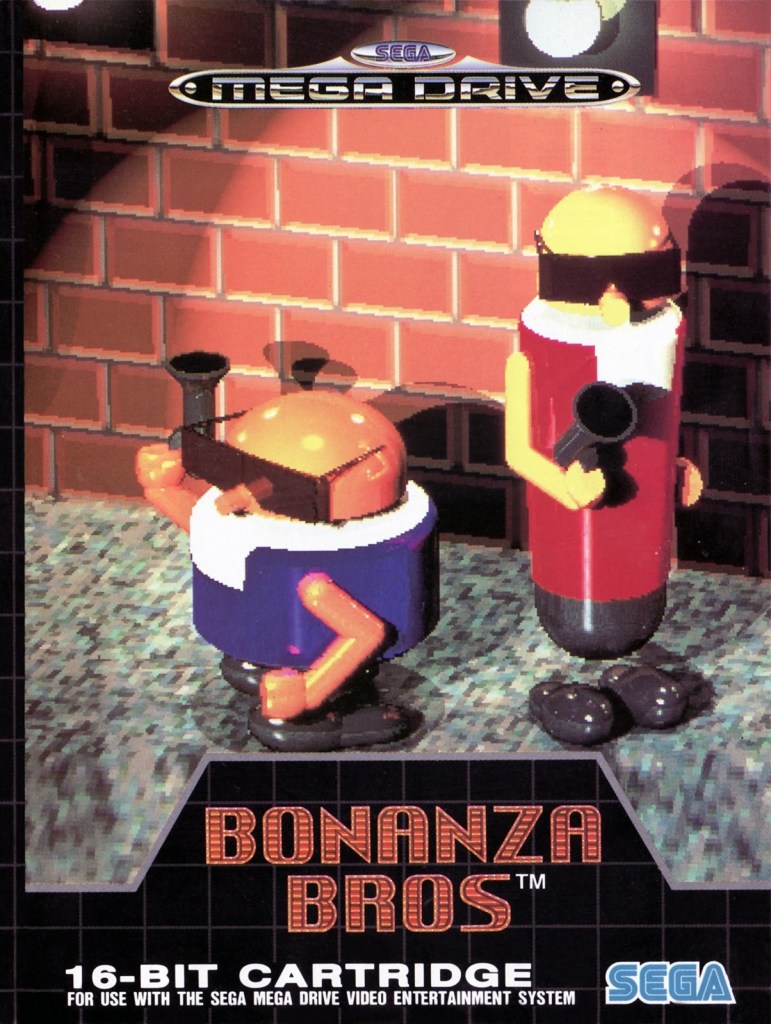
Title screen (Screenshot taken by the author)

Bonanza Bros. is a 2D shooter platform game created in a 3D style. It was developed and published by Sega for the Arcade in 1990 (U.S. Gold published the game for home computer systems). In 1991, it was released on the Amstrad CPC, Atari ST, Commodore 64, Amiga, Master System, TurboGrafix-CD, Mega Drive, Sharp X68000 and ZX spectrum. For this review, I played the Mega Drive version found on Sonic’s Ultimate Genesis Collection (2009).

Plot

In the game, you are hired by the Police of Badville to test the security of buildings around the town where some very valuable objects are housed. These include a mansion, yacht, bank and a casino.

Gameplay

To steal the objects, you must use your stealth skills and your wits to evade the security stationed to protect the valuables. Once you have all the valuables, you must reach the roof so that you can be whisked away in a hot air balloon.

Bonanza Bros. can be played in both one and two-player modes. The characters consist of Robo (red) and Mobo (blue). In the European version, they are named Mike and Spike. The two-player mode is co-operative, with the screen split horizontally, allowing both players to explore each level individually.

The controls are very simple. You can walk, jump and shoot your gun…that’s it. To make the game a little more interesting, you can move back and forth by one square from the foreground to the background. This enables you to hide behind walls and objects, as well as dodging shots from the guards. When you shoot the guards, they do not die, they are simply stunned for a few seconds. The guards are alerted to your presence when you either walk into their field of vision or if you make a noise near them, such as kicking a soda can. Some guards are armed with riot shields, protecting them from your gunshots. If you are hit by a bullet or if the guards are close enough to hit you with their truncheon, then you lose a life. Running out of time also causes you to lose a life and you must restart the level.

The graphics are a bit too basic when compared to its contemporaries (Screenshot taken by the author)

How Does It Handle?

The game is very easy, even for less experienced gamers, and the gameplay is so simple that it becomes boring very quickly. Frustratingly, you cannot duck which becomes frustrating particularly in the later levels. Also, for a game that is supposed to be designed around stealth, there is little finesse to it. There are very little consequences to alerting the guards to your presence as all you need to do is stun them and run off screen and they seem to forget you were even there.

So does the game hold up? Sadly no. I also think it is a game best played in two-player mode, perfect for a parent and child or for an older sibling playing with a younger one.

Graphics

The graphics, although quite cute, are below standard, even for 1991. When compared to contemporary games such as Sonic the Hedgehog (1991) and Quackshot (1991), the graphics were found wanting. However, some nice little touches to the game come in the form of being able to splat a guard against the wall when you open a door, and a fly buzzing around and landing on you if you stay still for too long.

Music

I think the music is great! Its upbeat, funky a fun, and fits well with the game.

Replay Value

The game contains three difficulty settings and allows you to increase or decrease the number of lives you are assigned. This adds a lot of replay value to a game that is pretty short and easy to complete for any gamer with half a brain cell. There is also a time limit of three minutes for each level.

Personal Memories

I first played Bonanza Bros. back in the early 1990s when my older brother either borrowed it from a friend or rented it from the local Blockbusters. At the time, I thought it was one of the best games I’d ever played (bearing in mind I was only about nine years old), and was really looking forward to revisiting the game. Sadly, I think this is a game not worth revisiting.

Although more enjoyable in two-player mode, the game is too easy and becomes repetitve very quickly (Screenshot taken by the author)

Did I Complete The Game?

Yes, but I don’t think I will be revisiting it very often.

What The Critics Said:

Mean Machines: “Fans of the coin-op will love this – but others might find the action a little too repetitive. If in doubt, check it out. Overall 82%.[1]

Mean Machines Sega: “Like Alien Storm, this is another superb conversion which is let down by the fact that it is just too easy. The two-player action is fun, but at the end of the day what you need is a challenge, and unless you’re a games novice, this simply fails to deliver. Overall 73%.[2]

Sega Power: “The graphics are faithfully reproduced, the split- screen two-player mode is included and the gameplay, if a bit repetitive, is all there. Overall 4/5.[3]

My Verdict:

“This game is not without its charm. Its cute, and quite fun in two-player mode. However, the graphics are below standard when compared to its contemporaries, and the gameplay becomes too repetitive too quickly. Definitely one for younger gamers.”

My Rating:

What are your memories of Bonanza Bros.? I would love to hear your thoughts, and don’t for get to follow and subscribe so that you don’t miss my latest reviews! You can also find me on Instagram: @nicklovestogame.


[1] ‘Mega Drive Review – Bonanza Brothers’. (July 1991). Mean Machines. Issue 10:86-8.

[2] ‘Review: Mega Drive – Bonanza Bros’. Mean Machines. (October 1992). Issue 1:137.

[3] ‘The Hard Line – Bonanza Brothers’. Sega Power. (October 1991). Issue 23:53.

The Story of Thor: A Successor of the Light/Beyond Oasis – Review

Nintendo’s The Legend of Zelda: A Link to the Past (LTTP) really changed the way gamers think about action-adventure games. The story line, the music, the graphics, the shear size of the game set the standard for action-adventures going forward into the 1990s. As far as I can tell, the only offering Sega had in this category was A Faery Tale (1991). There may be others, but none spring to mind. As far as I can tell, it took Sega until 1994 to create a reply to LTTP. The question is, would it be any good?

Title screen (Screenshot taken by the author)

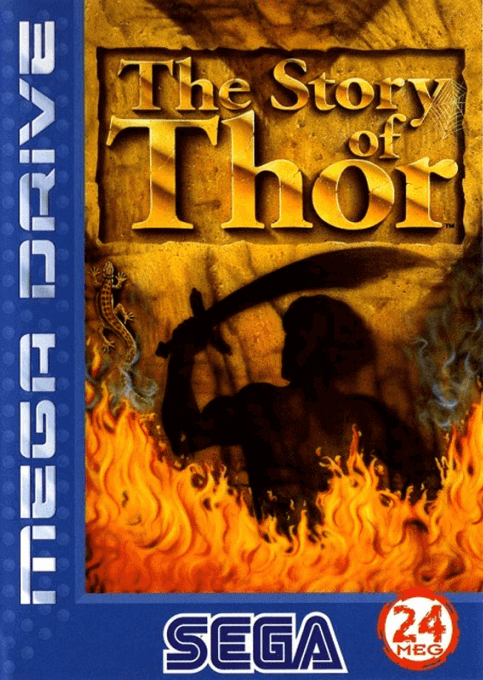
The Story of Thor: A Successor of the Light is an action-adventure game developed by Ancient Corp. and published by Sega. It was released in Japan in 1994, and Europe and North America in 1995 for the Sega Mega Drive. It would later be released on the Wii Virtual Console in 2007 and on the PlayStation 3 as part of Sonic’s Ultimate Genesis Collection (2009). Interestingly, it was released in North America under the title Beyond Oasis. For this review, I played the version found on the Sonic’s Ultimate Genesis Collection.

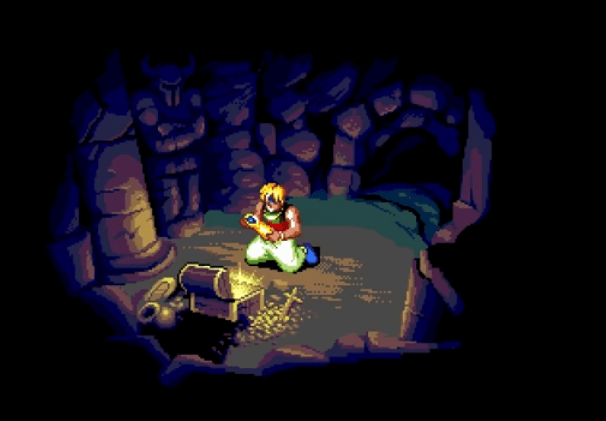
The intro is beautifully illustrated (Screenshot taken by the author)

Plot

Prince Ali is a treasure hunter, living on the land of Oasis. One day, whilst exploring a cave on a nearby island, he discovers a golden armlet. When he tries on the armlet, a ghostly face appears and re-tells the story of a magical war between two sorcerers. One of the sorcerors, Reharl, wore the golden armlet and used it to control four spirits: Dytto the Water Spirit; Efreet, the Fire Spirit; Shade, the Shadow Spirit; and Bow, the Plant Spirit. The other, Agitio, wore the silver armlet and used it for evil, causing death and destruction everywhere within his reach. Ali must search Oasis and gain the power of the four spirits and prevent the silver armlet from being used to destroy the world.

Gameplay

Like LTTP, as you explore the map, you will encounter numerous baddies that you can engage in battle and kill. You can attack these enemies using your dagger, swords, bow and arrow, and bombs. The dagger is the only weapon that you can use infinitely. Occasionally, these fallen foes will leave behind items that will help restore your health or magic bar. As the game progresses, you gain the ability to control the four spirits to get to previously in accessible areas and to defeat your enemies or help you regain health.

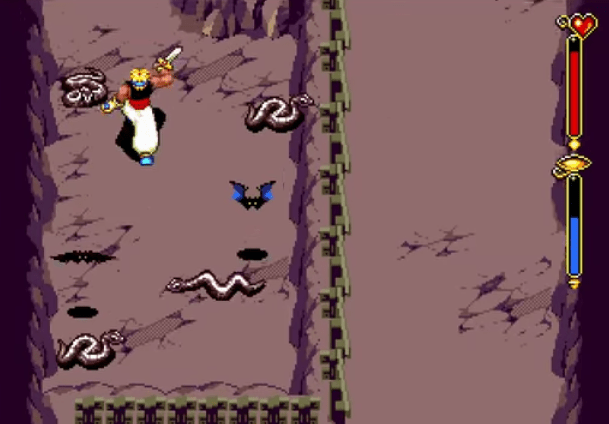
Battle your way through caves full of monsters to find the four spirits to aid you in your quest (screenshot taken by the author)

How Does It Handle?

The controls are easy to learn, and the game interface is intuitive and easy to use. The only difficulty is jumping, which takes some practice as it’s not always easy to gauge where you will land, even with a shadow to assist.

What makes the battles with foes more interesting than LTTP is that you have to crouch to hit foes such as snakes, and have to jump in order to hit bats. This adds an extra challenge to the game. The bosses are challenging but not too difficult, even for a younger gamer.

One annoying aspect of the gave is that Efreet is difficult to control. When trying to get him to ignite lanterns, for example, he must be facing them but he is often moving around and facing the wrong direction.

Graphics

The game begins with a beautifully illustrated cutscene giving the back story of the game. The in-game graphics are bright, colourful and much more detailed and interesting than in LTTP. The sprites are clearly defined and there is a good array of different foes to fight.

Music

Sadly, the music sucks and really can’t hold a candle to LTTP. In LTTP, the music is inspiring with hints of danger and intrigue. It encourages you to be brave and venture forth into the unknown. Beyond Oasis just falls flat and doesn’t inspire the same feelings.

Replay Value

As for replay value, although the game only has one difficulty setting, it is worth revisiting again, but there is nowhere near the amount of secret objects (if there are any at all) to find and the game is so much shorter than LTTP. In fact, you could easily beat it in the half the time it’d take to finish LTTP.

Efreet, the fire spirit, is one of four you need to find and gain control of (Screenshot taken by the author)

Did I Complete The Game?

Yes

What The Critics Said:

Electronic Gaming Monthly: “This one is pretty enjoyable…with the standard fare of menacing enemies and creative boss characters. The best element is probably the gigantic area you cover, and the plot twists throughout the game. Overall 38/50.”[1]

GameFan: “The game excels in almost every category. The music gets a tad repetitive, but it’s high quality… Overall 94.7%.[2]

Next Generation: “The use of magic, whether it be the fireball or meteor storm; a user-friendly interface, and an ever-ready map put Beyond Oasis beyond others of its type. But ultimately, poor fighting and an uninspired storyline leave this title looking more like a mirage. Overall 2/5.[3]

Awards:

Action RPG of the Year – GameFan’s Mega Awards 1995[4]

My Verdict:

“This game looks fantastic and incorporates some very interesting features such as the different abilities of the four spirits and the imaginative bosses. What let’s this game down is the music and game length. It’s well worth playing though!”

My Rating:

What are your memories of The Story of Thor: A Successor of the Light/Beyond Oasis? I would love to hear your thoughts, and don’t for get to follow and subscribe so that you don’t miss my latest reviews! You can also find me on Instagram: @nicklovestogame.


[1] ‘Review Crew – Beyond Oasis’. Electronic Gaming Monthly. (March 1995). Issue 68:36.

[2] ‘Viewpoint Beyond Oasis’. GameFan. (March 1005). Volume 3 Issue 3:18.

[3] ‘Rating Genesis – Beyond Oasis’. Next Generation. Issue 4:94.

[4] ‘GameFan’s Mega Awards 1995’. GameFan. (January 1996). Volume 4, Issue 1:106.

Batman: The Video Game – Review

In the sphere of TV and films, Tim Burton’s 1989 Batman film was a stark contrast to the colourful and campy 1960s TV show. The choice of Michael Keaton for the role of the Caped Crusader was controversial to say the least, but he acquitted himself admirably and, in my opinion, rivals Christian Bale as the definitive Batman.

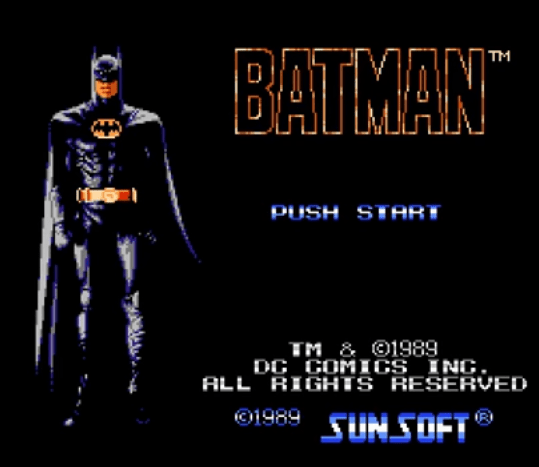
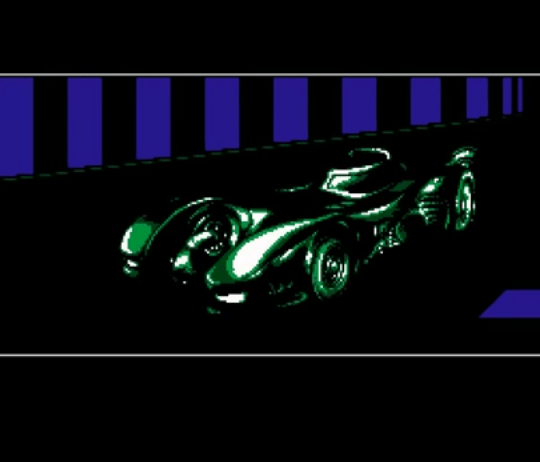
Title screen (screenshot taken by the author)

Batman: The Video Game is a side-scrolling platform game developed and published by Sunsoft. It was released on the NES in Japan in 1989, and North America and Europe, as well as for the Game Boy, in 1990 (oddly both games are actually different). I chose to review the NES version.

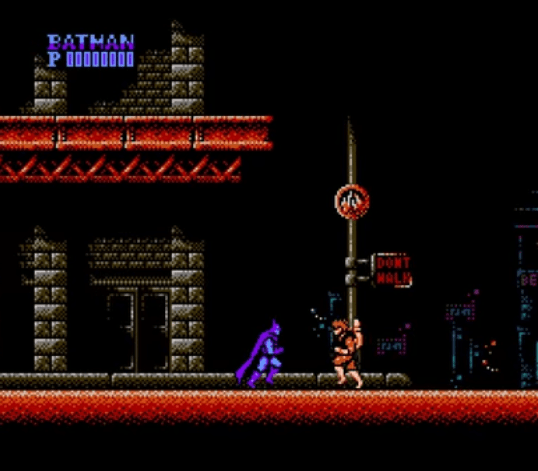
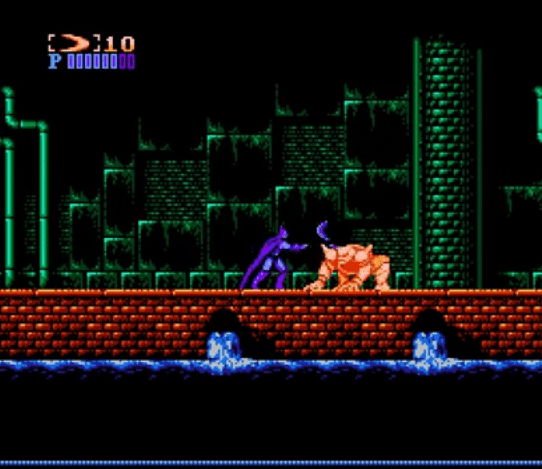
Fight your way through the City of Gotham (screenshot taken by the author)

Plot

The bicentenary of Gotham City is fast approaching, and the city’s officials are hard at work planning festivities for the event. However, the city is engulfed by a crime wave orchestrated and encouraged by the Joker. It is up to the Caped Crusader to stop the Joker’s evil plans and save the city.

Although based on the 1989 Tim Burton movie Batman, there are a few differences. Yes, you are pursuing the Joker and trying to save the City of Gotham, but the game contains enemies with rocket packs or that are mutants. These definitely do not appear in movie. However, these differences take nothing away from the game.

The in-between level animations look fantastic (screenshot taken by the author)

Gameplay

The game contains five levels (each level has four or five sub-levels):

Gotham City

AXIS Chemical Factory

Underground Conduit

Ruins of Laboratory

The Cathedral

Whilst battling his way through the levels, Batman utilises hand-to-hand combat as well as weapons such as a spear gun, Batarang and dirk (which is more like a shuriken) to defeat his enemies. The levels contain no time limit allowing your to take your time through the levels.

Beautifully detailed with an understated, dark colour scheme suits this game well (screenshot taken by the author)

How Does It Handle?

The controls are simple but they don’t need to be complicated. You can punch whilst standing and crouching, and select one of three weapons to use. You can jump to different heights, depending on how long you hold the ‘jump’ button for, and you can even use the walls to help you jump even higher and to avoid some nasty floor spikes.

Graphics

The game looks great! It begins with an awesome and intimidating looking title screen containing the figure of Batman looking menacing, and the game title in the same font used for the 1989 movie. Between each level, there is a short animated cutscene which again looks very cool.

For the in-game graphics, yes, Batman is coloured purple but that is purely so that you can see him clearly as the levels have a dark colour scheme. The levels themselves are very detailed. They help create a dark atmosphere for the game which fits well with Tim Burton’s vision. The sprites are beautifully illustrated, detailed and colourful. Throughout the game, I noticed that there was practically no flicker in the graphics at all.

Music

The music, although not from the movie, fits the game well and certainly has an arcade feel to it. It’s great for getting the adrenaline pumping.

Replay Value

Although this is an incredibly tough game, I had a lot of fun playing through it. The difficulty level is my only real gripe with this game. You are unable to change the difficulty level which is a pity as this would have given the game a bit more replay value.

Did I Complete The Game?

No, I was unable to get past level 3-1

What The Critics Said:

Mean Machines: “A classy license through and through. If you own a NES you’d be bats to miss this – so there! Overall 87%[1]

Awards:

Best Movie to Game – Electronic Gaming Monthly’s ‘Best and Worst of 1989’[2]

My Verdict:

“It looks great, sounds great, has tight controls and a challenge to test even the most hardened of gamers. The game proves that not all superhero games suck.”

Rating:

What are your memories of Batman: The Video Game? I would love to hear your thoughts, and don’t for get to follow and subscribe so that you don’t miss my latest reviews! You can also find me on Instagram: @nicklovestogame.


[1] ‘Nintendo Review – Batman’. (December 1990). Issue 3:78-9.

[2] ‘Best and Worst of 1989’. Electronic Gaming Monthly – 1990 Video Game Buyer’s guide. Issue 5:22.

Spider-Man: Return of the Sinister Six – Review

I love a superhero game. I imagine nearly everyone wishes they had some kind of superpower (although whether you’d use your powers for good or for evil I can only guess). Superhero games, although popular are, for the most part, disappointing. Why is it so hard to get superhero games right? Is it because they are difficult to translate into video games? Are they just a quick money grabbing scheme on an unsuspecting public? Are our expectations simply too high? I’d love to hear your thoughts on this.

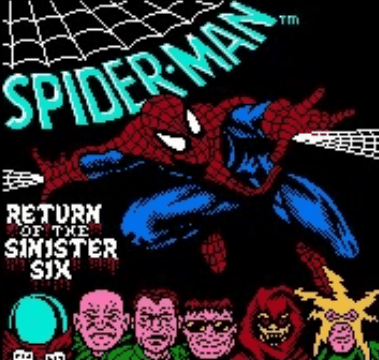
Title screen (Screenshot taken by the author)

Spider-Man: Return of the Sinister Six is a single-player action-adventure game developed by Bits Studios. It was published by LJN for the NES in 1992, and Flying Edge for Master System and Game Gear in 1992 and 1993 respectively. For this review, I played the NES version.

Plot

The game is based off the story arc found in The Amazing Spider-Man #334-339. The plot sees Doctor Octopus attempting to take over the world with the Sinister Six (Electro, Sandman, Mysterio, Vulture, Hobgoblin and, of course, Doctor Octopus himself).

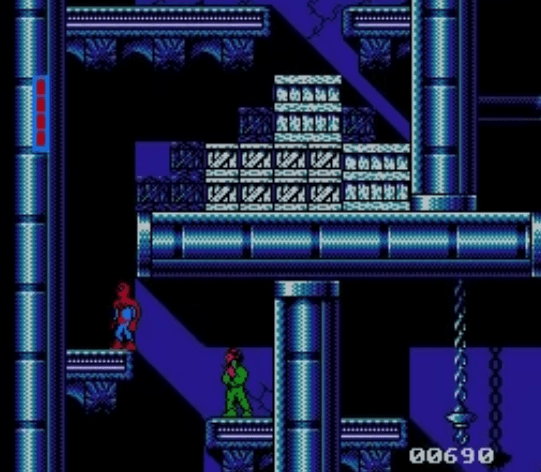
I think the graphics and animations are pretty darn good. Although when standing still, Spidey looks like he has developed a bit of a paunch (Screenshot taken by the author)

Gameplay

There are six levels which will see Spidey swing through. At the end of each level, you will face one of the Sinister Six:

Level 1: The Power Station

Level 2: Toxic Waste Dump

Level 3: The House of Illusion

Level 4: Streets and Rooftops

Level 5: The Forest & Hobgoblin’s Cave

Level 6: Doc Ock’s Castle

Throughout the levels, Spidey must swing and fight his way through a number of minions. There are two types of pick-ups available to you. Attack Web Fluid (which one can only assume is different from Swinging Web Fluid), and a special item which is different on every level. This item needs to be found for you to progress to the next level.

Spidey takes on The Sandman (Screenshot taken by the author)

How Does It Handle?

The gameplay is a let down. Firstly, the buttons have been mapped incorrectly. ‘A’ is punch and ‘B’ is jump. This may seem pedantic to some, but it makes the game feel “unnatural” and less intuitive. Spider-Man’s flying kick needs to be surprisingly accurate to cause damage. So many times you completely miss the enemy and fly straight past them.

Spidey is only able to shoot a web at his enemies when he picks up web packs…oddly, he seems to have an endless supply to swing around the levels. Whilst we’re on the subject of web-swinging, this is supposed to be a Spider-Man game, but you really don’t need to use your web-swinging or wall-climbing skills at all. Why Spidey can climb some walls and not others is anyone’s guess. At least the jumping is easy to control I guess.

For the most part, Spidey’s movements are very quick as one would expect, but he is quite slow when turning around. This frustrating, particularly when fighting The Sandman.

Interestingly, the enemies only inflict damage on you when they actively strike you. You can easily run and jump past them with no damage taken.

This game DOES win back points with me because the levels aren’t simply a case of running through, evading enemies and reaching the end. You actively need to find objects to help you progress in the level. For example, on Level 2, you need to find dynamite and a detonator in order to progress, adding a layer of complexity to the game.

Music

The music sucks! Nuff said!

Graphics

The graphics are pretty good. The backgrounds are incredibly detailed and the animation of Spidey is smooth, although oddly, when he stands still, it looks like he has bit of a paunch and not like the svelte superhero we are all used to.

Before each level, there is a very brief illustration letting you know which member of the Sinister Six you wil be facing next. The illustration looks good but I feel the cutscenes should have been a bit more in the comic-strip style with more than one slide, which in turn would give the story a bit more depth.

Replay Value

There is only one difficulty setting which limits its replay value.

I really didn’t spend that much time on this game, nor did I wish to. Where was the need for using your web to swing over large gaps or over pools of deadly lava or fire? Why couldn’t Spidey hang upside down on the ceiling to avoid enemies or crawl into small spaces? This game is not fun and I found it very disappointing.

Did I Complete The Game?

Nope, at present I’ve been unable to complete Level 3.

What The Critics Said:

Nintendo Power: “George: ‘The graphics are good and the villains are great, but play control is a little rough’; Rob: ‘You can release what looks like a perfect punch and end up releasing right past your enemy. That gets kind of frustrating, but otherwise it’s a fun game. Overall 2.925/5.[1]

Electronic Games: “The graphics are average for the NES, though the flicker is excessive in a few spots. The Spiderman figure is failry well animated and holds together during leaps, climbing, and somersaults. As in many 8bit cartridges, it isn’t always easy to tell three dimensional objects from non-interactive backgrounds. Overall 72%.[2]

My Verdict:

“Initially, I disliked this game outright. After revisiting it, it has gone up a little in my estimation. The game looks good, but is let down by the gameplay and the music. You really could take a character from another game and swap them for Spidey because his special skills of web-slinging and wall-climbing aren’t really needed for this game. It’s not a game you’ll be returning too. Unless you’re a Marvel fan, I’d not bother with this one.”

Rating:

What are your memories of Spider-Man: Return of the Sinister Six? I would love to hear your thoughts, and don’t for get to follow and subscribe so that you don’t miss my latest reviews! You can also find me on Instagram: @nicklovestogame.


[1] George & Rob., ‘Now Playing – Spider-Man: Return of the Sinister Six’. Nintendo Power. (October 1992). Issue 41:103 &105.

[2] Stevens, S., ‘Video Game Gallery: NES – Spiderman: Return of the Sinister Six’. Electronic Games. (December 1992). Volume 1 Issue 3:61-2.

Mitsume ga Tooru (The Third-Eyed One) – Review

When a games console is coming to the end of its life, the output of the games can seem odd, as if the creators are just trying to cash in one last time before taking the console out back and humanely laying it to rest. One would assume that the last few games would be the ones that really push the console to its limits, highlighting the need to move to a more powerful machine. However, it seems that some creators delve into the depths of their rejected titles to see if they can use up the last of their stockpile before moving on to pastures new. Mitsume ga Tooru (The Third-Eyed One) was one such game.

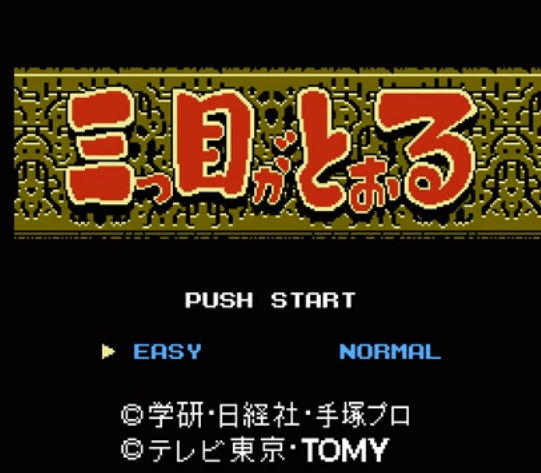
Title screen (Screenshot taken by the author)

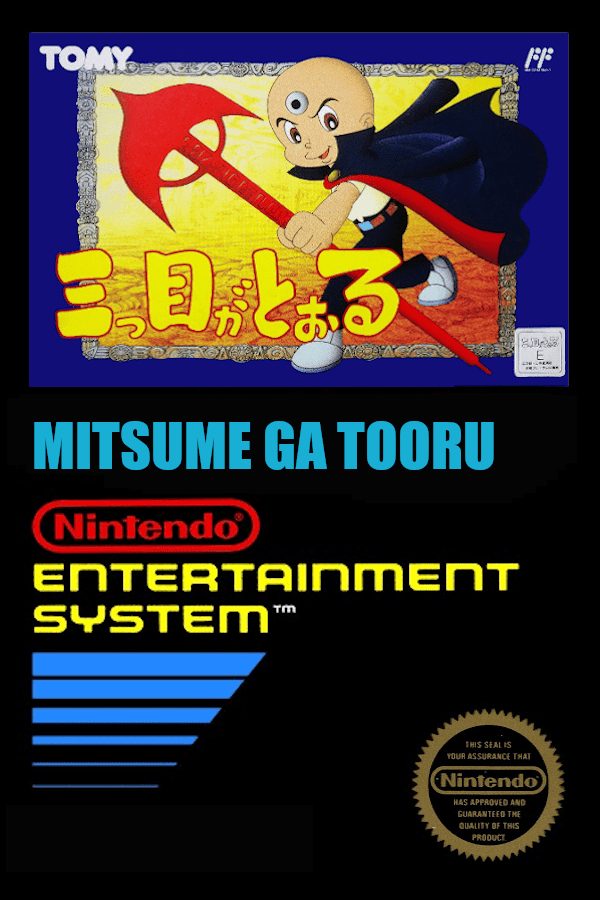
This week’s review, is Mitsume ga Tooru (The Third-Eyed One) an action-platformer based on the manga and anime series of the same name. It was developed by Natsume and published by Tomy for the NES in 1992.

Hosuke’s main attack is a bullet fired from his third eye (Screenshot taken by the author)

Plot

Hosuke Sharaku is the last Three-Eyed Man. He must rescue his friend Wato Chiyoko who has been captured by Prince Godaru.

Gameplay

The game contains five levels with a boss at the end of each level. The levels are:

Level 1 – The City, where Hosuke searches for his girlfriend.

Level 2 – Forest and Caves

Level 3 – Ancient Pyramid and Catacombs

Level 4 – Abandoned Ship

Level 5 – Sodom

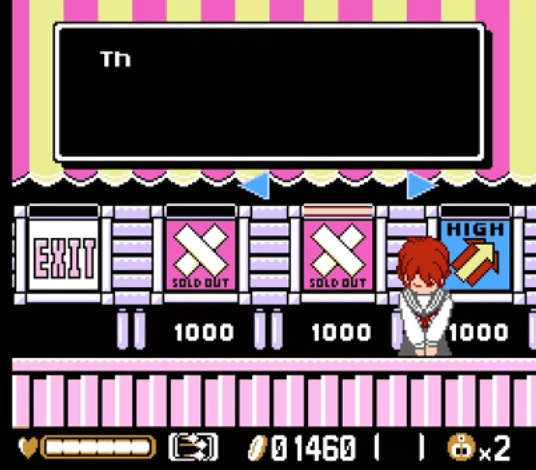
When you destroy enemies, they drop coins for you to collect and spend at your girlfriend’s shop (Screenshot taken by the author)

Graphics

The backgrounds and sprites are really nice (if a little limited in variety) and are just as good as other games released on the NES c.1992 like Felix the Cat and Joe & Mac, and are better than others like The Simpsons: Bartman Meets Radioactive Man, Hudson Hawk, and The Blues Brothers.

For me, the gameplay just feels very lacklustre. You can jump and shoot (from your third eye), and summon a red condor (which can be used as a platform), but that is about it. You cannot crouch, or shoot in any direction other than forward, which is annoying to say the least. Occasionally, you need to use a spear to help you jump over tall walls or large gaps. When you throw the spear, it only goes a short distance before turning and coming back toward you. You need to jump and land on it for it to stop and become a platform for you.

You also only run at one speed, which is lucky because there is no time limit to race against. The controls are tight and there is practically no slide when you come to a stop. Jumping is easy to control too.

You have six bars of life in your life meter which deplete by one whenever you get hit. If you fall off the edge into a hole, your red condor swoops down to save you but you still lose one bar of life. If you lose all your lives, you can continue but will be taken back to the beginning of the stage.

When you destroy an enemy, they will drop coins for you to collect. These coins can be used to buy special weapons and bonuses from your girlfirend. These include:

Wave – It allows you to curve your shot up and down, handy for enemies attacking at higher and lower altitudes.

Sonic – Three consecutive shots (High Middle and low)

High – Fires three laser blasts straight at the enemy

Spear – I’m not entirely sure what this one does as the language of the game is in Japanese.

You can also buy medikits to increase health, and extra lives. In order to select the different weapons, you need to pause the game. However, you will lose those weapons if you die.

The issue I have with the gameplay is that one expects more from a game released in 1992, even from the outdated (by 1992 the NES was outdated) NES. You’ve only got to look at other titles such as Vice: Project Doom (1991), Duck Tales (1989), and even Jackie Chan’s Action Kung-Fu (1990) to see how fun and interesting gameplay can be on the NES.

The sprites and backgrounds are beautifful illustrated (Screenshot taken by the author)

At least the fact that there are two difficulty settings offers the gamer some replay value.

Did I complete the game:

I lost all my lives on stage 3. Although you can continue, I didn’t enjoy this game that much to warrant continuing to play.

What the critics said:

At present, I have been unable to find a contemporary review of this game.

My verdict:

“This game looks great and has tight controls…but there just isn’t that much to it. This game could have been awesome but it just felt half-arsed. By all means, play it if a friend has it or you can find a cheap copy, but you won’t be losing sleep if you never play this game. I feel this game is aimed toward a younger audience and so is not a game I shall be returning to anytime soon.”

Rating:

What are your memories of Mitsume ga Tooru (The Third-Eyed One)? I would love to hear your thoughts, and don’t for get to follow and subscribe so that you don’t miss my latest reviews! You can also find me on Instagram: @nicklovestogame.

Metal Gear Solid – Review

Every now and then, a video game comes along that defines a generation. The game in question is always innovative and pushes the boundaries of what we thought was possible from a video game. These are the games that are burned into the brains of gamers everywhere. We’ve all heard of them, we’ve all played them, we’ve all loved them! In the late 70s it was Space Invaders, in the 80s it was Pac-Man and Super Mario Bros. In the early 90s it was The Legend of Zelda: Link to the Past (1991) and Sonic the Hedgehog (1991). In 1998 it was Metal Gear Solid!

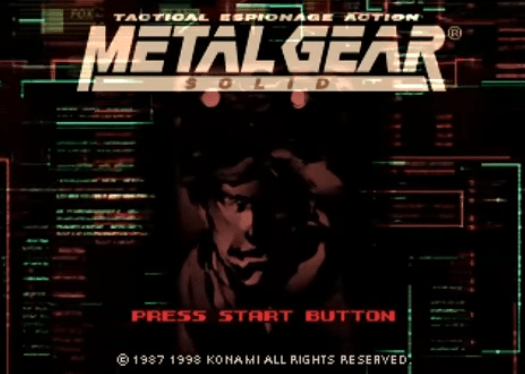
Title screen (Screenshot take by the author)

Metal Gear Solid (MGS) is a stealth game, billed as tactical espionage action. It was developed and published by Konami and released on the PlayStation in 1998 and for the PC in 2000. I used to own this game for the PlayStation all those years ago. However, for this review, I played the version found on the PlayStation Mini Classic.

Plot

Set in the year 2005, six years after the events of Metal Gear 2: Solid Snake (1990), a genetically enhanced special forces unit known as FOXHOUND has gone rogue and taken control of an island off the coast of Alaska. Why? Because the island contains a nuclear weapons disposal facility, meaning there are nuclear warheads present. Once they commandeer the facility, FOXHOUND threaten the US government with Metal Gear REX, a mecha capable of wielding and using nuclear weapons. To prevent nuclear weapons from being fired at the US, FOXHOUND demand the return of the remains of their deceased leader Big Boss as well as $1 billion within 24 hours.

Veteran Solid Snake is forced out of retirement by his former commanding officer and ordered to infiltrate the island and stop FOXHOUND.

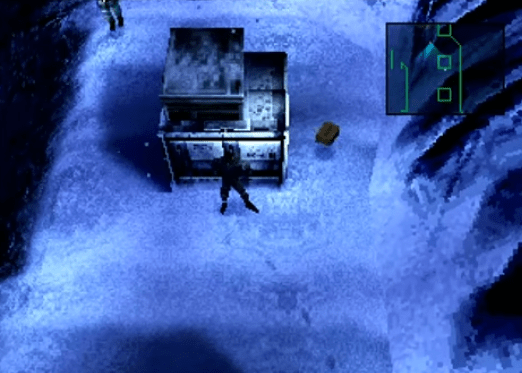
The map allows you to see the line of sight of the enemy soldiers and security cameras, allowing you to evade detection (Screenshot take by the author)

Gameplay

The object of the game is to use stealth. Your mantra should be discretion is the better part of valour.

You take control of Snake as soon as he has entered the facility. To help navigate your way through the facility, you have a map in the top right hand of the screen that shows you where soldiers and security cameras are located. It also shows you their line of sight allowing you to evade notice. This is particularly handy because the game is played mostly from an almost top down view. There are only a few occasions when the angle changes: if you are crawling through a tunnel or under something, if you are pressed against a wall in an attempt to peer around it, or if you are using binoculars or a sight on a rifle or missile launcher.

A smart feature I was impressed with is the ability to knock down on walls and crates to get the attention of a nearby guard who will approach the sound. This allows you to slip by undetected.

Should you be detected, the music will change to a dramatic theme, your map will turn red and a countdown will begin once you have moved out of the enemy’s line of sight. Once the timer reaches zero, the map turns yellow and begins another countdown. You must continue to stay out of the enemies’ line of sight else they will spot you again and your map will turn red. Once the yellow timer reaches zero the enemy stop chasing you and you can use the map again to see where the enemy are located.

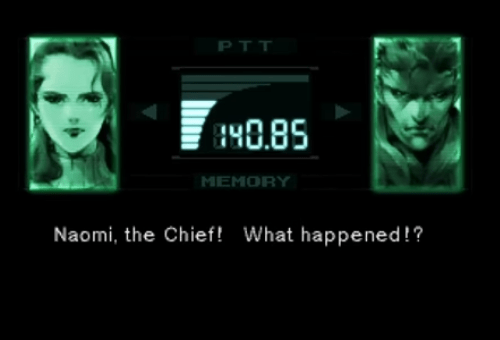
The codec allows you to communicate with mission control. They will either offer tips on how to procede or will contact you when the story is progressing (Screenshot take by the author)

You also have a codec, a communication device that allows you to speak to team members back at mission control. The people you communicate with will give you hints and tips on how to proceed. They will also contact you when the story progresses.

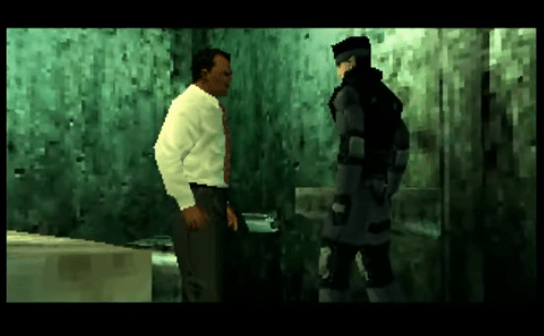
As the game progresses, you will trigger many cutscenes that will help story along and offer you more information. These cutscenes really draw you in. It’s the first game I played when I really felt like I was actively participating in a movie.

MGS really was a novel and innovative game when it was released. So much so that a training mode was needed. This could be found in VR Training Mode which allows you to get to grips with the controls and teachs you how to evade capture. It was very useful for gamers like myself who had hitherto been used to simple platform and sport games.

The cutscenes looked great for 1998, and really helped immerse you inot the story (Screenshot take by the author)

How Does It Handle?

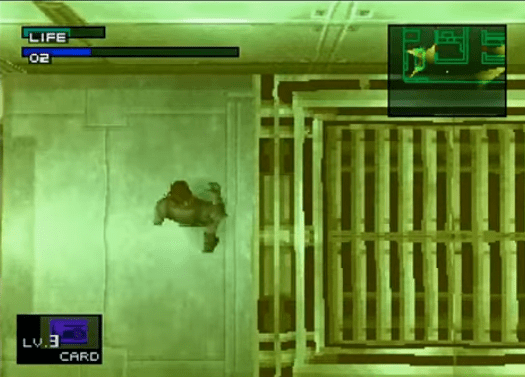
The controls and camera angles take some getting used to. The almost top down perspective, even when firing your gun or rifle, make it difficult to see where the enemy is if they are not on screen which is very frustrating. The left joystick is used for aiming but takes practice to become accurate with it.

Graphics & SFX

I remember when this game came out. A friend of mine bought it and lent it to me after he’d completed it. I was amazed! The graphics looked great for the time and the game felt eerily realistic…such attention to detail! MSG has several nice little touches too. For example, when it’s cold, you will see the breath from the sprites and when you are walking on snow, the guards will spot your footsteps. Also, when walking on some surfaces, if you run, you will create loud footsteps which will also alert the guards to your presence.

Music

The music in the cut scenes really add to the atmosphere of the game. Throughout the main part of the game there is no music. However, should you be spotted a dramatic piece kicks in pushing your adrenaline sky high as you try to hide from the enemy or kill the boss.

Spoiler Alert

MGS really was imaginative in many ways. It broke the fourth wall on several occasions which, as a younger gamer, really freaked me out. Naturally, I won’t spoil it for you here but all I will say is that when fighting Psycho Mantis, you really DO need to think outside the box to defeat him.

The storyline is full of twists and turns and I still don’t think I fully understand what was going on. It will certainly have you reading up more about the game trying to make heads and tails of it.

The over head angle can become frustrating as it is very limiting, particularly for a game where you really need to see your surroundings (Screenshot take by the author)

Did I Complete The Game?

Yes, but only on the easiest setting.

What The Critics Said:

Computer and Video Games: “Metalgear is distinctive in that the game is woven around the story, rather than the opposite way around. The story sections are all portrayed using polygons, but look as slick as any FMV. Occasionally it’s quite funny – the wobbly bum close-ups in the prison block should raise a titter – but it’s always gripping. Overall 9/10.[1]

Gamepro: “However, Metal Gear’s solid works get slowed by a few wrenches. An inconsistent frame rate occasionally stalls the eye-catching graphics. Especially annoying are instances where you zoom in with binoculars or the rifle scope, and the graphics slow to a crawl while you pan back and forth. Another annoyance is in the early stages of the game, as you’re constantly interrupted with advice from your team that’s all listed in the instruction manual. Yet, even with its minor and distracting faults, Solid is this season’s top offering and one game no self-respecting gamer should be without. Forget fast-food action titles with rehashed formulas that never worked; Metal Gear Solid elevates video gaming to high art. Overall 5/5[2]

Game Revolution: “Let’s face it – the hype surrounding Metal Gear Solid would be hard for any game to match. It won numerous awards after E3, and deserved most of them. In the end, we have a great game, one of the best for the system. But its diminished length and excessive no-interactive plot hold it back from truly reaching the highest plateau. Still, this is a must have for any PSX library and a ton of fun. Overall A-.[3]

Gamespot: “Five years from now, when we look back upon Metal Gear Solid, what will we see? The game definitely is revolutionary in many ways. It breaks new ground in gameplay and truly brings the video game one step closer to the realm of movies. It is, without a doubt, a landmark game. But the extreme ease with which it can be mastered and the game’s insultingly short length keep it from perfection. Plus, do we really want games that are more like movies? If Hideo Kojima, the game’s producer, was so set on this type of cinematic experience, he should really be making movies instead of games. While Metal Gear Solid currently stands alone, it stands as more of a work of art than as an actual game. It’s definitely worth purchasing, but don’t be surprised if you suddenly get extremely angry when you finish the game the day after you brought it home. Overall 8.5/10.”[4]

IGN: “I’m in awe. An admittedly ambitious project from the very beginning, Metal Gear Solid has managed to deliver dutifully on all of its promises. From beginning to end, it comes closer to perfection than any other game in PlayStation’s action genre. Beautiful, engrossing, and innovative, it excels in every conceivable category. Overall 9.8/10.[5]

Next Generation: “There are precious few games in this world that end up living up to the hype when they are released – especially when they’ve been hyped as much as this one. However, rest assured that this is a game no player should miss and the best reason to own a PlayStation. Overall 5/5.[6]

Official PlayStation Magazine: “Metal gear Solid is just asking to be teased and dominated, and any gamer wanting to lock horns with the ultimate in plot, action and originality must grab a copy immediately. Overall 10/10.[7]

Arcade: “A brilliant, technically stunning, well thought through release  that’s sure to influence action adventure games for many years. Overall 5/5. [8]

Awards:

PlayStation Game of the Year – Electronic Gaming Monthly 1998 Gamers’ Choice Awards (Editor and Reader’s Choice)

Adventure Game of the Year – Electronic Gaming Monthly 1998 Gamers’ Choice Awards (Editor and Reader’s Choice)

Best Sound Effects – Electronic Gaming Monthly 1998 Gamers’ Choice Awards (Editor and Reader’s Choice)

Best Graphics – Electronic Gaming Monthly 1998 Gamers’ Choice Awards[9] (Editor Choice)

Excellence Award for Interactive Art – 1998 Japan Media Arts Festival[10]

My Verdict:

“A truly legendary and ground-breaking game. Fantastic graphics and a fully engrossing storyline that will draw you in and mess with your head. Challenging and inventive boss battles will really test your mettle. You will certainly play through this game more than once!”

Rating:

What are your memories of Metal Gear Solid? I would love to hear your thoughts, and don’t for get to follow and subscribe so that you don’t miss my latest reviews! You can also find me on Instagram: @nicklovestogame.


[1] Alex C., (15th Aug 2001). ‘Playstation Reviews – Metal Gear Solid’. Computer and Video Games. (https://web.archive.org/web/20080615233719/http://www.computerandvideogames.com/article.php?id=8389 Accessed 13th December 2020).

[2] Major Mike, (13th July 2005). ‘Review – Metal Gear Solid’. Gamepro. (https://web.archive.org/web/20080602095023/http://www.gamepro.com/sony/psx/games/reviews/236.shtml Acessed 13th December 2020).

[3]  (10/1/1998). ‘Metal gear Solid – PS’. Game Revolution. (https://web.archive.org/web/20070219011314/http://www.gamerevolution.com/review/sony/metal_gear_solid Accessed 13th December 2020).

[4] Gerstmann, J., (September 25, 1998). ‘Metal Gear Solid Review’. Gamespot.com. (https://www.gamespot.com/reviews/metal-gear-solid-review/1900-2546002/ Accessed 13th December 2020).

[5] Nelson, R., (22 Oct 1998). ‘Metal gear Solid’. IGN. (https://www.ign.com/articles/1998/10/22/metal-gear-solid-6 Accessed 13th December 2020).

[6] ‘Playstation – Metal Gear Solid’. Next Generation. (December 1998). Issue 48:118-9.

[7] Griffiths, D., ‘Play Test – Metal Gear Solid’. OPM. (February 1999). Issue 42:88.

[8] Pelley, R., ‘New PlayStation Games – Snakecharmer’. Arcade. (December 1998). Issue 1:126.

[9] ‘1998 Gamers’ Choice Awards’. Electronic Gaming Monthly. Issue 117:109-113. (https://retrocdn.net/images/4/4d/EGM_US_117.pdf Accessed 1

[10] ‘1998 Japan Media Arts Festival’. Plaza.bunka.go.jp. (https://archive.vn/gkmXZ Accessed 13th December 2020).

Astyanax – Review

Game creators have never been shy about using aspects of ancient mythology as a basis for their games, and why wouldn’t they? Ancient mythology is filled with stories of derring-do: defeating giants, outsmarting the Gods and rescuing fair maidens. In Greek mythology, Astyanax (also known as Scamandrius) was the son of Hector, prince of Troy, and Andromache. When Troy fell, he was either thrown from the walls to his death by Neoptolemus or killed by Odysseus (depending on your source).[1]

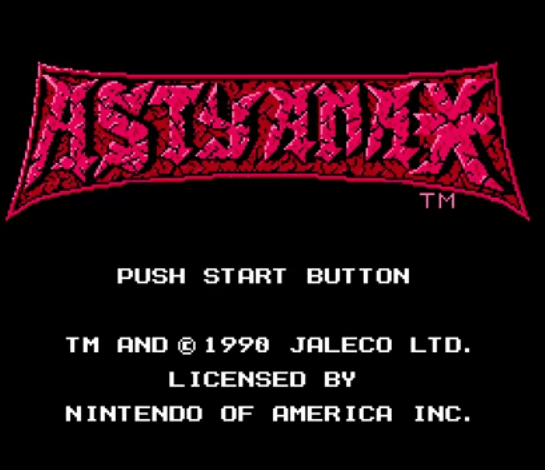
Title screen (Screenshot taken by the author)

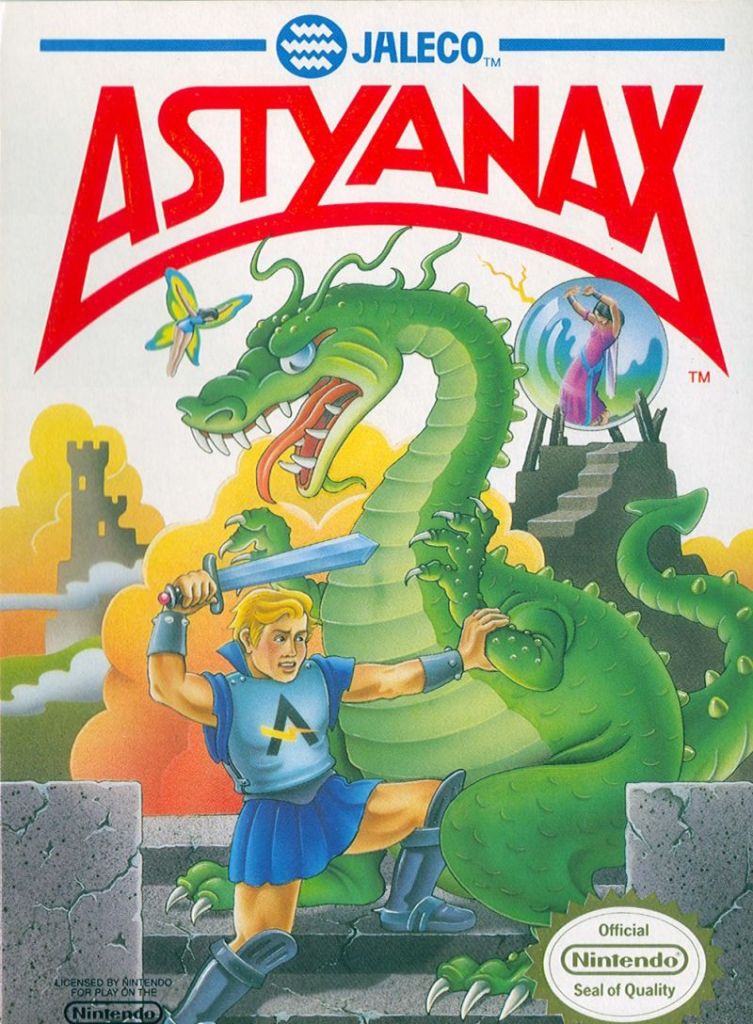
Astyanax, known in Japan as The Lord of King, is a side-scrolling platform action game developed by Aicom and published by Jaleco. It was first released in the arcade in 1989, then later that year on the NES in Japan before getting a release in Europe and North America in 1990. For this review, I revisited the NES version.

Plot

Astyanax is a 16-year-old student from Greenview High who keeps having a recurring dream of a woman calling his name. One day, he is transported to another dimension where he meets a fairy named Cutie. She persuades Astyanax to rescue Princess Rosebud, Ruler of Remlia, from the evil wizard Blackhorn. Using either the legendary axe known as ‘Bash’, a spear or a sword, Astyanax must fight through forests, caves and a castle to reach Blackhorn.

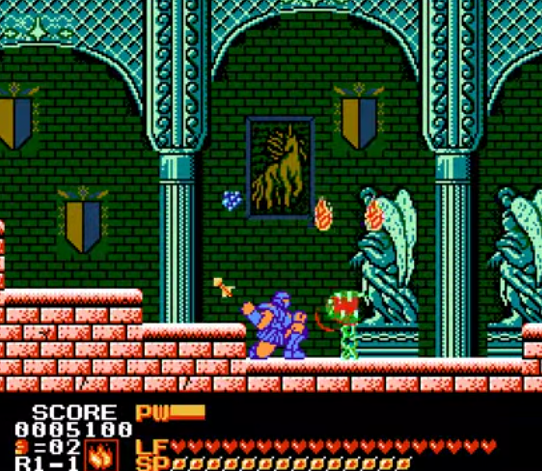
Graphics-wise, the game looks good. (Screenshot taken by the author)

Gameplay

You have energy three bars: the first is a power gauge showing how hard you hit the enemy. This descreases anytime you swing your weapon at an enemy. When you stop attacking, the bar increases again. The length of your power bar increases as you find power-ups. The second is your health bar, and the third is your magic bar. Unlike the arcade version, the NES version can only be played in one player mode.

How Does It Handle?

The controls, whilst easy to learn, are frustrating because you can only strike straight ahead, whilst crouching or whilst jumping. you cannot jab upwards. It is ridiculously tough too. Many enemies attack at awkward heights, and you find yourself accidentally pressing up and attack which casts a spell and uses up your magic supply. Some later levels have an insane number of monsters swarming the screen at once. Oddly enough, the end of level bosses are not that difficult to defeat.

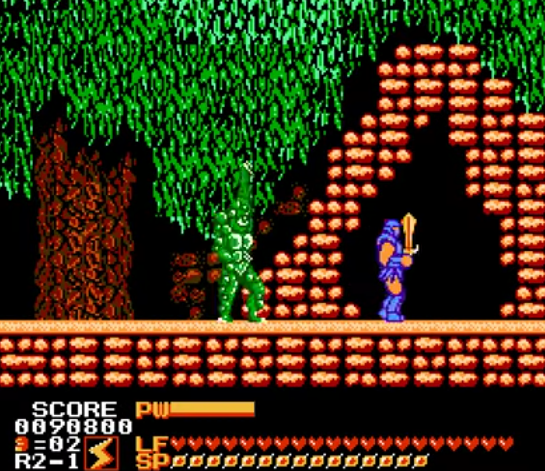
Attack of the Green Monster type thing! (Screenshot taken by the author)

Graphics

Graphically, this game looks good, especially when compared to its contemporaries such as Iron Sword: Wizards and Warriors 2 and Clash at Demonhead, both released in 1989. It has detailed and colourful backgrounds, and well defined sprites, especially the end of level bosses. After each level, you are treated to some beautifully illustrated cut scenes which help move the story along. However, there is a bit of flicker when you attack the enemy and at times, whole blocks of detail disappear.

Replay Value

Once completed though, there is little to make you want to play through again as the game only has one difficulty setting.

I wanted to give this game a better score but due to the monotonous music, the attacking issue, and the fact that you will need a cheat code to complete this game, lowers the score for me. There are better, more enjoyable games out there. I just didn’t enjoy playing this game that much so I doubt I shall be returning anytime soon.

Did I Complete The Game?

Yes, but I had to use the invincibility cheat, as this game is too damn hard. Without the cheat, I could only get to the end of level boss on level 3.

What The Critics Said:

As of yet, I have been unable to find contemporary reviews.

My Verdict:

“This game looks good, has tight controls, and a challenge that hardened gamers look for. The issue is that the controls are limited. It is perhaps too tough for the average gamer and has little in the way of replay value. It’s worth playing, but it’s not a game you’ll return to very often, if at all.”

Rating:

What are your memories of Astyanax? I would love to hear your thoughts, and don’t for get to follow and subscribe so that you don’t miss my latest reviews! You can also find me on Instagram: @nicklovestogame.


[1] ‘Astyanax’. (22nd December 2015). Oxford Classic Dictionary. (https://oxfordre.com/classics/search?siteToSearch=classics&q=astyanax&searchBtn=Search&isQuickSearch=true Accessed 24th November 2020).

Sonic the Hedgehog 3 – Review

It must be difficult for game creators. Do they stick to a winning formula for a sequel and run the risk of the concept becoming stale, or do they gamble on new features that have the potential to disgruntle loyal fans to the franchise? It’s a hard balance to get right as many games have shown over the years. The question is, will Sonic 3 fall foul of over-zealous creators or will they get it right for a third time in a row?

Title screen (Screenshot taken by the author)

Sonic the Hedgehog 3 is a platform game developed and published by Sega. It was released in 1994 on the Sega Mega Drive/Genesis and latterly for Windows in 1997. Later, it would be made available for the Game Cube, PS3 and Xbox 360. For this review, I revisited the Sega Mega Drive version.

Visually, very little has changed between Sonic 1, 2, and 3 (Screenshot taken by the author)

Plot

After Sonic 2, Dr. Robotnik’s spaceship crashed into the mysteriously floating Angel Island. He meets and tricks the island’s guardian, Knuckles the Echidna, into believing that Sonic is trying to steal the Master Emerald. Sonic and Tails must once again defeat Dr. Robotnik who is being aided by Knuckles.

Gameplay

Once again, you can choose to play as Sonic and Tails alone, or have as Sonic but have Tails tagging along controlled by the computer. Apart from the usual gameplay of running through levels and collecting of rings in order to access bonus stages to win the Chaos Emeralds, there are several new features to this game. Firstly, access to the bonus stages are now via giant gold rings which can be found in secret locations.

The bonus stages themselves are much for interesting and fun than Sonic 2. They consist of Sonic and Tails running around a globe in third person view. The object is to collect all the blue spheres. If you hit a red sphere you fail. The more blue spheres you collect, the faster Sonic runs, adding some difficulty to the harder bonus stages.

Once Sonic gains all the Chaos Emeralds, he can become Super Sonic, making him invincible for a short period of time.

Secondly, Sonic can attain three shields: lightning, bubble and fire, each giving him a unique ability when using them.

The new bonus stages are so much more enjoyable than the tunnels of Sonic 2 (Screenshot taken by the author)

How Does It Handle?

As usual, this game plays incredibly well. Tight controls, fun to play, and the new features, although not groundbreaking or genre defining, add enough to ensure the franchise doesn’t become stagnant.

One of the issues I have with this game is that the levels are so much bigger than previous games, but are filled with slopes and shoots and other features that you feel like you’re just whizzing through the levels without actually doing much. I appreciate that the whole appeal of Sonic is that he is fast, but sometimes it feels like you’re just on autopilot because he just whizzes through the game. Along with this speed comes another issue that the creators have yet to rectify…when Sonic is going at full speed, and the screen is busy, the game lags and the sprites flicker.

Graphics

As expected, the game looks great. Lots of beautifully designed levels for you to navigate through, and plenty of unique sprites to evade or destroy. However, I feel that if you were to be shown screenshots of Sonic 1, 2 and 3, there are times you’d be hard pressed to distinguish between the three. This is certainly not the case with the Mario franchise where the graphics of each game are very distinguishable. Now, I concede that Super Mario 1, 2 and 3 were all released on the NES and Super Mario World on the SNES, and so is bound to look different. However, even when comparing Super Mario World to Super Mario World 2: Yoshi’s Island, there is a clear distinctive design to the levels and enough gameplay changes so that both games can stand on their own.

The all too familiar underwater levels…you’d have thought he would have learnt to swim by now! (Screenshot taken by the author)

Music

The intro music has changed and although it is more update and emphasises Sonic’s speed. I still prefer the original theme tune. That is a personal thing of course. The rest of the music, for me, isn’t as memorable as previous games with the exception of the Carnival Night levels where they’ve mixed in a very “carnival” sounding theme into the music.

Did I Complete The Game?

Yes, with all Chaos Emeralds captured.

What The Critics Said:

Electronic Gaming Monthly: “Sonic 3 is simply the perfect Sonic game. It beats out all previous Sonics with outstanding graphics, more hidden items and new items like many types of shields…The bonus rounds give the average player a fair chance this time, unlike “those tunnels” of part 2. It seems unlikely that Sega will be able to top this one. Overall 38/40.[1]

Gamepro: “Sonic 3 proves that you can teach the old hedgehog new and exciting tricks. Take that old Sonic magic, add fun new variations, and you have another spectacular game. Overall 19/20.[2]

Hyper: “Everything you expect from a Sonic game, nothing more. If it was just me, the score would be lower, but Sonic freaks are going to go off. Overall 90%[3]

Entertainment Weekly: “Sonic 3, by contrast, represents the apotheosis of the Sonic concept: Unlike previous games, the stages are linked cinematically (Sonic and Tails literally tumble from one scene to the next), and the characters have some stunning new techniques — I, for one, never thought I’d see a spiny blue hedgehog on a pair of skis. Ovearll A+[4]

Mean Machines Sega: “Sonic’s Back! Back! Back! This game re-establishes him as King of the Hill, Top of the Heap and Life Emperor of the Platform Universe. Huzzah! Huzzah! Overall 94%[5]

Sega Power: “No radical changes to the game, but its sheer size, super graphics, wealth of imagination and above all playability, guarantee Sonic gold status. Overall 90%.[6]

Sega Magazine: “An amazing release and serious contender for Best Platform Game ever award. Overall 95%.[7]

My Verdict:

“Sonic 3 is a very good game. If you like the solid formula of speed, ring collecting and bonus stages that the creators have been successful with in their first two outings, then this game is for you and you’ll enjoy every second of it. Personally, I worry that there aren’t enough differences between this and the previous two games and it’s in danger of going stale.”

Rating:

What are your memories of Sonic the Hedgehog 3? I would love to hear your thoughts, and don’t for get to follow and subscribe so that you don’t miss my latest reviews! You can also find me on Instagram: @nicklovestogame.


[1] ‘Sonic 3’. Electronic Gaming Monthly. (March 1994). Volume 7, Issue 3:30.

[2] ‘Proreview – Sonic the Hedgehog 3’. (March 1994). Gamepro. Issue 56:42-44.

[3] ‘Sonic 3’. Hyper. (March 1994). 4:26-29.

[4] Strauss, B., (February 11, 1994). ‘Sonic CD; Sonic Chaos; Sonic Spinball; Sonic 3’. Entertainment Weekly. (https://ew.com/article/1994/02/11/sonic-cd-sonic-chaos-sonic-spinball-sonic-3/ Accessed 23rd November 2020).

[5] ‘Mega Drive Review – Sonic 3’. Mean Machines Sega. (March 1994) Issue 17:49.

[6] ‘Mega Drive Review – Sonic 3’. Sega Power. (March 1994). Issue 52:30.

[7] ‘Mega Drive Review – Sonic 3’. Sega Magazine. (February 1994). :87-88.