Kid Chameleon – Review

16-bit consoles are never short of platform games, all with varying degrees of popularity and success. Once you have a game like Sonic the Hedgehog, all platformers will naturally be compared to it. Originality isn’t always easy to produce and so many will naturally fall short.
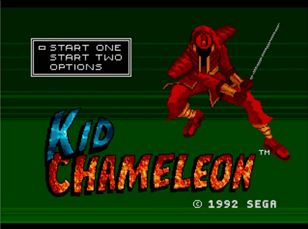
Title screen (screenshot taken by the author)

Kid Chameleon is a platform game developed and published by Sega. It was released for the Mega Drive in 1992 and latterly as part of the Sega Smash Pack 2 (2000) for the PC, Sega Genesis Collection (2006 for the PlayStation Portable and the PlayStation 2, on the Wii Virtual Console in 2007, and Sonic’s Ultimate Genesis Collection (2009) for the Xbox 260 and PlayStation 3, and on the Sega Forever service in 2017.
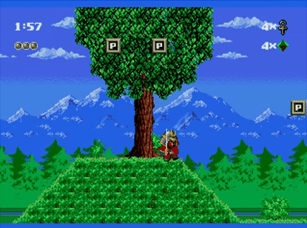
The Samurai helmet transforms you into Red Stealth (screenshot taken by the author)

In an unnamed town in the US, a new and exciting game has hit the arcades. Wild Side uses holograms to create a fully immersive video gaming experience, much like the holodeck from Star Trek. Soon children start to go missing once they enter Wild Side and they are never seen again. It is soon discovered that the boss of the game, Heady Metal, has escaped the confines of his programming and is kidnapping the children once he defeats them at the game. Kid Chameleon is the toughest and coolest kid in town. He agrees to take on the challenge of Wild Side, defeat Heady Metal and rescues the children imprisoned within the game.

The controls are simple. You can walk, run, crawl and jump. Like many platformers, you need to hit the blocks from below to gain whatever bonus is inside. The bonuses you receive will increase your time, contain different helmets to transform you and gain different abilities, and diamonds. Collecting diamonds helps energise your abilities. If you have 2, 5, 20 or 50, then you can engage your Diamond Power which is dependant on what sort of helmet you are wearing. You can also find Ankh’s which give you extra lives and coins which give you extra continues. Once you collect a helmet, you will automatically transform into a new character and will be bestowed unique abilities.

There are nine helmets that Kid Chameleon can wear, and they all have unique powers:

Iron Knight – Enables you to climbs walls.

Red Stealth – Samurai that can use his sword to attack or as a pogo stick to smash blocks below your feet.

Berzerker – An American football helmet with horn on the top. When you run at walls, he can smash them to break through.

Maniaxe – Jason from Friday 13th’s mask. He throws axes.

Juggernaut – Turns Kid Chameleon into a tank that fires skull bombs.

Micromax – Shrinks Kid Chameleon to access smaller places. He alsouses wallas to jump higher.

EyeClops – Allows Kid Chameleon to see invisible blocks.

Skycutter – Enables you to fly upside down and traverse ceilings.

Cyclone – Enables you to fly.
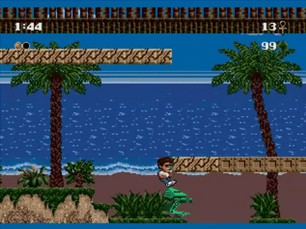
When you aren’t wearing a helmet, you can still attack some enemies by jumping on them (screenshot taken by the author)

Kid Chameleon can be played in one- and two-player modes. In two-player mode, each player simply takes turns. The physics of the game take some getting used to. When you begin to move, he starts slowly and quickly gathers speed. This sounds pretty straight forward but it just feels odd in this game. The physics when jumping are very unforgiving and I found him difficult to control. An interesting option is that you can choose whether to have Kid Chameleon walk and then use the speed button to speed up, or to run all the time and use the speed button to slow down.

I thought the graphics were pretty good. The sprites are clearly defined, colourful and are nicely animated. The levels and background are also colourful and very detailed. A nice touch is where on the first level, the reflections of the trees on the water are moving.

The music is fine for the game, no complaints here. It just hovers in the background not imposing itself too much on the game.

Interestingly, there is only one difficulty setting which obviously limits its replay value.

There is something about this game that just didn’t click with me. I liked the idea of the helmets giving you unique powers, but I felt the way they were used fell short of their initial vision. At the end of the day, I felt that the physics of the game made it feel that you weren’t really in control of the character. That could just be me sucking at video games of course.

Did I complete the game?

Not yet, I am currently unable to get past the Bagel Brothers level.

What the critics thought:

MegaTech: “Kid C is a platform game with a novel twist, the hero can change his form by collecting hats. This power lets him masquerade as a samurai, a tank, a psycho and a host of other characters. What lets it down is the lack of challenge which persists throughout the game bar one level. Overall 64%.[1]

Sega Force: “Aesthetically its ok: backgrounds are good, sprites are excellent, tunes and FX are reasonable – there’s nothing fault. Hardened platformers will take to this, those looking for the next Sonic should wait. Overall 82%.[2]

Console XS: “Above all, the kid is cool. With his Ray-Bans glistening in the midday sun, he must venture over and underground to rescue his mates. Best of all, kid can change his persona, resulting in constant variety. Overall 89%.[3]

My verdict:

“Great graphics but I don’t think the physics of the game is very good and the game can be very unforgiving at times. Other than that, there is nothing necessarily wrong with this game, but it lacks a bit of the “WOW” factor for me.”

Rating:

What are your memories of Kid Chameleon? I would love to hear your thoughts, and don’t for get to follow and subscribe so that you don’t miss my latest reviews! You can also find me on Instagram: @nicklovestogame.


[1] ‘Game Index – Kid Chameleon’. MegaTech. (May 1992). Issue 5:77.

[2] ‘Reviewed! – Kid Chameleon’. Sega Force. (April 1992). Issue 4:12-16.

[3] ‘Console XS AZ – Kid Chameleon’. Console XS. (June 1992). Issue 1:12-131.

Golden Axe III – Review

Golden Axe (1989) has gone down in history as being one of the greatest hack ‘n’ slash games of its generation. Golden Axe II (1991) was a respectable sequel but isn’t held in as high regard as its predecessor. The arcade sequel Golden Axe: The Revenge of Death Adder (1992), wasn’t released onto home consoles until decades later. Naturally, one can be forgiven for thinking that the franchise had ended. However, Sega decided to have one more stab at rivalling the original.

Title screen (screenshot taken by the author)

Golden Axe III is a side-scrolling hack ‘n’ slash developed and published by Sega. It was released on the Mega Drive in Japan in 1993 and north America in 1995 for the Sega Channel. For some reason, it didn’t get a European release until it became available as part of Sega Genesis Collection (2006) for the PlayStation 2 and PlayStation Portable, and the Xbox 360 and PlayStation 3 as part of Sonic’s Ultimate Genesis Collection (2009). It can also be found on Wii Virtual Console. I chose to review the version found on Sonic’s Ultimate Genesis Collection (2009) for the PlayStation 3.

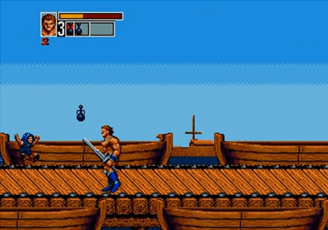
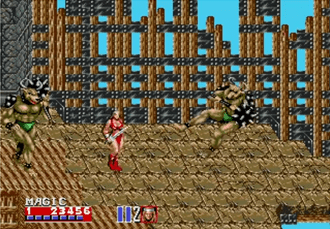
The sprites are more detailed than in Golden Axe (1989) and Golden Axe II (1991) (screenshot taken by the author)

Plot

It has been many years since Gilius Thunderhead, accompanied by Ax Battler and Tyris Flare, retrieved the Golden Axe from Dark Guld. Both Battler and Flare has since passed away, leaving only Gilius, a dwarf whose life expectancy is greater than humans, to relive their battles alone. Gilius vowed to travel to the ends of the Earth to find the Gods who had bestowed the Golden Axe among the humans to return it to ensure that future dark powers could not use it for their evil ends. As his ship sailed across the ocean and mighty tempest sank his ship. The next thing he knew, he had awoken in a land he had never been to before. He may have imagined it, but he could have sworn that the last thing he heard before losing consciousness was an evil laughter. There was one thing he that he is sure of. The Golden Axe he was carrying to the Gods has been lost…

Half a year later, Gilius’ injuries are healing and he feels strong enough to set out again in search of the Golden Axe. He is soon caught up in war between good and evil. The Kingdom of Splash Hill where he had been recovering is under attack from the armies of the evil Damned Hellstrike who has conquered and enslaved the people. The king is missing and the queen is confined to the castle. Gilius soon puts two and two together and realises that Damned Hellstrike is in possession of the Golden Axe. However, Gilius is too old to go into battle and must seek out four warriors to go in his place.

These four warriors are:
Kain Gurindaa – A soldier who wields a battle sword. His closes friends were killed by the Demon Army and he is seeking revenge. He is basically Ax Battler.
 
Sara Baan – Once part of a troupe of travelling entertainers, her friends were killed when the Demon Army invaded. Possessing the Blue Dragon Sword given to her by her father, she too seeks revenge. She is bascially Tyris Flare.
 
Puraudo Kuragga – A descendant of the giants, he lends his strength to the cause after Gillius rescued him from the Demon Army where he was being held captive.
 
Kuronosu “Ibiru” Reito – This half-man half-beast was once a human. He has been cursed by the Demon Army and seeks to regain his human form.

Gameplay

As with the prequels, you must battle through a variety of areas using hand to hand combat and magic. You can now block enemy attacks. To do this, you need to push the D-pad backward away from the enemy.

One nice addition to this game is that there are times when you can choose which path to take. Some paths will be easier, but the harder paths yield better power-ups, so the choice is yours.

Once again you can use Bizzarians. There are four types. The Red Dragon who fires flames, the Green Dragon that bites, the Purple Snail that uses its tongue to attack, the Green Snail, which is superior to the Purple Snail, because it has a longer tongue. Unlike Golden Axe II, if you are riding a Bizzarian and you get hit, you WILL lose some of your health. If you wish to mount one, you will need to press the action button near one. You will not mount one automatically. This also goes for picking up potions and health.

As with previous games in the series, you can gain potions to increase your magical power (screenshot taken by the author)

How Does It Handle?

The gameplay is very simple, if not a little repetitive due to the limited move set that each character has. The enemies are wiser to your offensive tactics and defend themselves better than in previous instalments. This is particularly noticeable when fighting the skeletons who have shields, and the big bosses who are exceptionally good at defending themselves.

In previous Golden Axe games, the attributes of the characters were clear. Gilius Thunderhead was the strongest in hand-to-hand combat but had the weakest spells, Ax Battler was in the middle ground and Tyris Flare was weaker in battle but had the strongest spells. In Golden Axe III it is unclear who the strongest is in hand-to-hand combat. To me, it seems that it’s Puraudo Kuragga as he seems to take less time to kill the evil minions. However, each character seems to have the same number and strength in spells, which doesn’t make sense as this means there is no advantage in playing with Sara Baan who is weaker and has less of a reach even though she wields a sword.

The new blocking action doesn’t work very well. You need to guess when they are going to attack else your fighter simply turns around and starts walking the other way. This method of defence is fine for one-vs-one fighter games when attack will only come from one direction, but when attacks can come from multiple directions, its just doesn’t work. It would have made more sense and would have been more intuitive to have a button to act as the blocking function. Also when fighting the baddies, they have the odd ability to be either slightly high or lower in the foreground and can still hit you with an attack which is incredibly annoying.

Annoyingly, you now seem to have no control over how much of your magic you use. I don’t understand why they didn’t keep this in from Golden Axe II (1991) as this adds strategy to the game.

The Bizzarians really are pathetic in this game and really are not worth the hassle of mounting them only to get knocked off almost instantly.

One good feature of this game is that you can rescue villagers to gain extra lives (I think it’s five per extra life). You can also find hearts which increase the size of your health bar.

Graphics

The graphics, as far as the sprites are concerned, are much larger and more detailed than in previous instalments and look great! However, the backgrounds are very lacklustre (only occasionally is there parallaxing), and the animations of the spells are really crap!

Out of the four characters, I preferred weather playing as Kain Gurindaa or Puraudo Kuragga; the former because of the reach of his sword, and the latter because of his strength.

Music

The music is more fitting than it was with Golden Axe II (1991), but again, is very forgetable.

Replay Value

There are two endings: one good, one bad. To get the good ending, you’ll need to reach the final boss with at least one continue left. Incidentally, when you do die, a message appears on the screen stating “And You Dead!” which made my brother and I laugh. It must be a translation issue.

Did I Complete The Game?

No, I made it the castle but have not gotten any further as of yet.

What The Critics Said:

Electronic Gaming Monthly “The graphics are by far some of the most plain looking on the Mega Drive. Plus, the new magic effects aren’t as impressive as before. No rating given.”[1]
  
Sega Power: “Not the sequel we expected, I’m afraid. Everything about this game smells. If you’ve got the superior Golden Axe II, be content with that – you won’t find anything here. Overall 34%.[2]

Sega Pro: “The competitive two player mode still remains, but the moves are limited and the control a little too shabby in comparison to modern head-to-heads we see today. Again, the challenge is far too easy and the gameplay soon becomes repetitive and boring. This is one too many. Overall 54%.[3]

Computer & Video Games: “Loads of levels and stacks of moves. Boring, tedious, dull, unattractive. Is that enough? Overall 62%.[4]

My Verdict:

“A disappointing sequel. This game is just not fun to play. Which is a shame as the graphics of the sprites are greatly improved from the previous instalments. There is more wrong with this game than right.”

Rating:

What are your memories of Golden Axe III? I would love to hear your thoughts, and don’t for get to follow and subscribe so that you don’t miss my latest reviews! You can also find me on Instagram: @nicklovestogame.


[1] ‘Golden Axe III’. Electronic Gaming Monthly. (December 1993). Issue 53:111-1.
[2] Mortlock, D., ‘Mega Drive Review: Golden Axe 3’. Sega Power. (September 1993). Issue 46:50-1.
[3] ‘Short Reviews – Golden Axe III’ Sega Pro. (September 1993). Issue 23:84.

[4] Anglin, P. & Rand, P., ‘Review Mega Drive – Golden Axe III’. Computer & Video Games. (September 1993). Issue 142:54-5.

Golden Axe II – Review

Golden Axe has gone down in history as arguably one of the most famous hack ‘n’ slash videogames ever to grace the arcade, warranting its conversion to the 16-bit consoles. With such success, questions surrounding sequels are bound to be asked. Can lightning strike twice or will Golden Axe II be nothing but a damp squib?

Title screen (screenshot taken by the author)

Golden Axe II is a side-scrolling hack ‘n’ slash game that can be played in single and two-payer modes (Be careful in two-player modes as you can damage the other player if not careful). It was developed and published by Sega and released solely on the Mega Drive in 1991. It would later be released on the PlayStation 3 and Xbox 360 as part of Sonic’s Ultimate Genesis Collection (2009), as well as iOS. For this review, I played the Mega Drive version found on Sonic’s Ultimate Genesis Collection (2009).

Although this is the sequel that was released on home consoles, in 1992, another sequel, Golden Axe: The Revenge of Death Adder was released but only appeared in the arcade. As far as I can tell, this sequel was set after the events of Golden Axe II.

Plot

A few years after the defeat of Death Adder, evil once more rises to threaten the world. After many years imprisonment, Dark Guld escapes and steals the Golden Axe. With his army of evil demons, he terrorises the world bringing death and destruction to peaceful villages everywhere. Once again, it is up to the mighty barbarian Ax Battler, the Amazonian Tyris Flare and the dwarf Gilius Thunderhead who defeated Death Adder, to come forth once more and reclaim the Golden Axe, defeat Dark Guld and bring peace to the world.

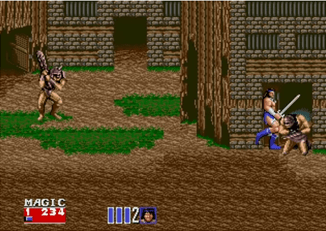
Ax Battler once again swings his mighty sword against the armies of evil (screenshot taken by the author)

Gameplay

The three playable characters from the first Golden Axe, Ax Battler, Tyris Flare, and Gilius Thunderhead, return in Golden Axe II to take on Dark Guld and his army of evil minions. The game features a total of seven levels: six scrolling levels and a final end of game boss battle against Dark Guld:

  • Ravaged Village
  • Ruins
  • Tower
  • Dragon’s Throat Cave
  • Castle Gates
  • Castle
  • Dark Guld’s Chamber

As before, each character has a unique move set and magic spells. Gilius Thunderhead is the strongest and so has weaker spells. To cast spells you first need to collect spell books. These can be found either lying around, or will be dropped by evil mages when you attack them. In the option screen under the magic heading, you can select ‘Special’ or ‘Normal’. When ‘Normal’ is selected and you use your magic, you will automatically use the strongest level of spell you can according to the number of spell books you have acquired. When you select ‘Special’, you can press and hold the ‘magic’ button in order to select how strong you wish your spell to be. This is a nice new feature as it adds an element of strategy to the game and means you don’t have to waste your strongest spells on the lesser minions.

The Bizarrians (Chicken Leg, Green Dragon, Red Dragon) are also still available. When you find these along your journey, it is advisable that you ride them and use their abilities. If you get hit whilst rding a Bizzarian, you won’t lose any of your life bars.

An additional sub-game is The Duel. In one-player mode you must fight total of 15 rounds against ever increasingly strength of opponents. In two-player mode player one and two fight each other.

Amazonian Tyrius Flare also returns to fight Dark Guld and his evil army (screenshot taken by the author)

How Does It Handle?

I did notice a slight change in the tactics of the computer sprites, in particular, the bosses. In the original, you simply kept the bossses on either side of you and ran back and forth using your diving attack. However, in this game, the sprites are wise to this and move slightly up or down the screen to avoid this tactic. The final boss also seems to stay half off the screen, meaning that you cannot ambush him in two-player mode.

Now, is it me, or is this game very short? Both this game and the original can be completed within 25 minutes, but for some reason, this game feels shorter. In reality the game length is around the same as the original. Funny how the mind can play tricks on you, but then again, humans are notoriously bad at gauging time without the aid of a clock. Either way, as a sequel this game should be longer.

Graphics

There seems to be very little improvement in the graphics (if any), although parallax scrolling has been added on the Dragon’s Throat Cave level and the spell graphics have slightly improved. Other than that, there is very little to discuss here.

Music & SFX

The music over the title screen does not fit with the theme of the game. It sounds like it would be more fitting in a game associated with crime such as Dick Tracy (1991) or Bonanza Bros. (1991). The in-game music is very…meh. It is easily forgettable and a little annoying. You’ll be forgiven for not recognising it when you hear it again.

I didn’t actually like the SFX. They felt lazy and sounded a little odd. An example of this is when you fill an enemy. They don’t cry out, but emit a sound reminiscent of a childish “blurgh” as if eating something disgusting.

Replay Value

This game has plenty of replay value. When playing the single or two-player standard game, you can change the difficulty setting to either ‘Easy’, ‘Normal’ or ‘Hard’, as well as adjusting the number of life bars you have per life.

Did I Complete The Game?

Yes, I have completed it on Normal Mode.

What The Critics Said:

Mean Machines: “A disappointing sequel which lacks new ideas, and challenge, and is just too similar to the original to be really worthwhile. Overall 69%.[1]

Mean Machines: “What a con! Golden Axe II is almost identical to the original game. It follows the same formula, has virtually no new features and certainly isn’t worth the money. Buy the original if you haven’t already got it. If you have, look elsewhere for your beat ‘em up thrills. Overall 69%. [2]

My Verdict:

“There is nothing glaringly wrong with this game. The issue is that there is very little to distinguish it from its predecessor. It’s almost an exact carbon copy and just feels like a lazy money-grabbing move by the creators. A disappointing sequel.”

Rating:

What are your memories of Golden Axe II? I would love to hear your thoughts, and don’t for get to follow and subscribe so that you don’t miss my latest reviews! You can also find me on Instagram: @nicklovestogame.


[1] ‘Megadrive Review – Golden Axe II’. Mean Machines. (December 1991). Issue 15:142-4.

[2] ‘Game Index: Mega Drive – Golden Axe II’. Mean Machines. (October 1992). Issue 1:139.

Gain Ground – Review

As you can imagine, thousands of video games have been created since they became a thing way back in the 1960s. So, it is perfectly understandable that with great regularity you may come across a game that you have never heard of. However, just because you have never heard of a game doesn’t necessarily mean that it isn’t worth playing. After all, it may be one of those “hidden gem” games that one finds every now and then. Could Gain Ground be one such game?

Title screen (screenshot taken by the author)

Gain Ground is an action-strategy game developed and published by Sega. It was first released for the arcade in 1988 before being ported to the Master System and Mega Drive in 1991. For this review, I played the Mega Drive version found on Sonic’s Ultimate genesis Collection (2009) on the PlayStation 3.

Plot

In the year 3000AD, there is no poverty. There is no war or discrimination. Humans finally live in a time of total peace…but…with total peace comes a price. Without the threat of violence, humans have forgotten how to defend themselves, leaving them vulnerable. To retrain humans how to fight, the United Earth Government create a war simulation run by a supercomputer called Gain Ground. During testing, an error occurs, and its creators are taken hostage. A rescue party is also captured. The government have one final chance to rescue the creators and stop the computer.

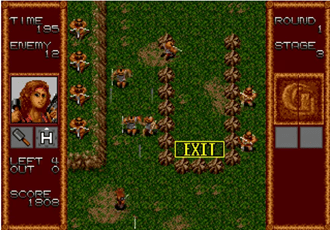
Mediocre graphics but this is a highly addictive game (screenshot taken by the author)

Gameplay

The game can be played in single and two-player mode. Even though you are competing for the highest score, the two-player mode is co-operative. There are five rounds, with each round having 10 stages. The last stage of each round being a boss level. The rounds are as follows:

Round 1 – Dark Ages

Round 2 – Middle Ages

Round 3 – Pre-Revolutionary China

Round 4 – Present day

Round 5 – Future

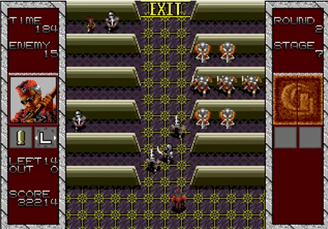
The on-screen information allows you to see the time limit for each stage, the number of enemies left to kill, the character you are using, how many of your soldiers you have left to escape, how many have already escaped, and your score.

There are two ways to complete each stage. You can either destroy all enemies on screen or you can guide all your soldiers safely to the exit. At the beginning of each stage, you have the opportunity to choose which soldier you wish to use. If that soldier is killed by an enemy, they will turn grey before becoming an icon on the screen. You then pick another soldier to complete the mission. You can pick up your fallen comrades and finish the level to ensure they are available in the next stage.

Each character has unique weapons, special weapons, abilities, and weaknesses, and so it is important to use each character where they will be most useful. For example, some are powerful but slow. Others are weak but fast…you know…the usual trade off.

You must choose to either run the gauntlet to escape or kill all enemies on screen (screenshot taken by the author)

How Does The Game Handle?

The game is very easy to learn. You can move and fire in all directions, but when using some of the special weapons, you will automatically orientate yourself to fire up the screen. This can be a great help at times and a hinderance at others. You also have to be accurate with your shots and this will take some getting used to. It can be frustrating when you miss the enemy by a hair’s breadth and they are able to kill you.

Graphics

The graphics are just what you need for a game like this. They are mediocre but detailed enough so that the game is playable. They won’t win any awards, mind. However, this game isn’t about graphics. It is about the action and there is plenty of that!

I had never heard of this game before reviewing it. I have to say I was pleasantly surprised. This is just the sort of game that I would have played with friends for hours and hours in my teenage years. It is fun, challenging, and highly addictive like all arcade games should be.

Music

I actually enjoyed the music, especially early on. The music has a typical arcade-style upbeat tempo that gets your blood pumping for the action. Upon completion of each stage, you are rewarded with a nice little victory riff.

Replay Value

There are three difficulty settings to choose from. Easy offers you up to eight continues and the game ends after Round Three Stage 10. Normal offers up to four continues, and hard gives you no continues but you have all 20 of your soldiers available to you from the beginning. These changes with each difficulty level offer a good level of replay value.

Did I Complete The Game?

No, I couldn’t get past Round 3 Stage 4. I will, however, definitely be returning to this game.

What The Critics Said:

Sega Pro: “Great two-player action as you battle through multiple levels of complex action. You control a band of warriors from ancient times right through to the future. Detailed graphics and very addictive gameplay. Overall 89%.[1]

Raze: “…the graphics are very small, and the sound not too spectacular. But a closer inspection reveals some great animation on the characters and their weapons, and a splattering of colour and variety all through the game. Overall 92%.[2]

Computer & Video Games: “It’s very simple and very boring. You’d have to be stark raving mad to part with thirty quid for this… Overall 49%“.[3]

Mean Machines: “A very accurate conversion of an obscure and hopelessly crap arcade game which features the average graphics, rubbish sound and boring gameplay of the original machine. Overall 43%.[4]

Sega Power: “Choose the right soldiers in this intriguing flick-screen combat game. Heavy on strategy, its slower pace might make a change from alien death. Unusual two-player mode. Overall 3/5.[5]

My Verdict:

“Pleasantly surprised by this game. Although the gameplay is simple and the graphics won’t blow you away, I found it enjoyable, challenging and highly addictive.”

Rating:

What are your memories of Gain Ground? I would love to hear your thoughts, and don’t for get to follow and subscribe so that you don’t miss my latest reviews! You can also find me on Instagram: @nicklovestogame.


[1] ‘Gain Ground – Mega Drive’. Sega Pro. (December 1991). Issue 3:18.

[2] ‘Gain Ground’. Raze. (May 1991). Issue 7:64.

[3] ‘Byte Size Mega Drive Review – Gain Ground’. Computer & Video Games. (March 1991). Issue 112:72.

[4] ‘Review: Mega Drive – Gain Ground’. Mean Machines. (October 1992). Issue 1:139.

[5] ‘The Hard Line – Gain Ground’. Sega Power. (October 1991). Issue 23:53.

Star Trek: Judgement Rites – Review

Star Trek: 25th Anniversary (1992) was a commercial success and highly praised by critics on MS-DOS. Star Trek fans everywhere were treated to the reunion of the original cast with episodic-type missions that contained all the atmosphere and charm of the television series. A sequel would be released a year later. Would it achieve the same success as its predecessor?

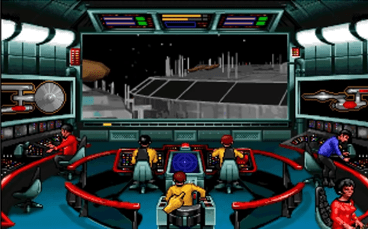
Title screen (screenshot taken by the author)

Star Trek: Judgement Rites is a single-player point and click game developed by Interplay Productions and released for MS-DOS in 1993. A version would be developed by Mac OS and released on the Mac in 1995. I chose to review the PC version downloaded from Steam.

Plot

Judgement Rites picks up directly after the final mission of 25th Anniversary (1992). Once again you take command of the USS Enterprise bridge crew and are instantly thrown into a scenario that could spell disaster for the Federation. There are eight missions or “episodes” for you to complete with the emphasis on brains over brawn. The main story arc consists of the crew becoming aware that the missions they are embarking on seem to have been created by a superior race of aliens who are testing the Federation’s suitability for contact.

Captain’s Log…(screenshot taken by the author)

What’s New?

During each mission, Kirk, Spock and Mccoy beam to a planet or another spaceship. They are joined by a fourth member of the crew whose speciality is needed for that particular mission. In 25th Anniversary (1992), the focus was very much of Kirk, Spock and McCoy but this game also allots time to other characters such as Uhura and Scotty, allowing them to come to the fore and shine.

Gameplay

The gameplay is identical to 25th Anniversary (1992). You use the cursor to direct your characters to interact with objects and characters. When speaking to other characters, there are times when you have the option to choose a diplomatic or terse response. This will directly affect your end of mission score. If your end of mission score is too low, you will be ordered back to Starfleet Academy to retrain, ending the game so save multiple games and save often.

The missions and story are more complex than 25th Anniversary (1992). The game really tests your problem solving skills (screenshot taken by the author)

How Does It Handle?

The interface is very user friendly and I can’t imagine anyone not being able to learn easily how to work the game.

There are a few differences between Judgement Rites and 25th Anniversary (1992). Firstly, 25th Anniversary (1992) focussed on individual missions much like the TV show. Judgement Rites sees most of the missions follow a story arc throughout the game. Also, unlike 25th Anniversary, you do not have to fight in a starship battles when playing on Easy Mode, which I was a little bit disappointed in. After all, we all love a good starship battle don’t we? Guess I’ll just have to play through again on a harder setting.

Graphics

Once again, the vibrancy of the colours and the detail of the sprites and background are very pleasing to the eye. Apparently, Judgement Rites had sharper graphics and SFX than 25th Anniversary, but after comparison I can’t say I noticed it really. Maybe the backgrounds were more detailed but the improvements maybe so subtle as to go undetected by my aging eyes.

I found this game harder and the missions more complex than 25th Anniversary, especially the mission called “Through This Be Madness…”. I felt that the puzzles were harder and there was greater depth to the material of each mission.

SFX & Music

The original cast all return to voice their characters which, naturally, makes you feel as if you are playing an episode from the Original series. The game just wouldn’t be the same without the dulcet yet unemotional tones of Spock, or the comedic bickering of Spock and McCoy that we know so well from the television series.

The music has improved a little I feel. As well as the regular Star Trek themes, there are some original pieces which are very distinctive and add well to the atmosphere of the game.

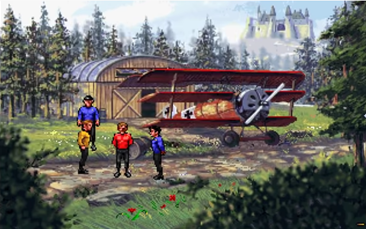
A character from the Original series makes an appearance and no it’s not Harry Mudd (screenshot taken by the author)

Personal Memories

I first played this game almost 20 years ago. If memory serves, the voices of the original cast were not available then. I can’t remember if the issue was my computer or not but according to my research, the voices of the cast were only available on the CD-ROM versions. I wish more of these games were created as they are so much fun, and not just for Star Trek fans. I’m sure point and click fans would also enjoy the challenge of the game.

Together, 25th Anniversary and Judgement Rites feel like the final season of the Original series that the crew and fans deserved. With the passing of DeForrest Kelly, James Doohan and Leonard Nimoy, games revolving around the Original series are incredibly unlikely.

Did I Complete The Game?

Yes, but I did need to use a walk through several times. Much more than I did with 25th Anniversary (1992).

What The Critics Said:

Electronic Entertainment: “Judgement Rites captures the feel of the original show, down to the nuances of the dialog. Other than Kirk, though, the characters in the game aren’t used to their fullest potential, so there’s room for improvement. Overall 9/10.[1]

Awards:

Game of the Month – Electronic Entertainment (March 1994)[2]

My Verdict:

“Complex and challenging puzzles, fantastic dialog true to the TV show, bright colourful graphics and excellent SFX. There is more depth to the peripheral characters although, it is still the Kirk, Spock and McCoy show. Pity about the lack space battles though.”

Rating:


[1] Olafson, P., ‘Game of the Month – Star Trek: Judgement Rites’. Electronic Entertainment. (March 1994). :80-1.

[2] Ibid,. :80-1.

Flicky – Review

Quite often, game developers would re-release arcade games onto home consoles, no doubt in a bid to cash in once its arcade popularity waned. Unless they were re-vamped a little, these games could look dated, and underwhelming compared to more modern releases. I’ve never been a fan of the basic platformer where you simply accumulate points and there is very little story, but then there are millions who do so maybe I’m wrong about my disdain for these money-guzzlers. What are your views on games like Flicky being released at a high price on a console seven years after its arcade release?

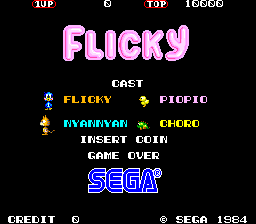
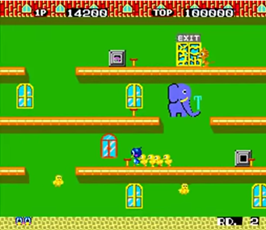
Title screen (screenshot taken by the author)

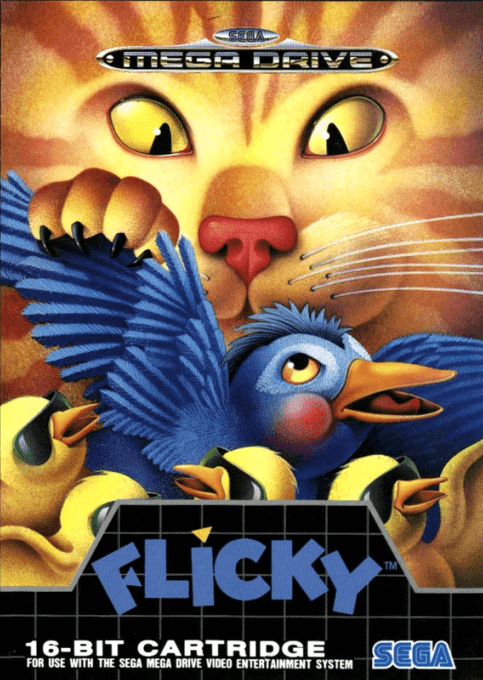
Flicky is a single-player platform game developed by Sega. It was released by Sega in the arcades in 1984 (Bally Midway in the US). Originally ported to the SG-1000 in Japan, it was released in North America and Europe in 1991 on the Sega Mega Drive. I chose to review the version found on Sonic’s Ultimate genesis Collection (2009) on the PlayStation 3.

Gameplay

You play as a blue bird called Flicky who must save all the little Chirps before they are eaten by the Tiger cats and Iggy lizards. To save a Chirp, you simply walk past them, and they begin to follow you. Once they are following you, you need to escort them to the door where they can escape, and you gain points. The more Chirps you rescue at any one time, the higher your points multiplier. The speed with which you rescue the Chirps is also a factor when accumulating points. You must do this whilst avoiding the cats and lizards which kill you as soon as they touch you. Thankfully, you can defend yourself by picking up various objects and hurling them at the beasties.

Rescue the Chirps before Tiger cats and Iggy lizards get you (screenshot taken by the author)

How Does It Handle?

The physics of the game are quite hard to control and take some getting used to. The jumping action is rather floaty, and you tend to bounce of the walls when you hit them. It is also very slow in changing direction, and lots of practice is needed to spot the cats and lizards to be able to avoid them in time. I found the Iggy Lizards the hardest to spot and got killed by those little bastards a lot.

Graphics

Although bright and colourful, the graphics of this game may have been excellent for when it was released in the arcade in 1984, but by the time it was released on the Mega Drive in 1991, things had moved on and the game looks dated. The sprites are so small that it is difficult to make out the detail that should be there. Considering games such as Sonic the Hedgehog, Super Mario World and Mickey Mouse: Castle of Illusion were all released around 1991, I can’t imagine why anyone would bother with Flicky unless it was incredibly cheap (unlikely), wanted the game purely to add to their collection, or were buying it for a child. These later games contain so much more in regard to story, characters, graphics and music.

Music

The music isn’t actually that bad. On the contrary, the music is quite fun and gives this game a light, playful feel.

Did I Complete The Game?

There are 99 levels to play through, but I did not have the patience or desire to play this game for too long. I simply got bored. I think I had had my fill by level 10.

What The Critics Said:

Electronic Gaming Monthly: “Here is a low cost game for the Genesis aimed purely at younger players. The theme is cute, as are the characters, but 99 levels is a little much. Since the enemies and music don’t change, the game becomes tiresome quickly. The bonus stages do break the monotony a bit. Overall 21/40”.[1]

Mean Machines Sega: “The conversion of the ancient coin-op looks crap, sounds crap and plays…brilliantly! It’s very simplistic, but for some reason the action is incredibly enjoyable and addictive. Check it out! Overall 88%.[2]

Sega Power: “Cheap maze-chaser with 99 levels of moderately difficult platform action. Cute and definitely aimed at younger players. Overall 2/5.[3]

My Verdict:

“Bright and colourful with cute music is all you can say about this game. There just isn’t the detail or depth to it and it feels like a quick cash in on Sega’s part. It’s cute and great for youngsters, but by 1991, looks dated and I’d suggest spending your money on better games out there…unless you’re a collector of course.”

My Rating:

What are your memories of Flicky? I would love to hear your thoughts, and don’t for get to follow and subscribe so that you don’t miss my latest reviews! You can also find me on Instagram: @nicklovestogame.


[1] ‘Review Crew – Flicky’. Electronic Gaming Monthly. (April 1991). Issue 21:24.

[2] ‘Review: Mega Drive – Flicky’. Mean Machines. (October 1992). Issue 1:138.

[3] ‘The Hard Line – Flicky’. Sega Power. (October 1991). Issue 23:53.

Fatal Labyrinth – Review

Some gamers love nothing better than to take control of an individual or a group of fighters and battle through endless dungeons gaining experience points, better armour, better weaponry and even stronger magic spells. To me, these games feel a tad monotonous and I rarely complete them purely because I don’t have the desire to spend hours fighting the same monsters to gain a few levels to help defeat a big boss only to have to do the same again soon after. It feels like a waste of time to me. Fatal Labyrinth, although containing RPG elements, is an alternative to these types of games. A sort of RPG-lite if you will. The question is, is it any good?

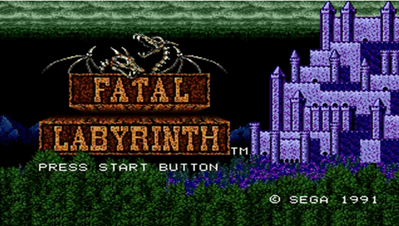
Title screen (Screenshot taken by the author)

Fatal Labyrinth is a single-player RPG developed and published by Sega. It was released on the Mega Drive in 1991 and appears on Sonic’s Ultimate genesis Collection (2009) for the Xbox 360 and PlayStation 3. It was also released for Microsoft Windows in 2010 and can also be found on the Nintendo Switch. For this review, I played the version found on Sonic’s Ultimate genesis Collection (2009) on the PlayStation 3.

Plot

One day, in an unnamed village in a faraway unnamed land, the monstrous castle of doom known as Dragonia rises from the earth. Ghouls from the castle pour out and head towards the village. They steal the Holy Goblet, a sacred artifact and source of light in the world, and take it back with them to the castle leaving the villagers in a state of terror.

One man, Trykaar, volunteers to take up arms and infiltrate the castle to steal back the goblet. To find the goblet, he must search through 30 levels of labyrinth that are filled with all manner of creatures hellbent on stopping him.

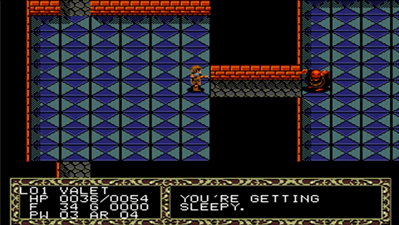
Beware the wizards, for they can paralyse you, leaving youu open to attack. (Screenshot taken by the author)

Gameplay

Throughout the labyrinth, you can pick up various weapons, shields, body armour, helmets and bows to defend yourself with. You can also find many magical items such as canes, potions, scrolls and rings. Initially, you don’t know how strong each weapon is or what each of these magical items do until you use them.

You do not automatically pick up these items though, and only have limited numbers you can carry. However, rather than just discarding them, you can choose to throw them at the enemy which I think is a nice, realistic touch. Afterall, having a metal helmet thrown at your face isn’t exactly going to tickle.

Like other RPGs, you gain experience points when you kill enemies. You start as “Beginner” and as you level-up progress onto “Valet” and countless other names. With each level you increase your attack, defence and HP also increase.

When battling the monsters, they will only move in response to you moving. When you take a step, they will take a step at the same time. Some need to be next to you to attack, and others can throw projectiles at you. This means that once one is chasing you, it’s incredibly difficult to lose them so you may have to simply fight them.

Every five levels is an automatic checkpoint so that if you die, you will go back to Level 5, 10, 15 etc. You seem to have infinite continues so in theory can play until you get tired of the game. If you stay on the same level for too long, then the screen flashes and the monsters will respawn.

Food is a vital part of the game. When fed, the hero slowly regenerates health. If unfed for extended periods of time, the hero becomes hungry and loses health. If too much food is eaten, the character’s movements become sluggish due of overeating. This is an unnecessary addition to making the game even harder.

Throughout the levels, you can pick up gold. This has very little benefit in the game other than when you die, your gravestone is more elaborate, and more mourners attend your funeral. It’s almost as if the game creators know you are going to die a lot during this game.

Features to watch out for:

Secret Doors – You actively have to press the ‘Pick Up’ button (the square button on the PlayStation joypad) when you are next to a wall to find these secret doors.

Trap Doors – Occasionally, you will fall through the floor to the level below. You simply have to find the stairs again to take you up.

Booby Traps – You may also set off an alarm which causes enemies to respawn and surround you.

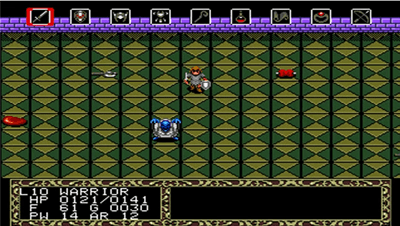
There are lots of items to search for and pick up throught the labyrinth. Beware, as not all items will aid you. Some are cursed! (Screenshot taken by the author)

How Does It Handle?

Disappointingly, There is very little intro to this game. You simply speak to a few people in the village before heading off to the castle. They don’t confide any information that is particularly helpful, and it all feels like a half-arsed afterthought.

This game is simple enough to play. The not knowing the strength of the weapons or what the magical items do works well as it forces you to experiment with your items and adds an element of danger and risk.

An annoying aspect to the game is that when you are approaching an enemy to attack, they will move aside one square and so you’ll turn to face them but they will move again meaning that you also move a square. It is as if you are engaging in a medieval dance with a monster. It’s very frustrating. Also, when you do get hit, you are frozen for a split second, and this makes it very difficult to escape, especially when surrounded by multiple enemies.

Graphics

Personally, I feel the graphics leave a lot to be desired. The initial top down view is similar to other games such as Phantasy Star III: Generations of Doom (1991), but that is all you get. There are no additional battle scenes where player and foes are seen with more elaborate illustrations and animations. The game also lacks the scary atmosphere of Shining in the Darkness (1991).

Music

The music in this game is very unassuming and very repetitive. You won’t need SFX or the music anyway for this game as they add very little to the atmosphere, so I just turned down the volume and listening to a podcast.

Replay Value

This game has plenty of replay value. Although it only has one difficulty setting, the levels are randomly generated so that every time you play, you are greeted with a new labyrinth, and the items will never be in the same place twice.

Did I Complete The Game?

No, I couldn’t get past Level 11.

What The Critics Thought:

Electronic Gaming Monthly: “Even though the mazes change constantly, the gameplay itself never changes, let alone the music! How Irritating! The price is right, however, for the Gauntlet fan who hates playing the same levels over and over. Since no passwords exist, you can only finish in one sitting. Yikes! Overall 20/40.[1]

Mean Machines Sega: “This Cross between a scrolling beat ‘em up and a role-playing game fails to deliver in both categories. The RPG aspect is dull and limited and slow, boring action fails to offer any thrills and spills. Overall 51%.”[2]

SegaPower: “Addictive roam around the labyrinth and collect the goodies RPG. Overhead graphics reveal themselves as you enter each room, which is nice, but it’s just too easy. Overall 2/5.[3]

My Verdict:

“Sadly, this game is rather monotonous and lacks atmosphere. The constant “swing and a miss” dynamic of the fighting is downright tedious. Mediocre graphics and dull music mean that you won’t be missing much if you give this game a miss. Pity really, as the concept had potential.”

My Rating:

What are your memories of Fatal Labyrinth? I would love to hear your thoughts, and don’t for get to follow and subscribe so that you don’t miss my latest reviews! You can also find me on Instagram: @nicklovestogame.


[1] ‘Review Crew – Fatal Labyrinth’. Electronic Gaming Monthly. (April 1991). Issue 21:22.

[2] ‘Review: Mega Drive – Fatal Labyrinth’. Mean Machines. (October 1992). Issue 1:138.

[3] ‘The Hard Line – Fatal Labyrinth’. SegaPower. (October 1991). Issue 23:53.

Ecco the Dolphin: The Tides of Time – Review

It is natural that the financial success and popularity of a video game should beg the question if a sequel (or prequel) will be wroth the investment. After all, I’m sure all game developers wish to be known for creating a successful franchise spanning generations of video gamers. The issue is that sequels are, more often than not, flops. Ecco the Dolphin was a huge success. So why not create a sequel?

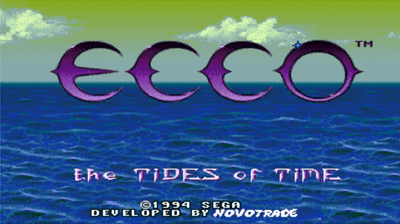
Title screen (Screenshot taken by the author)

Ecco the Dolphin: The Tides of Time is a single player action-adventure game. It was developed by Novotrade International and published by Sega for the Mega Drive, Game Gear and Sega CD in 1994, and for the Master System in 1996. The version I chose to review can be found on Sonic’s Ultimate Genesis Collection (2009) for the PlayStation 3.

Plot

Tides of Time picks up where the first Ecco game left off. Having saved his pod, and coincidently the world, from an alien vortex, Ecco retains the powers bestowed upon him by the Asterite that allow him to stay underwater indefinitely without the need for air. His sonar also produces a blast wave stunning enemy sea creatures. Things are peaceful in Home Bay.

One day, a powerful earthquake hits the underwater cave that Ecco is exploring. Unsure how, Ecco soon learns that his powers have left him and that the Asterite has been killed. Ecco soon meets an unusual dolphin named Trellia, who informs him that she is from the future and one of his descendants. She brings Ecco back to her future where he learns that the Vortex Queen survived, followed him back to Earth and killed the Asterite in Ecco’s time. After travelling back to his own time, Ecco must search for the globes of the Asterite that have been scattered throughout the ocean and bring them together. Only then can he learn how to defeat the Vortex Queen and save the Earth…again.

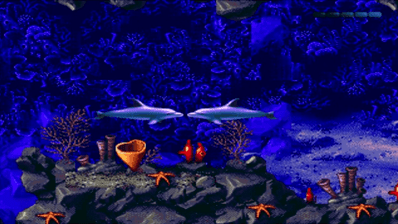
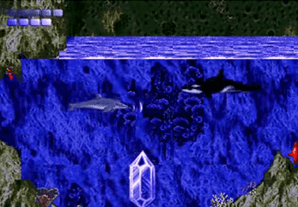
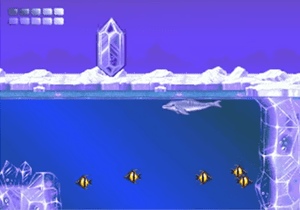
The graphics for the Mega Drive versions of the Ecco series are truly stunninig (Screenshot taken by the author).

Gameplay

The game play is the same as the original Ecco game. When pressing a direction, Ecco will swim in that direction. When you stop swimming, Ecco will drift, adding some realism to the game, since the sea is always moving with the tides. To increase speed, press the ‘C’ button, and Ecco will speed up, handy for when you’re almost out of oxygen or when you need to leap out of the water and over obstacles. The ‘B’ button makes Ecco dash (tap twice for double charge). This is mainly used to attack the many dangerous and deadly creatures he encounters, as well as, breaking down shelled walls.

The ‘A’ button is Ecco’s sonar ability and can be used in several ways:

  • Press and hold ‘A’ until the sonar bounces back. This opens a map segment, again very handy for when you are lost in caves.
  • Communicate with other friendly sea creatures such as other dolphins and killer whales. These friends can offer advice and hints to you.
  • Large glyphs are found dotted around the levels that offer tips or give Ecco a password so that when he comes across one that blocks his path, he can use his sonar to clear the way.
  • After the first few levels, Ecco gains the ability to use his sonar to stun enemy creatures.
  • Pressing ‘B’, followed by ‘A’, Ecco releases a sonar charge that will kill his enemies.

So What Is New About Tides Of Time?

In the first Ecco game, there were Key Glyphs that when you sang to them, would offer clues or give you a specific song to pass through Barrier Glyphs. Power Glyphs would give you invincibility for a short period of time. In Tides of Time, there are now:

Puzzle Glyphs – Join with others to help release their powers

Cracked Glyphs – Similar to Barrier Glyphs but will only open for a short period of time; Broken

Broken glyphs – Fit the pieces together to Ecco receives a gift

Milestone Glyphs – Act like save states

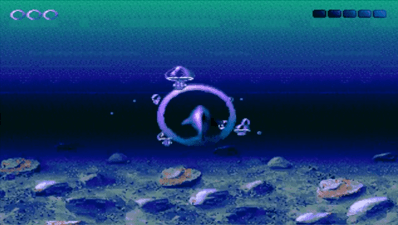
Another new addition to the game is the teleportation sub-stages. The view changes so that the camera is behind Ecco as he travels forward. Dodging seaweed and jellyfish, you must watch out for rings that Ecco must swim or jump through. If you miss too many, you will go back to the beginning of the level. It doesn’t really add that much to the game, but changes it up enough to be worth including as a new feature.

Several new features include new level types (Screenshot taken by the author)

How Does It Handle?

The game handles pretty much the same as it’s predecessor…and is just as difficult.

The Sky Tides level was tough because it is a scrolling level and there is lots of trial and error when it comes to finding the best way to navigate through the level. If you fall out of the sides of the tubes, you fall back to the ocean and back to the previous level.

On the next stage, Tube of Medusa, if you get grabbed by the Medusa’s and flung out of the tubes, you go back two stages!!! Luckily, the Barrier Glyph is still open so you can swim straight back to the Sky Tides level, but it is still incredibly frustrating.

On some of the levels, there are helium bubbles in the sky. When you leap into the air and use your sonar on them, they fling you across the screen to either a floating pool or another set of helium bubbles. On another level, when you leap out of the water to where a larger bubble is floating in the air. When you touch it, you turn into a seagull and need to fly over cliffs to another body of water. What on Earth were the creators smoking when they came up with ideas for this game?

Graphics

The graphics still look top rate. The sprites all look a little smoother and the colours and detail of the sprites and backgrounds still look incredible. Now, I may be crazy, but the game perspective feels like you have been zoomed in slightly…or am I imagining it?

Music

The music just does not fit the game. In the original you had either a soft Caribbean melody or a low-key track that almost buzzed, giving you the feeling of being along in a scary and unfamiliar environment. Some of the weird new music feels like it should fit better in a run-and-gun shooter.

Replay Value

To add to the replay value of this game, at the begining you can choose to swim in four directs. Left leads to the password screen, top left is difficult, top right is easy and right is normal. Normal adjust the game difficulty based on your ability and how well you’re doing.

Did I Complete The Game?

Not yet. At present, I am stuck on Four Islands where you need to follow a friendly dolphin who will show you the way. When following the dolphin, if it disappears off your screen, it will go back to where you found it. It is rather unforgiving.

What The Critics Thought:

GamePro: “There’s no doubt that Tides of Time offers a lot, providing a scenic variety of levels for the player to swim through and solve. Occasional control glitches do bring their share of frustration, but you still get a solid does of entertainment. This sequel proves that Ecco’s not washed up yet. Overall 85%.[1]

Electronic Gaming Monthly: “Ecco: Tides of Time really shows that Genesis games can be colourful, The backgrounds and animation are simply beautiful, with lots of eye-popping graphics. The quests are a lot harder than before, and sometimes you are left without a clue as to what to do. I like the fact that you can transform into different creatures I’d have to say that I really like Ecco and his adventures. Overall 7.25/10.[2]

Next Generation: “Taxing puzzles, RPG elements, shooting stsgaes, and some of the best Genesis graphics to date make you want to reel Ecco II in, but it’s certainly not a keeper. Overall 3/5”.[3]

My Verdict:

“I’m not sure what to make of this game. The graphics, as with the original, are glorious. The change in music doesn’t work well for me, and some of the new aspects of the game like the helium bubbles and turning into other creatures seems a bit dumb. Having said that, it’s a perfectly good game. Challenging, great to look at, and is certainly a worthy addition to the Sega Mega Drvie library.”

Rating:

What are your memories of Ecco the Dolphin: The Tides of Time? I would love to hear your thoughts, and don’t for get to follow and subscribe so that you don’t miss my latest reviews! You can also find me on Instagram: @nicklovestogame.


[1] LaMancha, M., ‘ProReview – Ecco the Dolphin: The Tides of Time’. (December 1994). GamePro. 75:86-7.

[2] ‘Review Crew – Ecco: Tides of Time’. (December 1994). 65:40.

[3] ‘Rating Genesis – Ecco: Tides of Time’. (February 1995). Next Generation. 2:100. (

Ecco the Dolphin – Review

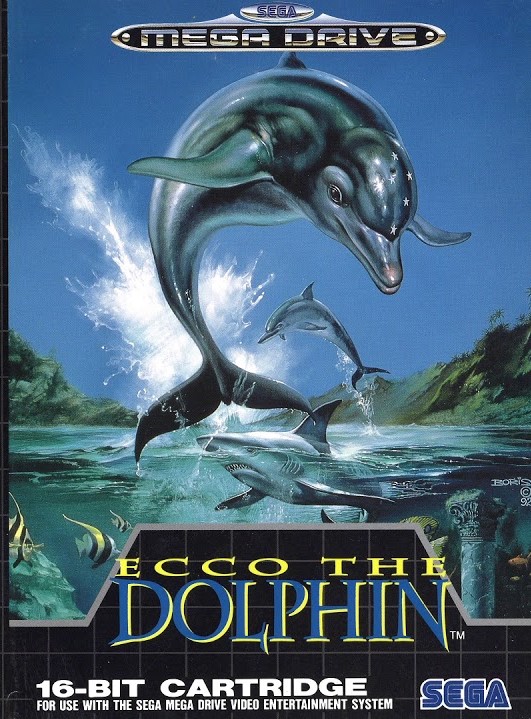
Heroes come in all shapes and sizes in video games. Muscle-bound barbarians, ace spaceship pilots, martial arts experts, and yes, even Italian plumbers, to name a few. In 1992, Sega took a chance on a new hero. This one couldn’t wield swords or axes, or pilot machinery, or cast magic spells. It didn’t know kung-fu and certainly didn’t grow larger having eaten mushrooms. No, this hero lived in the ocean but needed air to breathe. He was agile, could swim at great speeds and leap from the water to soar above he waves like an albatross. This hero was a dolphin!

Titlescreen (Screenshot taken by the author)

Ecco the Dolphin is an action-adventure developed by Novotrade International and published by Sega. It was released on the Mega Drive in 1992, with versions also being released on the Master System, Game Gear, and Sega CD. Versions were later released for the Wii Virtual Console (2006), Xbox Live Arcade (2007), as part of Sonic’s Ultimate Genesis Collection (2009) for the Xbox 360 and PlayStation 3, Nintendo 3DS (2013), and Sega Genesis Mini (2019). For this review, I played the Mega Drive version.

Plot

Ecco is a dolphin. There is nothing particularly special about him other than the unique star pattern on his forehead. One day, whilst swimming with his pod, he leaps high into the air and at that exact moment, a vortex opens and sucks up his pod (as well as other ocean dwelling sealife). Ecco needs to find out what happened to his pod from creatures much older and wiser than himself. He embarks on a long journey into cold and unfamiliar waters, where strange and deadly creatures live.

Ecco can use his sonar to stun or to talk to other creatures (Screenshot taken by the author)

Gameplay

The basics of the game are simple. When pressing a direction, Ecco will swim in that direction. When you stop swimming, Ecco will drift, adding some realism to the game, since the sea is always moving with the tides. To increase speed, press the ‘C’ button, and Ecco will speed up, handy for when you’re almost out of oxygen or when you need to leap out of the water and over obstacles. The ‘B’ button makes Ecco dash. This is mainly used to attack the many dangerous and deadly creatures he encounters, as well as, breaking down shelled walls.

In each level, you must explore each area Ecco travels through looking for clues as to where your pod has gone. This includes rescuing other dolphins, speaking to killer whales, and swimming though mazes to find glyphs that give Ecco a sonar song that you can sing to other glyphs that are blocking your way.

Rather than have time limits for the levels, Sega offer us two energy bars. One is health and the other is oxygen. To replenish your health, simply dash and catch smaller fish. To replenish your oxygen bar, you need to find an area where you can breach the surface of the water or find where oxygen bubbles are rising from cracks in the seabed.

The ‘A’ button is Ecco’s sonar ability and can be used in several ways:

  • Press and hold ‘A’ until the sonar bounces back. This opens a map segment, again very handy for when you are lost in caves.
  • Communicate with other friendly sea creatures such as other dolphins and killer whales. These friends can offer advice and hints to you.
  • Move starfish circles that will eat rock and open previously blocked pathways for you.
  • Large glyphs are found dotted around the levels that offer tips or give Ecco a password so that when he comes across one that blocks his path, he can use his sonar to clear the way.
  • After the first few levels, Ecco gains the ability to use his sonar to stun enemy creatures.
Eating the smaller fish helps Ecco restore lost health (Screenshot taken by the author)

How Does It Handle?

This becomes challenging when you are deep under sea in a labyrinth of caves. To recover health, Ecco must dash into the shoals of smaller fish to gobble them up. If you die, you simply go back to the beginning of the level. You have infinte lives in this game and believe me, you’ll need the am all!

The enemies include sharks, jellyfish, pufferfish, and crabs….those crabs can fucking do one! They come out of nowhere and make a ‘B’ line for you. I admit, I dropped the ‘C’ bomb several times during my playthrough due to those little wankers. Frustratingly, the enemies also respawn which pisses me off even more and makes the game even harder.

This game may look cutsie, but it is fucking hard! Rage quitting is standard for this game, especially when you are near the end of a level and those fucking crabs come out of nowhere and kill you. Thankfully, you receive a password after every level.

Another aspect of this game that is irksome about this game, is when you have to navigate through narrow caves and sometimes you need to manoeuvre through even narrower gaps past sharp coral. There are points where you cannot do this without injuring yourself, not matter how hard your try to avoid them.

Graphics

There are few that would disagree that the graphics of this game show the Mega Drive at its pomp. Bright and colourful, with incredibly detailed backgrounds and sprites. From the multi-coloured shoals of fish, to the array of seas sponges and plants on the sea bed, there is so much that draws the eye. An accurate and nice touch is where the deeper you go, the darker the background becomes, emphasising that light doesn’t penetrate that deep into the ocean.

Music

The music is very understated in this game, but it works so well. Some of the music is very relaxing and calming, which is surprising because for most part, you are not very relaxed at all. In fact, the game will give even the most seasoned gamers anxiety.

Personal Memories

I remember when a childhood friend of mine bought this game. We were stunned! Not only did the concept of controlling a dolphin seem unique (to us at least), but the attention to detail was at such a level that I think we firmly believed that gaming had reached its apex…how young and naïve we were.

Replay Value

The game only has one difficulty setting and so offer little in the way of replay value other than simply showing the awesomeness of the graphics to a friend.

Did I Complete The Game?

Nope, and I have never met anyone who has either.

What The Critics Said:

Mean Machines Sega: “A Megadrive classic without doubt, and a strong contender for best game ever! A unique underwater experience for those tired of unoriginal pop. Overall 97%.[1]

MegaTech: “Original concept combined with wonderful graphics and amazingly engrossing gameplay make this a classic. Overall 94%.[2]

My Verdict:

“This is by far, one of the most original and best-looking games the Mega Drive has to offer. Incredible graphics and atmospheric music offer a unique gaming experience. The difficulty of the game is the only this that lets it down.”

Rating:

What are your memories of Ecco the Dolphin? I would love to hear your thoughts, and don’t for get to follow and subscribe so that you don’t miss my latest reviews! You can also find me on Instagram: @nicklovestogame.


[1] ‘Ecco the Dolphin – Review’. Mean Machines Sega. (December 1992). Issue 3:24-8.

[2] ‘Game Index – Ecco the Dolphin’. MegaTech. (October 1993). Issue 22:99.

ESWAT: City Under Siege – Review

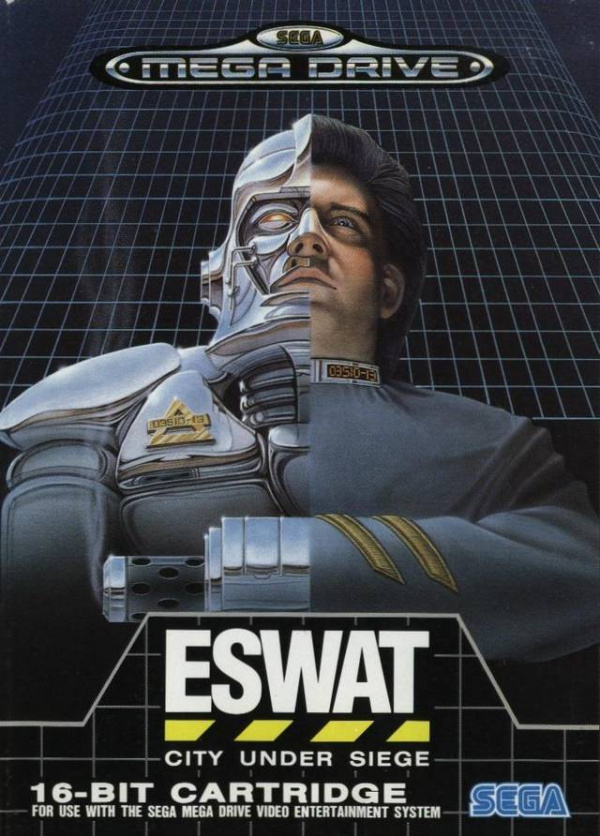
Science-fiction movies have often toyed with the idea of a mechanised police officer battling huge crime syndicates in a dystopian future (1987s Robocop springs to mind). ESWAT: City Under Siege was one such game, with a storyline that felt like it came straight from a 1980s B-movie starring Jean Claude Van Damme or Dolph Lundgren.

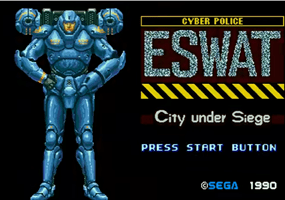
Titlescreen (Screenshot taken by the author)

ESWAT: City Under Siege (Cyber Police ESWAT in Japan) is a side-scrolling action platform game developed and published by Sega. Based on the 1989 arcade game Cyber Police ESWAT, it was released in 1990 for the Mega Drive and Master System. It was later released on the Wii Virtual Console in 2007 and as part of Sonic’s Ultimate Genesis Collection (2009) found on the PlayStation 3 and Xbox 360.

Plot

Global terrorist organisation E.Y.E is wreaking havoc throughout the world. To combat this terrorist threat, the governments of the world launch their ESWAT (Enhanced Special Weapons and Tactics) initiative. Selected from the bravest police officers and sharpest shooters, these law enforcement officers don state-of-the-art ICE combat suits with advanced armour and weaponry.

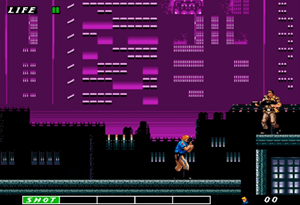
In the early missions, you are a plain clothes officer (screenshot taken by the author)

Gameplay

There are eight missions for you to battle through:

  • Guard Silent City!!
  • Infiltrate Cyber Prison!!
  • Defend Neo Three-Mile!!
  • Attack Mad Scientist!!
  • Destroy Dark Base!!
  • Penetrate Secret Sewer!!
  • Destroy Tactical Complex!
  • Break E.Y.E’s Plan!

You begin the game at the rank of Captain and are a uniformed police officer. Once you complete the first mission you gain a promotion to Chief. The completion of the second mission sees you promoted again to ESWAT and this is when you gain the ESWAT suit. The suit begins with your plain shot weapon but allows you to pick up a further four weapons:

  • Super – Shoots three shots at once instead of one, and includes rapid fire ability.
  • R.L. (Rocket Launcher) – Fire two powerful rockets in quick succession before needing a bit of time to reload.
  • P.C. (Plasma Charge) – Fires smaller shots but can charge up to fire a huge devastating ball of plasma.
  • Fire – The most powerful weapon in your arsenal, this weapon can only be used when your jetpack fuel is in the red zone (full power). You can also only use it once.
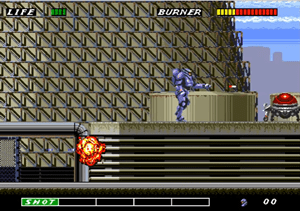
Once you reach the ESWAT rank, you gain the stat-of-the-art armour (screenshot taken by the author)

How Does It Handle?

In the first two levels, you only move a one speed: walking. As you progress and gain the ESWAT suit, you can also use your rocket pack to help evade hazards and enemy fire. My only criticism of the player’s movement is that I feel that your character walks a little too slowly for my liking and cannot shoot diagonally, which is a tad annoying at times. I also felt that the you are too zoomed in (if that makes sense). You are quite clsoe to the edge of the screen as you walk to progress. I’d have liked to have seen it zoomed out a bit more so that you can see a bit more of what’s going on around you and aren’t in a constant state of nervous surprise.

Graphics

I’d like to rave about the graphics of this game. The sprites look incredible! The detail on your character’s uniform and the initial human enemies is top rate for 1990 (there is a nice little explosion once you kill the enemies too). They are bright and colourful, and they have even captured the shadows on your attire (between the legs for example). The levels themselves, are also incredibly detailed and there is plenty that to attracts the eye. They really did go all in for this game.

Music

The music sounds great too. Upbeat and funky, it’s the sort of in-game music that you’d listen to as opposed to muting the sound and putting on your own tunes.

Replay Value

This is a tough game, and certainly not for the faint-hearted. If you complete the game and are a glutton for punishment, you can increase the difficulty and number of lives you begin with. This increases the replay value of the game.

Did I Compete The Game?

No, I could not get past mission five.

What The Critics Said:

Mean Machines Sega: “ESWAT is s super-slick platform shoot ‘em up that simply oozes quality. The parallax scrolling backdrops and sprites are excellent, and the sound is great. Combine those with challenging and highly addictive gameplay and you’ve got a game that’s a must for your collection. Overall 92%.[1]

Sega Power: At first this Shinobi-style shooter isn’t too hot. Later on, though, it displays some of the moodiest scenes on the MD. Tried and trusted gameplay, plus a few shocks! Overall 4/5.[2]

My Verdict:

“Graphically, a superb example of the capabilities of the Sega Mega Drive with a knock out soundtrack to boot. This is a challenging game and you won’t simply finish it in one sitting.”

Rating:

What are your memories of ESWAT? I would love to hear your thoughts, and don’t for get to follow and subscribe so that you don’t miss my latest reviews! You can also find me on Instagram: @nicklovestogame.


[1] ‘Review: Mega Drive – Eswat’. Mean Machines. (October 1992). Issue 1:138.

[2] ‘The Hard Line – E.S.W.A.T. City Under Siege’. Rage Magazine. (October 1991). Issue 23:53.