Vectorman 2 – Review

By 1996, there had been a sharp decline in the titles being released for the Mega Drive. Creators were clearly favouring the next generation of consoles such as the PlayStation, Sega Saturn, and Nintendo 64. However, due to the success of its predecessor, Vectorman returns for a second adventure. The question is, will it receive the same plaudits as the first instalment?
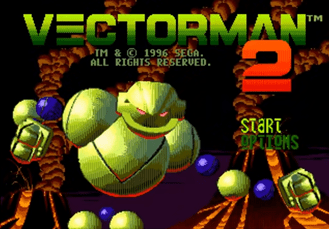
Title screen (screenshot taken by the author)

Vectorman 2 is a single player run and gun platform game and the sequel to Vectorman (1995). It was developed by BlueSky Software and published by Sega for the Mega Drive in 1996. For this review, I played the version found on Sonic’s Ultimate Genesis Collection (2009).

Plot

After defeating Warhead and foiling its plans to kill the humans when they returned to Earth, Vectorman resumes his normal duties. One day whilst completing the routine task of accompanying a sludge barge, his ship is hit by a missile of unknown origin. Vectorman survives the crash landing and finds himself near a research facility. As he investigates the origin of the missile, he discovers a population of mutant insects that have taken up residence in the research facility. The insects show clear signs of a destructive nature towards the Earth, but it is unclear who is controlling them. Vectorman must destroy the insects to once again save Earth.
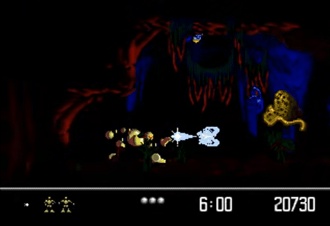
Use Vectorman’s built-in weapon to destroy the mustant insects (screenshot taken by the author)

Gameplay

Vectoman can run and jump, and fire a weapon from his hand. Whilst at the apex of his jump, he can use his Boot-Blasts to gain even more height. These Boot-Blasts can also be used to cause damage to enemies when ignited. The game consists of seven parts, divided into 22 scenes.

Weapons

Whilst battling through the levels, Vectorman can temporarily acquire other weapons including:

  • Laser – Allows rapid fire.
  • Energy Shot – Solid beam of incredible power.
  • Super Energy Shot – More powerful than the Energy Shot, can ricochet of walls and also break through tiles.
  • Pulse – Fires in a more dispersed range. The second most powerful weapon Vectorman can use.
  • Overkill – A single shot which destroys everything onscreen.

Morphs

At times, Vectorman can also morph into the following:

  • Helicopter – Helps him hover and control his descent.
  • Skates – Enables him to travel through level at high speed.
  • Tornado – Helps Vectorman spin very fast for a limited time causing destruction to whoever comes into contact with him.
  • Tank – Pure firepower.

Power-Ups

Some enemies drop Assimilation icons which temporarily allows Vectorman to take on the characteristics of that enemy:

  • Shell Bug – Shield.
  • Scorpion – Attack using a deadly stinger.
  • Rhino Beetle – Charge through walls and into enemies.
  • Tick – Destroy your enemies by giving them a mighty wallop.
  • Fireant – Fireball.

Other Power-Ups include:

  • Multipliers x2, x3, x5, x10 – Multiplies points earned respectively.
  • Health Point – Restores one health ball.
  • Full Health – Fully restores health.
  • Max Health – Increases number of health balls.
  • 1-Up – Extra life.
  • Milestone – If you die, you will restart the level from this point.
  • Extra Time – Gives you extra time on the level.
  • Power Sacks – Destroy these to get power-ups inside.
  • Photons – Collect these for points. If enough are collected, you will be taken to a bonus round.
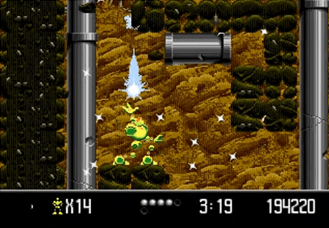
(screenshot taken by the author)

How Does It Handle?

The controls are exactly the same as its predecessor. They are tight, and responsive and the game is easy to just pick up and play. I really liked the changes in enemies from the robotic minions of the first game to the mutant insects of this game. It emphasises that you are facing a different challenge and helps differentiate the two games. The addition of different morphs and the ability to take on the characteristics of some of your enemies makes for a more interesting game too.

Graphics

The graphics of the Vectorman’s sprite look a little more refined in my opinion. There seems to be a new sheen to our hero. The levels look good…not spectacular but good. The mutant insect’s look ok, and the bosses look pretty good. One nice touch is that when you are in dark caves and Vectorman fires his gun, the area around him lights up.

Music and SFX

The music was ok, but it was quite forgettable. What I did like was the introduction of Vectorman’s robotic voice which I can’t remember from the first game. When he picks up new weapons and power-ups, he speaks but I couldn’t for the life of me understand what he was saying. It was still cool to hear though. There is also more differentiation between the sounds of the weapons when fired.

Replay Value

Vectorman 2 has three diffficulty settings but other than that, and there isn’t much to keep you coming back time and time again fter completing it a few times.

Did I Complete The Game?

No, I got to the last boss and died.

What The Critics Said:
Electronic Gaming Monthly: “No surprises here. Vectorman 2 is a solid side-scrolling platform game that will keep players busy for a few weekends. It’s levels-which include above-and below-ground areas-are huge and allow for a lot of exploration. Although the graphics are rarely outstanding, they’re always decent (and often very dark, as well). Boss monsters look especially good Many are so huge they fill the screen in fact, most of the game’s enemies look pretty cool. What really calls attention to this title, though, is its soundtrack, a booming techno-beat that sounds nothing like the static-ridden music pumped out by most genesis games. Overall 29/40.[1]

GamePro: “It’s simple mindless fun – just like the good old days. Vectorman 2 is the most addicting Genesis game this year…and it may be one of the last, so enjoy! Overall 19.5/20.[2]

Awards:

Electronic Gaming Monthly – Genesis Game of the Year 1996[3]

My Verdict:

This is another solid action-platformer. Very fun to play and challenging enough more experienced gamers. There is enough to make this game different enough from its predecessor

Rating:

What are your memories of Vectorman 2? I would love to hear your thoughts, and don’t for get to follow and subscribe so that you don’t miss my latest reviews! You can also find me on Instagram: @nicklovestogame.


[1] ‘Review Crew – Vectorman 2′. Electronic Gaming Monthly. (November 1996) Issue 88:90.

[2] Scary Larry. ‘Genesis Proreview – Vectorman 2 GamePro. (December 1996). Volume 09 Number 12 Issue 99:154.

[3] ”The Best of 96′.  Electronic Gaming Monthly. (March 1997). Number 92:86.
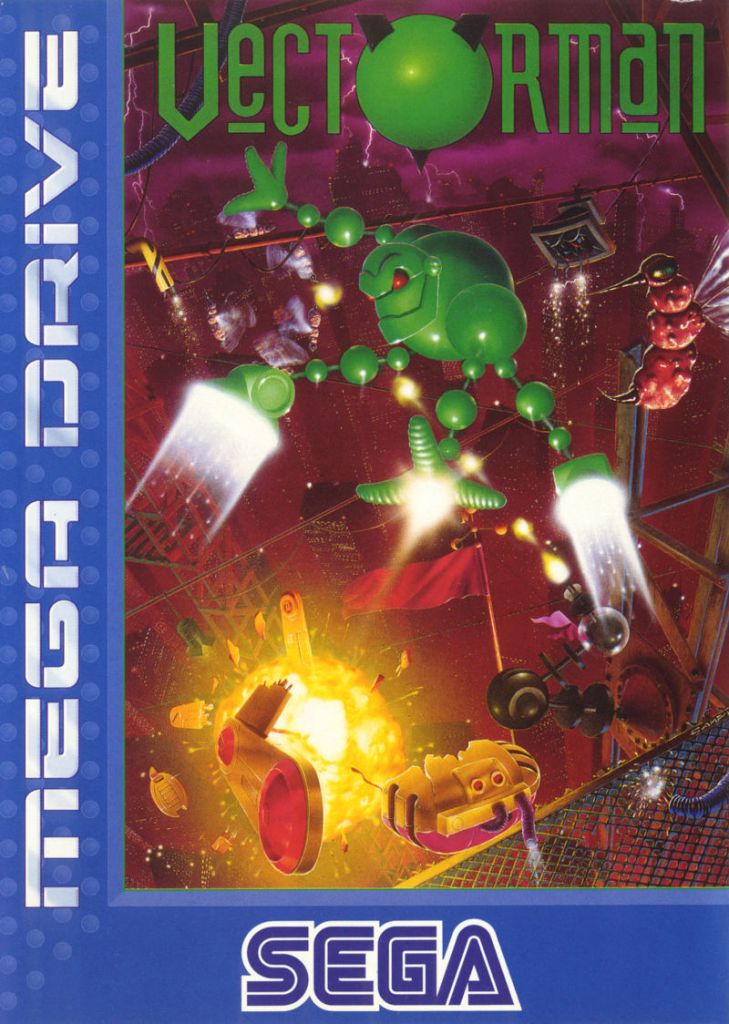
Vectorman – Review

It is always confusing when you come across a game that you’ve never heard of before and it’s awesome. Why? Because you begin to wonder why you haven’t heard of it before! Why were these games not championed more by creators, critics, and gamers alike? I wonder whether Vectorman’s late arrival to the scene was simply overshadowed by the focus on the next generation of consoles. Had Vectorman been released just a year or two earlier, it may have been given higher regard by the gamer community.

Title screen (Screenshot taken by the author)
Vectorman is a single player run and gun platform game developed by BlueSky Software and published by Sega. It was released on the Mega Drive in 1995 and would later appear on a number of compilations such as Sonic Gems Collection (2005) for the GameCube, Sega Genesis Collection (2006/7) for the PlayStation 2 and PlayStation Portable, and Sonic’s Ultimate Genesis Collection (2009) for the PlayStation 3 and Xbox 360. It was also released on the Wii Virtual Console in 2007 and on Steam in 2018 as part of the Sega Genesis Classics Pack. It was also included on the Mega Drive Mini in 2019. For this review, I played dthe version found on Sonic’s Ultimate Genesis Collection (2009).

Plot

In the year 2049, the Earth is one big cesspit of pollution and toxic waste. Humans decide to leave Earth and seek a new home to colonise. In the meantime, they create robots known as “orbots”, designed to clean up the mess whilst the humans are away. Raster, a highly advanced orbot, is accidentally connected to a nuclear weapon by a lesser orbot. This turns Raster from a benevolent orbot into the psychopathic machine known as Warhead. He is hellbent on ruling Earth himself and plans the execution of humans once they return to Earth.

Vectorman is a lesser orbot whose job is to clean up toxic waste and dispose of it in the sun. He was off planet when Raster became Warhead and returns to find the planet in a state of chaos. Vectorman decides that he should try to stop Warhead’s evil plans.

Vectorman has a built-in gun in his hand (Screenshot taken by the author)

Gameplay

The game consists of Vectorman fighting his way through 16 levels, battling Warhead’s minions on the way. At his disposal is his built-in gun, which he uses to destroy the baddies or to blow-up the TV screens that offer power-ups. The weapon power-ups include:

  • Rapid Fire: Keep the fire button held down to produce a continuous stream of bullets.
  • Wave: Useful for killing enemies not directly in your line of sight.
  • Bolo: Fires a bit rotating ball.
  • Orb: Can be used only one and designed to kill all nearby orbots in a huge explosion.
  • Nucleus Shield: Temporary invincibility. Once it runs out, you also lose your previous weapon power-ups.

Note: Shooting downwards whilst falling, will slow your descent.

Other power-ups include:

  • Health Point: Fills one ball on your health indicator.
  • Full Health: Fills all balls on your health indicator.
  • Max Health: Increases number of balls on your health indicator.
  • 1-Up: Gives you an extra life.
  • Milestone: Should you die, you restart the level where you picked this up.
  • Extra Time: Adds time to the count down.
  • Photons: Pick these up for extra points.
  • x2: Multiples points by 2.
  • x3: Multiples points by 3.
  • x5: Multiples points by 5.
  • x10: Multiples points by 10.

Vectorman can also pick up morph icons that will transform him into other types of robots to help him advance in the level:

  • Drill: Allows you to break through certain floors.
  • Bomb: Explosion will kill nearby enemies and destroy certain walls and floors.
  • Jet: Enables you to fly higher than you can jump.
  • Fish: Enables you to swim faster than you can run.
  • Missile: Enables you to break through certain ceilings.
  • Parachute: Allows you to slowly descend with greater manoeuvrability.
  • Buggy: Can be used as a battering ram to break through certain walls.

Vectorman has the ability to jump a little higher by tapping the jump button again whilst when he reaches the top of his initial jump. This will briefly ignite rockets in his feet which also causes damage to enemies.

Destroying satellite dishes allow you access to bonus stages. However, to destroy these you first need to find and destroy the shield generators which are hidden throughout the levels.

(Screenshot taken by the author)

How Does It Handle?

The game is quite chaotic at times and there is a lot on the screen to take in, and at first, I had no idea what was going on. However, there is lots of fun to be had charging through the levels and blasting all the baddies. I feel it would have been better to have the view zoomed out a little more so that you can take in more of the level.

Graphics

The Vectorman sprite looks awesome and the movements are incredibly fluid. When you move into dark areas, your sprite also goes dark, but you can still see red flashing lights on his body, face and extremities that remind us that he is a robot. This was a nice touch. I also liked the lightning flashes on Day 12.

Most of the backgrounds for the levels looked good, but I just felt that they lacked something. Maybe they just weren’t full of vibrant colour that I have been used to with so many Mega Drive games. Then again, maybe the drabness was to emphasise the polluted state the Earth is in. Even so, the flags flying in the breeze in particular look very realistic.

Music

The game contains electronic techno dance music throughout which I though suited the game very well.

Replay Value

The game has three difficulty settings Lame, wicked, and insane which offers some relay value. However, although the end of level scores state whether you picked up all the photons and destroyed all the TV screens, there is no difference to the outcome of the game if you do destroy all TV screens and pick up all the photons. I think this is a missed opportunity to add something more to the game encouraging gamers to return to it.

Did I Complete The Game?

Yes, but so far, only on the Lame setting.

What The Critics Thought?

Electronic Gaming Monthly: “It seems like Sega has a new mascot. Vectorman offers graphics that make it look like it’s on a system other than the Genesis. The animation is really smooth. Surprisingly, VM excels in the control department. It doesn’t have anything really new, but it plays well. The gameplay is fast, and the action generally is intense but not frustrating. Think of Strider with a gun. The audio is just right. Overall 33/40.[1]

GamePro: “Your 16-bit system isn’t dead yet, and Vectorman is the reason why! This entertaining platform game is tough, but it rewards you with tons of fun. Overall 19.5/20.[2]

Awards:

GamePro Editor’s Choice Awards 1995 – Best Genesis Game[3]

GameFan’s 1995 Megawards – Genesis Game of the Year[4]

GameFan’s 1995 Megawards – Best Genesis Action Platformer[5]

My Verdict:

“This is a fun game. Lots of charging through levels blasting everything in sight with an array of weapons. It’s a beautiful looking game with a solid soundtrack. My only criticism is the lack of replay value for me. Definitely worth your time though!”.

Rating:

What are your memories of Vectorman? I would love to hear your thoughts, and don’t for get to follow and subscribe so that you don’t miss my latest reviews! You can also find me on Instagram: @nicklovestogame.


[1] ‘Vectorman’. Electronic Gaming Monthly. (November 1995). Number 76:42.

[2] ProReview – Vectorman‘.GamePro. (November 1995). Issue 76:70-1.

[3] Editor’s Choice Awards 1995‘. GamePro. (February 1996). Issue 79:26.

[4] ‘GameFan’s 1995 Megawards’ GameFan. (January 1996). Volume 4 Issue 1:106.

[5] ‘GameFan’s 1995 Megawards’ GameFan. (January 1996). Volume 4 Issue 1:104.

Super Thunder Blade – Review

Combat flight simulator games are not everybody’s cup of tea. However, for some gamers, they allow the closest experience to actually piloting jets and helicopters. What better experience is there than gracefully soaring between buildings or trees whilst evading enemy fire until you hone in on the enemy and blow them out of the sky?

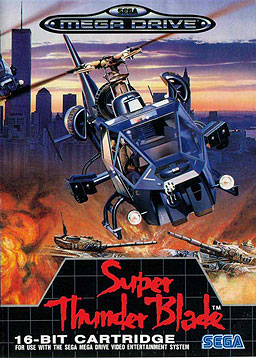
Title screen (screenshot taken by the author)

Super Thunder Blade is a combat flight simulation shooter game and follow up to the 1987 arcade game Thunder Blade. It was developed and published by Sega and released on the Mega Drive in 1988 in Japan, 1989 in North America, and 1990 in Europe. It would later be released on the Wii Virtual Console in 2007 and was part of the Sega Genesis Collection (2006) for the PlayStation 2 and PlayStation Portable, and on Sonic’s Ultimate Genesis Collection (2009) for the PlayStation 3 and Xbox 360.

Plot

After the events of Thunder Blade 1987, your helicopter returns battle hardened from its encounters with the renegade troops. However, from their secret base in the East, it is not long before the renegade troops regroup and re-arm with even more devastating weaponry at their disposal. Their aim is still to conquer the free world and deploy their forces on land, sea and in the air. With a refitted attack helicopter with state-of-the-art weaponry, you take to the sky once more and set about dismantling the enemy forces.

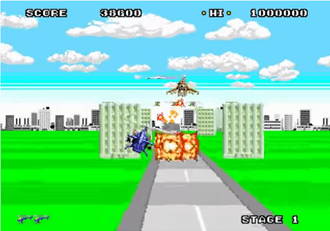
Most of the game occurs in third person mode…(screenshot taken by the author)

Gameplay

There are two aspects to this game. The first is a third-person view which sees you flying through landscapes firing your gatling gun and AATM missiles at enemy jets, helicopters, and tanks. At the end of the stage, the view shifts from third person to bird’s eye view. You then proceed to fight an end of level boss.

In the option menu, you can choose whether to have the controls as up being up and down being down, or you can invert these controls. The ‘A’ button fires the gatling gun and missiles at the same time, ‘B’ activates the air brakes and allows you to slow down and hover, and the ‘C’ button fires your Vulcan cannon and missiles at the same time.

When you earn 500,000 points, you will gain a life. You can gain more for every 1,000,000 points you accrue after that.

The game consists of four stages:

City

Desert and Caves

Ocean

Refineries

…the change to bird’s eye view is a nice change of pace. (screenshot taken by the author)

How Does It Handle?

There’s really not that much to learn. There is steer, fire, and hover. There is a slight delay when change direction, but this adds to the realism of the game and just takes a bit of practice to get used to. The key to this game is knowing when to advance quickly and when to hover. There is no time limit so you can take your time. You also have infinite ammo, so there is little in the way of strategy to conserve ammo. You’ll find you always have the fire button pushed down.

Graphics:

I thought the graphics were pretty good. After checking out other combat flight sims, released around the same time, I don’t think they’re any better (or worse) than the likes of After Burner II (1987), Air Diver: F-119 Stealth Fighter Simulation (1990), or Space Harrier 2 (1988). They’re good…but not great. The first level, flying through the city looks very good. There are buildings on the skyline, the greenery of the trees, and buildings to evade. I particularly like how Stage 2 looks where you see mountains in the distance until you enter the caves and the background changes colour making the Stage darker, emphasising that you are flying through a dark cave. The sprites look good too, but they fly by so quick or are destroyed in the distance that you don’t often see them up close.

Music & SFX
The music really takes back seat in this game and is overpowered by the monotonous white noise-esque weapons fire and explosions. I found myself turning down the sound very early on as it is not essential to the game and was giving me a headache.

Replay Value:

There are three difficulty settings: Easy, Normal and Hard. You can also change the number of lives from 3, 5 or 7. The game is very tough and so won’t be beaten straight away. The game is quitre short too, and so I’m sure a second and third run through would be worth your time.

Did I Complete The Game?
No, I couldn’t get past Stage 2 (which seems much longer than Stage 1).

What The Critics Thought:

Computer & Video Games: “The best version of Thunder Blad on any system, and features colourful and effective 3D graphics and decent gameplay as you fly your helicopter against a heavily-armed enemy force. If you like the coin-op, this is a must. Overall 80%.[1]

The Games Machine: “Not quite as super as the title makes out, Super Thunder Blade nonetheless proves a playable, if tough, shoot-‘em-up. The pace and challenge is enough to test the mettle of may an arcade expert. Overall 74%.[2]

Sega Power: “A spruced-up version of the slotty, but not very super. The 3D is too ambitious, and the scrolling screens are too average. It it’s trigger fingering fun you want, look elsewhere. Overall 2/5.”[3]

My Verdict:

“This game is short, but tough. Perhaps a little too tough. The gameplay is simple with slightly sluggish controls, but the game looks good. Probably not a game you’ll return to much though.”

Rating:

What are your memories of Super Thunder Blade? I would love to hear your thoughts, and don’t for get to follow and subscribe so that you don’t miss my latest reviews! You can also find me on Instagram: @nicklovestogame.


[1] ‘Guide – Super Thunder Blade’. Computer & Video Games (Complete Guide to Consoles). (October 1989). :74.

[2] ‘Super Thunder Blade’. The Games Machine. (June 1989). Issue 19:108.

[3] ‘The Hard Line – Super Thunderblade’. Sega Power. (October 1991). Issue 23:54.

Streets of Rage 3 – Review

Streets of Rage (1991) and Streets of Rage 2 (1992) were both awesome games worthy of the highest accolades. Their success would naturally spawn a third in the series. The question is, would the creators be able to make the game unique enough to stand on its own whilst at the same time staying true to what made the first two instalments so successful?

Title screen (Screenshot taken by the author)

Streets of Rage 3 (known as Bare knuckle 3 in Japan) is a side-scrolling beat ‘em up developed and published by Sega. It was released in 1994 for the Mega Drive and would appear on later compilation packs including Sonic’s Ultimate Genesis Collection (2009) for the PlayStation 3 and Xbox 360 and Sega Genesis Classics (2010) which is available for Microsoft Windows, Linux, MacOS, PlayStation 4, Xbox One and Nintendo Switch. In 2012, it was released on Steam as a stand-alone game as well as with Sega Genesis Classics Pack 5. For this review, I replayed the version for the Mega Drive found on Sonic’s Ultimate Genesis Collection (2009).

Plot

Streets of Rage 3 is a direct sequel to Streets of Rage 2 (1992). It has been Several years since Axel Stone, Blaze Fielding, Eddie “Skate” Hunter and Max Thunder defeated Mr. X and rescued Adam Hunter. However, Mr. X, head of an organised crime group known as The Syndicate has returned. Since his last defeat he founded RoboCy Corporation, a legitimate robotics company that acts as a cover for his illegal activities. He has hired the world’s foremost expert on robotics (Dr. Dahm) to create an army of androids under his command to secretly replace important city officials with a view to controlling the city. Whilst this operation comes into effect, he plants bombs throughout the city to distract the police while the city officials are replaced.

After realising what Dr. Dahm’s research as really been used for, Dr. Zan, a cyborg himself, contacts Blaze Fielding and explains Mr. X’s plans for the city officials. Upon learning of the severity of the situation, Blaze contacts her old police partners Axel Stone and Adam Hunter. Axel agrees to join the task force, but Adam is unable to because of his own commitments within the police force. However, his younger brother Eddie “Skate” Hunter agrees to join the task force in his place.

It is unclear what happened to Max Thunder but Dr. Zan takes his place (Screenshot taken by the author)

Gameplay

Consistent with the previous two instalments, Streets of Rage 3 follows suit. The game can be played in one-player or two-player co-op mode. Each fighter has different stats depending on who you prefer to play with. Some are faster, some are more powerful, but none are considered the ultimate fighter.

The fighting is much the same. You must fight your way through a number of levels fighting baddies of varying strengths. Along the way you can pick up money and gold bars which increase your points tally, and food to help restore your life gauge. Occasionally, you will spot a 1-up.

As well as the usual weapons of knives, pipes, baseball batts and swords, you can also pick up grenades. Just be sure to not hold on to them too long else they will explode, and you will suffer damage.

There are a few differences from previous games, however. This is the first game in the series to utilise the six-button controller allowing for a larger move set. For special moves, you have a power bar consisting of six segments. The higher the gauge the more damage you will do to the baddies. One you perform a special move, the bars will empty and you will need to wait a few seconds for them to recharge. If the gauge is empty when you perform a special move, your life gauge will deplete slightly. With every 40,000 points you accrue, a star appears below your fighter’s life gauge. Each star you earn increases the strength of your Blitz attack. You can earn up to three stars but if you lose a life, you will lose a star.

Whereas in Streets of Rage 2 (1992) only Skate could run, Streets of Rage 3 allows all characters to run as well as roll up or down to screen to evade enemy attacks.

The story itself is more complex, with dialogue between the characters after each level, adding another layer to the story telling.

Characters:

Dr. Zan – After discovering what The Syndicate are planninng with their androids, Dr. Zan contacts Blaze Fielding in a bid to acquire her help in stopping Mr. X.

Blaze Fielding – Since defeating The Syndicate a second time, she now works as a private detective. She agrees to help when she is informed that the next victim of this dastardly plan will be her old friend the Chief of Police.

Axel Stone – After defeating Mr. X a second time, Axel moved far from the city to start up his own martial arts school. Blaze convinces him to return to fight Mr. X one more time.

Eddie “Skate” Hunter – Since helping the others defeat Mr. X and rescue his older brother Adam, Skate has grown in strength and speed. He agrees to join the task force to take down Mr. X once and for all.

The Duel Mode has been made more interesting. It is no longer just a one-on-one fight. For example, on one fight stage, the floor contains sparks that travel along a line on the floor. If it touches you, you get electrocuted. Another has holes for you to fall down which will make you lose health.

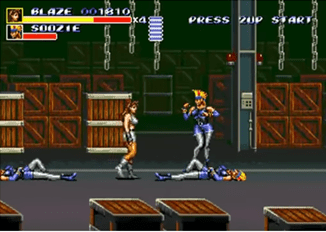
New sprites have been introduced… (Screenshot taken by the author)

How Does It Handle?

This game has tight controls, and the increase in the number of moves ensures that the fighting does not get monotonous. I did think that the hit detection was off a little though. There were instances where an enemy is slightly to the back or to the fore of the line I was on, and I was unable to hit them, but they were able to hit me. That was frustrating! There were two bosses that I felt were annoyingly difficult. The two women in the bar, and the three samurai. Even on Easy Mode I struggled with these bosses. I appreciate this may simply be a case of finding a strategy, but these fights are where I lost most of my lives.

There was an interesting level consisting of our heroes moving from right to left and having to punch through concrete walls whilst being chased by a bulldozer. This level is easy and just seems to slow down the gameplay. It was a good idea, I’m just not sure it worked.

Graphics

Even though the levels and sprites were highly detailed and well animated, I did think that the levels and sprites of four protagonists were not as good as Streets of Rage 2 (1992). There were plenty of enemy sprites who were still around from the previous two games to make it feel familiar, but I did question the reliance on sprites from previous game. Having said that, I still think the game looks pretty darn good.

One level I though was particularly good was the disco stage. The lighting occasionally flashes, making the level feel really authentic.

Music

The music was criticised by several contemporary critics (see below). Although not necessarily as memorable as the previous games, the music is still that adrenaline fuelled upbeat techno/electronic music which fits this game well.

Replay Value

There are three difficulty levels: Easy, Normal and Hard, as well as the option to alter the number of lives you begin with. Initially, when I completed the game on Easy, the game ends after five stages and I thought the game was very short. However, completing the game on harder settings reveals several more stages and a continuation of the story. Apparently, there are four endings depending on which difficulty level you complete the game on and the time it takes for you to do it. The Duel Mode has been improved too, but again, it will never compare to fighitng games such as Street Fighter II (1992).

…and some old sprites resurrected (Screenshot taken by the author)

Did I Complete The Game?

I have completed the game on the Easy setting, but whilst looking into this game, I have discovered that there are more levels when played on harder settings. Clearly, I will have to re-visit this game.

What The Critics Said:

Electronic Gaming Monthly: “This has always been a good series, and I really enjoyed this cart. A few things bothered me. The music wasn’t up to par with what Yuzo Koshiro normally does, and the sounds were sub-standard. The background animations were really good, and the diversity of game play adds tremendously. One question: Why did Sega change the characters’ outfits to gender neutral colours? It is still a great Sega fighter. Overall 29/40.[1]

Gamefan: “I’m usually blown away with any of the SOR games, but part 3 just didn’t do it for me. The graphics and control are very good, but the music is horrible compared to previous versions. It’s as if the person who composed the music in Chakan did the BGM in SOR 3. What were you thinking Yuzo?” Overall 234/300.[2]

Hyper: “If you liked the rest of the series then you’ll love this game. If you’re a sensitive new age type I’d steer clear though…stick to Ecco. Overall 83%.[3]

Mean Machines Sega: “A stylish continuation of the series, but not all it could – and should – be. A classic case of ‘If only they had…’. Overall 83%.[4]

Sega Magazine: “Expensive, but you’re paying for the best scrolling combat game in existence. Only Streets of rage 2 is anywhere near as good as this. Overall 90%.[5]

My Verdict:

“Don’t get me wrong, this is a solid third instalment of the franchise. Great graphics and gameplay with a more complex story…I just wasn’t feeling it. The music was less memorable, I didn’t like Dr. Zan as a new character and I felt the protagonist sprites didn’t look as good as in previous games. I felt the hit detection was slightly off and some of the bosses were insanely hard, even on Easy. If I had a choice, I would much rather revisit the first two instalments.”

Rating:

What are your memories of Streets of Rage 3? I would love to hear your thoughts, and don’t for get to follow and subscribe so that you don’t miss my latest reviews! You can also find me on Instagram: @nicklovestogame.


[1] ‘Review Crew – Streets of Rage 3’. Electronic Gaming Monthly. (July 1994). Number 60 Volume 7 Issue 7:34.

[2] Viewpoint – Streets of Rage 3’. Gamefan. (June 1994). Volume 2 Issue 7:24.

[3] ‘Review – Streets of Rage 3’. Hyper. (June 1994). 7:30-33.

[4] ‘Megadrive Review – Streets of Rage 3’. Mean Machines Sega. (March 1994). Issue 17:42-45.

[5] ‘Megadrive Review – Streets of Rage 3’. Sega Magazine. (May 1994). Issue 5:78-9.

Streets of Rage 2 – Review

There’s very little argument to be had. Streets of Rage (1991) was one of the finest beat ’em ups produced on the 16-bit console in the early 1990s, and I will not hear a bad word against it! Wanting to cash in on it’s success, Sega produced a sequel and released it the following year. Surely the creators couldn’t improve on such a near perfect game…or could they?

Title screen (screenshot taken by the author)

Streets of Rage 2 (known as Bar Knuckle II in Japan) is a side-scrolling beat ‘em up. The sequel to Streets of Rage (1991), it was developed by Sega, Ancient Corp., MNM Software and H.I.C.. It was published by Sega in 1992 and was released for the Sega Mega Drive in North America in 1992 and Europe and Japan in 1993; the Game Gear and Master System in 1993, and the Nintendo 3DS in 2015. For this review, I revisited the Mega Drive version.

Plot

It has been a year since ex-law enforcement officers Axel Stone, Blaze Fielding and Adam Hunter defeated the Syndicate and restored peace to their city streets once more. The morning after the one year anniversary of their bringing down of the Syndicate, Axel receives a phone call from Adam’s younger brother, Eddie “Skate” Hunter. He tells Axel that upon returning from school, he found that the house had been trashed and that Adam was missing. Axel and Blaze visited Adam’s house and sure enough, the place had been wrecked. Whilst looking for clues as to the culprit, Axel and Blaze find a photo showing Adam in chains lying at the feet of the Syndicate boss who they thought they had defeated the previous year. That very day, swarms of the Syndicate’s henchmen returned to the streets wreaking havoc once more. Axel and Blaze contacted their old friends at the Police Department, but they had either been fired or transferred to another department and so could not assist. Luckily, one of Axel’s friends, Max, agrees to help them rescue Adam. Skate also joins the trio to help rescue his brother.

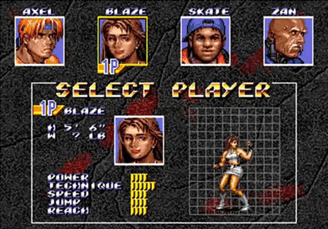
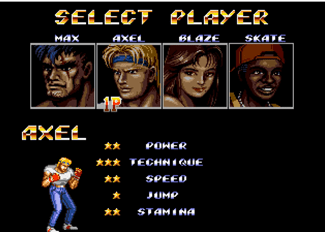
There are four characters to choose from each with differing stats (screenshot taken by the author)

Gameplay

Very little has changed from the first instalment. The game can be played in single or two-player mode and you must use your hand-to-hand combat skills to battle through hordes of Syndicate gang members. Along the way you can pick up and use weapons such as metal pipes and knives. These have limited use and will disappear once they are used up. When smashing up items such as sandwich boards and bins, you will also find money which goes towards your overall score, and apples and turkeys which help restore your energy.

What’s New?

The special attack has been changed for this game. Instead of a back-up Police car raining down fire in the form of napalm or bullets from a gatling gun, you perform a special move. However, every time you use this move, you will lose a bit of energy.

SOR 2 also introduces a Duel Mode where you can fight other characters one on one. If you choose the same character, a colour palette change distinguishes the two of you. This is a nice little addition to the game but cannot compare to the likes of Street Fighter II (1992).

Characters:

Axel Stone – Ex-Police Officer and skilled martial artist. Currently working as a bodyguard. A good all-rounder.

Blaze Fielding – Ex-Police Officer and Judo expert. She is currently teaching dance. Agile, but not as strong as Axel and Max.

Eddie “Skate” Hunter – Teenage brother of Adam Hunter. He is an inline skater and break-dancer which allows him speed and agility but also the weakest character.

Max Thunder – Friend of Axel, Max is a former wrestler and extremely strong. His size does make him the slowest character though.

Axel giving a baddie a knuckle sandwich (screenshot taken by the author)

How Does It Handle?

The game plays very well. The controls are responsive and the differences between the characters are very apparent meaning you will need to change your fighting tactics based on who you are. You can still hit your team mate so be careful when you’re swinging that metal pipe.

The game also has a flatter perspective, so it feels as though there is less room to move around, encouraging you to engage in fighting quickly.

I like the fact that the energy bars of the enemies are now shown. It enables you to tactically work your way through enemies, perhaps killing the lesser henchmen before moving on to the tougher ones so that you are not so overwhelmed by their number.

One annoying aspect to the game is the once you are at the end of the level and have beaten the last enemy henchman, your player will automatically walk to the exit. This can be annoying if you’ve been trying to save an apple or turkey for health and it ends up just being left behind.

Graphics

As with the Streets of Rage (1991) the graphics look awesome. The levels are incredibly detailed and colourful (some with parallax scrolling in the background and foreground). The sprites are also larger, allowing for more detail to their design. One nice little touch is the slight up and down motion when on the boat level.

Many of the baddies have been lifted directly from the original which is a little cheap I guess, but they still look great so, I’m my opinion, the creators can be forgiven. Maybe this was a case of If it ain’t broke, don’t fix!

Beware…these buggers can breathe fire (screenshot taken by the author)

Music

The music takes on a similar style to the original game. It is upbeat and fits well into this style of game. I can’t say that the music is as memorable for me as the original but this is just a personal preference.

Replay Value

The fact that the characters have very different stats and move sets, as well as the difficulty settings, two-player option and Duel Mode, adds lots of replay value. This game will become a staple for Friday night gaming with your friends.

Personal Thoughts

Throughout many of the reviews below, there seemed ot be a constant comparison with Street Fighter II (1992), which I found odd. They are two different styles of game. To compare them is to compare apples to oranges. I appreciate that this was at the height of the Sega/Nintendo wars, but the comparison is a nonsense.

Did I Complete The Game?

Yes, I have completed the game many times on Easy. I will no have to try it on Normal.

What The Critics Said?

Computer & Video Games: “The hyper-violent gameplay grabs you by the throat from the very moment you pummel your first bad guy, and don’t expect it to end there. Overall 95%.[1]

Mean Machines Sega: “Let’s make no bones about it, Streets of Rage 2 is the greatest sequel we’ve seen for ages and is certainly the best scrolling beat ‘em up to ever hit a home console! Overall 90%”.[2]

Bad Influence!Overall 9/10”.[3]

Mean Machines – The Essential Sega Guide: “The Megadrive really shows off with Streets of Rage 2. Cool beat ‘em up action, about double the size of the average Megadrive game. Overall 92%.[4]

Mega Play: “The graphics are very good and the animation superb. The music is complex and upbeat, and the sound effects are great. The moves are simple and there are enough techniques to keep it from getting repetitive. Overall 84%.[5]

Mega Play: “This is a solid action fighter with a good variety of moves. However, I found that the special moves gave you too much strength and made the game too easy. Less power and more technique would have made it more challenging. Still, It’s a solid two player game. Overall 80%.[6]

Sega Force: “Sega have come up with the goods! Wipes the floor with Street Fighter II. Overall 93%”.[7]

Sega Power: “The best scrolling beat-‘em up around – and big improvement on the original. Time will tell whether it’s the best yet though (Street Fighter 2 is on its way, after all). Overall 92%.[8]

Sega Pro: “Forget Sonic 2, this has to be the best game to date. Overall 96%.”[9]

Awards:

EGM’s Best and Worst of 1992 – Hottest Video Game Babe (Blaze)[10]

Mega Reader Awards ’92 – Beast Beat ‘Em Up[11]

Golden Megawards Game Fan’s Best of 1992 – Best Game

Golden Megawards Game Fan’s Best of 1992 – Best Game Music

Golden Megawards Game Fan’s Best of 1992 – Best Action Fighting[12]

My Verdict:

“Although I still prefer the original (purely from a nostalgic point of view), I have to confess that SOR 2 is a superior game. More moves, slightly better graphics, and more characters, it is easy to see why this has gone down as one of the greatest 16-bit beat ‘em ups of all time.”

Rating:

What are your memories of Streets of Rage 2? I would love to hear your thoughts, and don’t for get to follow and subscribe so that you don’t miss my latest reviews! You can also find me on Instagram: @nicklovestogame.


[1] ‘Review – Streets of Rage 2’. Computer & Video Games. (February 1993). Issue 135:26-28.

[2] ‘Streets of Rage 2’. Mean Machines Sega. (December 1992). Issue 3:136-139.

[2] Bad Influence!. ‘Bad Influence! Series 1 Episode 11’. Bibilography.com. Uploaded by retro Pixels. Wed, 01 Nov 2017. https://ghostarchive.org/varchive/JgNu9HIEXEI.

[4] Rignall, J., & Leadbetter, R., ‘Streets of Rage 2’ Mean Machines: The Essential Sega Guide. :97.

[5] Alessi, M., ‘Streets of Rage 2’. Mega Play. (February 1993). Volume 4 Number 1:52.

[6] Grossman, H., ‘Streets of Rage 2’. Mega Play. (February 1993). Volume 4 Number 1:53.

[7] ‘Streets of Rage 2’. Sega Force. (April 1993). Number 16:28-31.

[8] ‘Streets of Rage 2’. Sega Power. (April 1993). Issue 41:30-1.

[9] ‘Streets of rage 2’. Sega Pro. (February 1993). Issue 16:28-9.

[10] ‘EGM’s Best and Worst of 1992: Best Video Game Babe (All Systems) – Streets of Rage 2‘. Electronic Gaming Monthly’s 1993 Video Game Buyer’s Guide. (1993). :20.

[11] ‘It’s The Mega Reader Awards ‘92’. Mega. (March 1993). Issue 6:20.

[12] ‘Golden Megawards Game Fan’s Best of 1992’. Game Fan. Issue 16:28-9.

Sonic Spinball – Review

In a bid to cash in a franchise’s success, creators will often produce spin-off games that are usually inferior in quality to the main releases. Many would argue that these games are simply cheap and awful. However, occasionally you will find spin-offs such as Dr. Mario (1990) and Dr Robotnik’s Mean Bean Machine (1993) that are actually worth owning (although this is likely because the Tetris (1984) like format had already been tried and tested and found to be successful). How would a Sonic themed pinball game fare?

Title screen (screenshot taken by the author)

Sonic the Hedgehog Spinball is cross between a platformer and a pinball game. It was developed by Sega Technical Institute and published by Sega. It was released in 1993 for the Sega Mega Drive and in 1994 for the Game Gear and Master System. It has also had multiple re-releases on the following:

  • Sonic Mega Collection (2002) – GameCube, PlayStation 2, Xbox and PC
  • Sonic’s Ultimate Genesis Collection (2009) – PlayStation 3 and Xbox 360
  • Sega Smash Pack – PC (1999), Dreamcast (2001), and Game Boy Advance (2002)
  • Sonic Gems Collection (2005) – GameCube and PlayStation 2
  • Wii Virtual Console (2007)
  • iOS and Steam (2010)

For this review, I played the Mega Drive version found on the Sonic’s Ultimate Genesis Collection (2009).

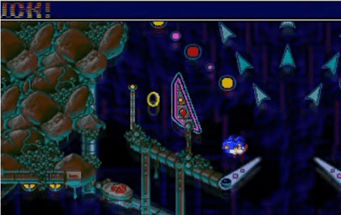
Sonic acts like a pinball throughout most of the game (screenshot taken by the author)

Plot

On the Planet Mobius, the evil Dr. Robotnik is putting his latest dastardly scheme into action. He has created the Veg-O-Fortress, a monstrous machine built into Mount Mobius so that it can draw energy from the volcano via the lava flow. His plan is to trap the wildlife of Planet Mobius and convert them into mindless machines. Knowing that Sonic and his friends may soon try to foil his plans, he has created a Pinball Defense System to protect his latest invention. As Sonic and Tails approach the mountain in their plane, they are shot down. After escaping a watery grave, Sonic must play the Pinball Defense System to destroy the Veg-O-Fortress and save Planet Mobius.

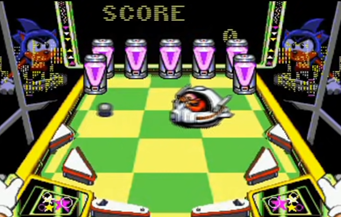
Although I think Sonic’s moving reflection is good, these bonus stages are a bit pointless (no pun intended) (screenshot taken by the author)

Gameplay

The levels are designed to simulate a pinball machine. You control Sonic and although he acts like a pinball for most of the game, there are times when you can walk/run. The aim of the game is to collect the Chaos Emeralds which will destabilize Mount Mobius and destroy the Veg-O-Fortress. After gaining all the Chaos Emeralds from one level, you must then fight and destroy one of Robotnik’s many boss machines.

There are only four levels:

The Toxic Caves – This is where Robotnik dumps his industrial waste. When you gain the Chaos Emeralds, Scorpius awaits. 

Lava Powerhouse – The heart of the Veg-O-Fortress where the lava-powered generators lie.

The Machine – This is where the inhabitants of Planet Mobius are held captive and where they are transformed into machines.

Showdown – Grab the last of the Chaos Emeralds and flee before the Veg-O-Fortress explodes.

At the end of every level, Sonic will enter a bonus stage which is also designed like a pinball machine. but where the view is different, and the object is to simply score as many points until you lose all three balls.

Up to four players can join in the fun but like pinball machines in real life, each player must wait their turn until the previous player loses a ball (Sonic dies).

The game also features some play firming elements too (screenshot taken by the author)

How Does It Handle?

Sonic’s move set is the same as it would have been in Sonic the Hedgehog 2, in that can still do the Spin Dash. However, when falling off an edge, Sonic will perform a Cliffhanger Flip that allows him to pull himself to safety. You can even control Sonic’s trajectory to a certain extent. For example, if he is falling back to the flippers, you can press left or right to make him veer in that direction which is incredibly helpful at times.

One incredibly annoying aspect to the game is that if Sonic dies, the level is reset and so you have to go through the whole rigmarole of pulling levels or opening doors again. I understand that arcade pinball machines are like this, but I think the realism actually is a detriment to the video game.

Graphics

I think the game looks great! The levels and sprites are colourful and very detailed. I particularly like the bonus stage where you can see Sonic move in the reflection which is a nice touch. However, when you defeat a boss and they begin to explode, the explosions can make the game slow down and blocks of exploding graphics can disappear.

Music & SFX

The music is pretty good and fits the game well. The funky music of first level in particular is distinctive enough to get stuck in your head.

Oddly, the sound Sonic makes when he performs a Spin Dash has changed. It no longer sounds like a bandsaw speeding up but more the sort of sound one would associate with a jumping action. You’ll know what I mean when you hear it.

Replay Value

This game does have some replay value. As well as the multi-player option, you can also change the speed of the game. I also find myself returning to this game generally. There is something about it which draws you back.

Did I Complete The Game?

No, I haven’t yet gotten past Level 3.

What The Critics Said:

Electronic Gaming Monthly: “Sonic Spinball is definitely a new setting for the hedgehog and there are points for originality, but the overall execution of the game seems like an afterthought. The scrolling of the pinball boards is choppy and it’s hard to control what you want to do. As a plus, the boards are huge with lots of nooks and crannies with items to seek out. It’s worth a look. Overall 28/40.[1]

GamePro: “Some animals just refuse to walk out into the roadway when their time is up. Sonic is one of those critters, but, fortunately, the wizards of Sega have come up with a fun, fast and frenetic pinball game to offset all that running and jumping. Overall 17.5/20.[2] 

Mean Machines Sega: “Eminently playable, and full marks for the ingenious approach to pinball, but Sonic Spinball is not the Twix of Megadrive games. One bite and it’s gone. Overall 81%” .[3] 

Electronic Games: “Spinball’s graphics and sound, while not as impressive as Sonic 2, are very good…The sound and music effects not only maintain the game’s internal rhythm but also provide audio game clues. No Rating.[4]

Entertainment Weekly: The first, a video pinball game in which Sonic is the ball, boasts a terrific concept but an ultimately flawed execution — Sonic often moves like a leaden marble. Overall C.[5] 

MegaTech: “Sonic Goes Pinball with five huge levels and a good feel from the flippers and Sonic-ball. Fun and very addictive – the first four levels are pretty easy, but the last one’s dead hard. Not really enough there to warrant the asking price. Overall 86%”.[6]

My Verdict:

“I must confess, I actually like this game even though I can’t complete it and find it incredibly frustrating and cheap at times. It looks great, sounds great, and although the scrolling isn’t as smooth as it could be, I find that this game draws me back again and again. It has a certain charm that warrants a better reputation.”

Rating:

What are your memories of Sonic Spinball? I would love to hear your thoughts, and don’t for get to follow and subscribe so that you don’t miss my latest reviews! You can also find me on Instagram: @nicklovestogame.


[1] ‘Review Crew – Sonic Spinball’. Electronic Gaming Monthly. (December 1993). Number 53 Volume 6 Issue 12:48.

[2] Scary Larry. ‘Genesis ProReview – Sonic Spinball‘. GamePro. (January 1994). Volume 6 Number 1:48-9.

[3] ‘Megadrive Review – Sonic Spinball’.  (December 1993). Number 14:70-2.

[4] ‘Video Game Gallery – Sonic Spinball’. Electronic Games. (January 1994). Volume 2 Number 4:90.

[5] Strauss, B., (February 11, 1994). Entertainment Weekly. (https://ew.com/article/1994/02/11/sonic-cd-sonic-chaos-sonic-spinball-sonic-3/ Accessed 13th January 2022).

[6] ‘Game Index – Sonic Spinball’ MegaTech. (May 1995). Issue 42:30-1.

Sonic 3D Blast – Review

By the end of 1996, the Sega Mega Drive was nearing the end of its life. The PlayStation, Sega Saturn and N64 were leading the way to the future of gaming and were far more powerful machines. After 1996, the number of games released on the Mega Drive would be greatly reduced as creators focussed more and more on the newer systems. Sega decided to release one more Sonic game for the Mega Drive. Sonic 3D Blast was that game.

Title screen (screenshot taken by the author)

Sonic 3D Blast (Sonic 3D: Flickies’ Island in Japan) is a single-player platform game developed and published by Sega. It was released for the Sega Mega Drive and Sega Saturn in 1996, with a Windows port being released in 1997. The Mega Drive It would be re-released as part of the following compilations:

  • Sonic Mega Collection (2002) for the GameCube
  • Sonic Mega Collection Plus (2002) for the PlayStation 2, Xbox, and Windows
  • Sonic’s Ultimate Genesis Collection (2009) for the PlayStation 3 and Xbox 360
  • Wii Virtual Console in 2007
  • Steam in 2010

For this review, I played the version found on the Sonic’s Ultimate Genesis Collection (2009) for the PlayStation 3.

Plot

Whilst ever pursuing the elusive Chaos Emeralds, Dr. Robotnik discovers Flicky Island. The island is home to the Flickies, a genus of bird that are able to teleport using Dimension Rings. As is his usual custom, Dr. Robotnik proceeds to capture the Flickies and encase them inside his evil machines known as Badniks. He plans to use them to help him capture the Chaos Emeralds. It is up to Sonic to rescue the Flickies and defeat Robotnik’s evil machines yet again before they can find the Chaos Emeralds.

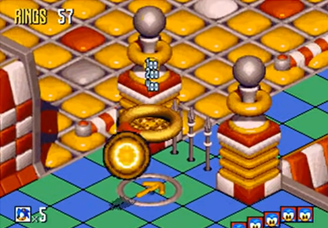
Perspective has now changed from 2D side-scrolling to 3D isometric (screenshot taken by the author)

Gameplay

Thus far, all Sonic the Hedgehog games in the franchise have been 2D (which the exception of some of the bonus stages which ventured into 3D). Sonic 3D Blast moves from side-scrolling platformer to isometric platformer. You still need to collect rings (which act like health). If you take damage without any rings, Sonic dies. Collecting 100 rings will gain Sonic an extra life.

Sonic must navigate his way through the following levels:

  • Green Grove Zone
  • Rusty Ruin Zone
  • Spring Stadium Zone
  • Diamond Dust Zone
  • Volcano Valley Zone
  • Panic Puppet Zone
  • The Final Fight

As with all Sonic games, there is a boss battle at the end of each zone consisting of one of Dr. Robotnik’s contraptions.

To progress through the stages, you need to rescue the Flickies that are trapped inside the Badniks. Once you destroy a Badnik, a Flicky will jump out. When you run near them, they will latch on and instantly start following you. You must then escort them to the Dimension Ring. You will need to find five Flickies in total per Dimension Ring. You can then progress to the next part of the level or the next stage. Beware, if you take damage, not only will you lose rings, but the Flickies will stop following you, so you’ll need to round them up again.

Throughout these levels, you will encounter Knuckles and Tails (sometimes in secret areas). If you hold 50 rings when you approach them, you will be transported to a special stage where you can win a Chaos Emerald. I was interested to note that the special stages have reverted to a similar style found in Sonic the Hedgehog 2 (1992). Only this time, Sonic is not running along a halfpipe, but a simple platform. You must still evade bombs and collect rings to progress to the next stage and win a Chaos Emerald.

The Chaos Emerald stages have reverted to a similar format as Sonic the Hedgehog 2 (1992) (screenshot taken by the author)

There are also plenty of items for you to pick up along the way to assist you:

  • Rings – Necessary for health, extra lives and to access special stages.
  • Super Ring Box – Gain 10 rings.
  • Invincibility Box – Makes Sonic invulnerable for a short period of time.
  • Power Sneakers Box – Makes Sonic extra quick for a short period of time.
  • Red Shield Box – Sonic gains a shield that makes him impervious to heat.
  • Blue Shield Box – Sonic gains a shield that makes him impervious to electrical attacks.
  • Gold Shield Box – Protects Sonic from one normal attack and allows Sonic to use the Sonic Blast attack.
  • 1-Up – Gives Sonic an extra life.
  • Sonic Icon – Gives Sonic a continue.

Hint: When Sonic has the Flickies following him and he jumps on a spring, you’ll notice that the Flickies will fly even higher. Use this to gain difficult to reach goodies.

You need to rescue to the Flickies and take them to the large golden rings to progress (screenshot taken by the author)

How does the game handle?

For those of you who have played the arcade games Marble Madness (1984) and Flicky (1984), will recognise that the two games have basically been amalgamated to create this game, and that is not a criticism.

The controls are very difficult to get used to. Sonic is very fast on screen and the camera angle is zoomed in so far that one is reluctant to use Sonic’s speed because you cannot see enough around you. Not being able to use Sonic’s speed defeats what gamers love about Sonic. Once you memorise the levels, I’m sure you can increase your speed and whizz through the levels. The Isometric view also makes it incredibly difficult to judge when Sonic is jumping. The shadow that Sonic casts doesn’t help either. A part of the game I found particularly frustrating was when Sonic must jump on platforms whilst trying to ascend a steep ramp or cliff. The physics of the game make this incredibly difficult to judge where Sonic will land before it is too late, and you fall to the bottom of the slope/cliff again. I’m afraid I may have dropped the C-Bomb once or twice during these parts of the game.

If you take damage while guiding the Flickies to safety and they scatter, you’ll need to round them up quickly as they have a habit of wandering off and are not easy to find again. This an extra layer of difficulty to the game, but a welcome one.

Graphics

Graphically, I think the game looks great. I’m pleased to see the creators try something different, but it is still easy at first glance to recognise this is a Sonic game. I think it was a good idea to alternate the colours of the ground, making it look more like a chess board as this is more pleasing to the eye. I also think that the theme of each level was very distinctive, if a little predictable as with previous Sonic games. The addition of an ice level allowed the creators to really utilise the slipping and sliding mechanic was a good call. Interestingly, the platform that Sonic runs along during the special stages has been created in Mode 7 style. Different from the rest of the game style.

Music

I think this game is let down by the music. The main theme and the in-level pieces of music are just very…”meh!”…and fail to be as memorable as the music from previous games.

Did I Complete The Game? (Spoiler Alert)

Yes, I completed the game twice. Once with all the Chaos Emeralds and one without. The so called “Good Ending” is very poor! It is simply four or five slides showing Sonic and his friends free from the clutches of Dr. Robotnik. It is very underwhelming. Oddly, the bad ending is animated and has much more about it.

What The Critics Said:

Electronic Gaming Monthly: “Blast has some of the best, most colourful graphics this old machine has ever seen. The action is fast, yet smoothed and refined. The levels are a bit too similar in design for my taste, but a couple of them will surprise you. The control takes a little bit of getting used to, but so are most games that are viewed from three-fourths perspective. I would’ve liked a map of some sort (I know – Sonic games don’t need a map), but the levels are bi; I’ve gotten side-tracked on a couple of occasions. Is this the Genesis’ last call? Overall 25/40.[1]

Entertainment Weekly: “Sonic the Hedgehog, whose sequel-spawning cartridge ignited sales of the 16-bit Genesis in the early ’90s, has been a conspicuous no-show on Sega’s 32-bit Saturn system. He’s back in Sonic 3D Blast, but he’s showing his age. The Genesis and Saturn versions are essentially the same: Rescue birds called flickies, collect golden rings, and bring down Dr. Robotnik. Problem is, while 3D Blast is super by 16-bit standards, it falls flat on Saturn, where 32-bit games with far more sophisticated 3-D graphics and gameplay are the norm. Genesis: B”.[2]

My Verdict:

“I actually quite like this game. It’s Marble Madness meets Flicky. A fun concept which is only let down by the music and parts where Sonic is difficult to control. Impressive graphics and a thumbs up for trying something new.”

Rating:

What are your memories of Sonic 3D Blast? I would love to hear your thoughts, and don’t for get to follow and subscribe so that you don’t miss my latest reviews! You can also find me on Instagram: @nicklovestogame.


[1] Dan., ‘Review Crew – Sonic 3D Blast’. Electronic Gaming Monthly. (November 1996). Number 88:90.

[2] Walk, G.E., (December 13th, 1996). ‘Sonic 3D Blast’. Entertainment Weekly. (https://ew.com/article/1996/12/13/sonic-3d-blast/ Accessed 12/01/2022).

Sonic & Knuckles – Review

I’m sure we’ve all said at one point in our lives, “Wow, we have reached the pinnacle of videogaming,” only to be proved wrong a year later. Innovation is the key to ensuring that gaming franchises don’t become stale. The introduction of new characters, new features and gameplay styles are all used in attempts to keep games fresh. But what if you could add new characters to older games? Well, that’s just what the creators of Sonic & Knuckles did.

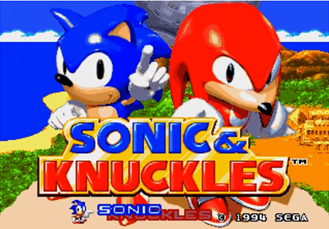
Title screen (screenshot taken by the author)

Sonic & Knuckles is a single-player platform game developed and published by Sega. It was released for the Mega Drive in 1994 and later on various compilations including:

  • Sonic Jam (1997) for the Sega Saturn
  • Sonic & Knuckles Collection (1997) for the PC
  • Sonic & Garfield Pack (1999) for the PC
  • Sonic Mega Collection (2002) for the GameCube
  • Sonic Mega Collection Plus (2004) for the PlayStation 2, Xbox, and PC
  • Sonic’s Ultimate Genesis Collection (2009) for the PlayStation 3 and Xbox 360
  • Sonic Classic Collection (2010) for the Nintendo DS

The game would also become available on the Wii’s Virtual Console, Xbox 360 Live Arcade, and Steam. For this review, I played the version found on the Sonic’s Ultimate Genesis Collection (2009) for the PlayStation 3.

Plot

No sooner had the events of Sonic the Hedgehog 3 (1994) been concluded, where once again Sonic thwarted Dr. Robotnik’s evil plans to steal the Chaos and Master Emeralds causing DeathEgg to crash land on Floating Island (Angel Island), Sonic must again act quickly to seek out the emeralds and recover them before Dr. Robotnik can find them. However, Sonic is now fighting a war on two fronts. He also needs to beat Knuckles to Echidna to them too. Knuckles is the Guardian of Angel Island and the Emeralds, and his mission is to stop any invasion by any means necessary.

You cannot fault this game’s beauty (screenshot taken by the author)

Gameplay

You can choose to play as Sonic, Tails, or Knuckles in this game. Sonic and Tails have the same skill set as before. However, if you play as Knuckles, you may not be as fast or be able to jump as high as Sonic, but you do have your advantages. For one, you can glide! Secondly, you can climb walls using the spikes on your fists.

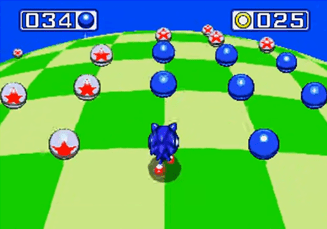
As is standard for Sonic games, you collect rings along the way. When you gain 50 rings you can enter the special and bonus stages. These are identical to those found in Sonic the Hedgehog 3 (1994) in that you must run around a globe and collect small blue spheres. The more you collect, the faster you run making it more difficult to control.

Another bonus stage is similar to the emerald stages of Sonic the Hedgehog (1991) in that Sonic is curled up in a ball and must navigate a rotating stage. The aim is to stay as central as possible and enter a slot that spins fruit machine reels to win rings. This continues until you touch the outer edges a few times revealing red circles in the wall that make you exit the game when you land on them. As before, every 100 rings you collect gains you an extra life.

A third bonus stage sees you use glowing electrical spheres to catapult yourself up the screen. However, you need to be quick. A horizontally spiralling laser beam slowly moves up the screen. if you fall into it, you will exit the bonus stage.

The special stage where you can win the Chaos Emeralds (screenshot taken by the author)

Sonic & Knuckles must traverse the following levels:

Mushroom Hill Zone

Flying Battery Zone

Sandopolis Zone

Lava Reef Zone

Hidden Palace Zone

Sky Sanctuary Zone

Death Egg Zone

Doomsday Zone

Throughout the levels you must try to find the Chaos Emeralds. As with Sonic the Hedgehog 3 (1994), these are found in hidden locations. Once you obtain all the emeralds, you gain access to special abilities.

The power-ups are exactly the same as found in Sonic the Hedgehog 3 (1994). The boxes contain:

  • Super Rings – 10 rings
  • 1-Up – Extra life
  • Invincibility – Invulnerability for a short time, however, you can still die if you are crushed.
  • Water Shield – Allows you to breathe underwater as well as bouncing on the heads of the badniks.
  • Lightning Shield – This magnetic shield attracts rings when nearby, can absorb energy ball attracts, and allows you to gain a little extra height with a double jump.
  • Flame Shield – Makes you impervious to lava and fireball attacks. You can also briefly turn into a fireball that will destroy badnisk.
  • Super Shoes – You can run at hyper speed for a short period of time.
  • Robotnik – Avoid these as they spell instant death if you break them.
Knuckles has the ability to climb and glide (screenshot taken by the author)

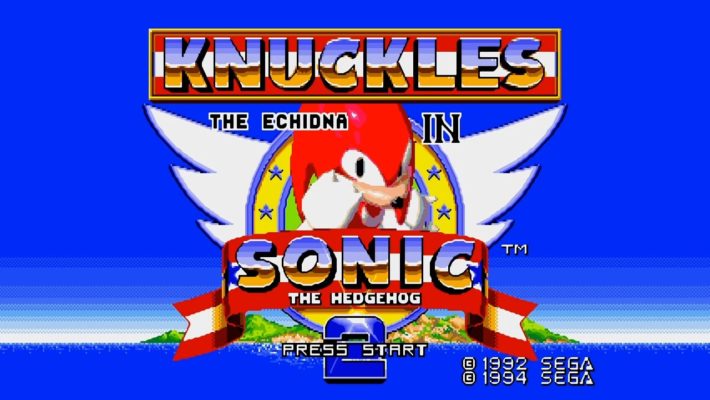
One of the biggest selling points of this game was that the cartridge was designed for you to attach Sonic the Hedgehog 2 (1992) and Sonic the Hedgehog 3 (1994) onto the top of the Sonic & Knuckles (1994) cartridge allowing you to play the previous games with Knuckles. This isn’t just a quirky feature either. It actually allows you to reach previously unattainable areas of the levels.

This is the title screen that appears when you attach the Sonic the Hedgehog 2 (1992) cartridge to the Sonic & Knuckles (1994) cartridge.
This is the title screen that appears when you attach the Sonic the Hedgehog 3 (1994) cartridge to the Sonic & Knuckles (1994) cartridge (screenshot taken by the author)

How Does It Handle?

Although the gameplay is unchanged from Sonic the Hedgehog 3, the game has added a few nice touches to make the gameplay a little more interesting. An example of this can be found in Sandopolis Zone 2 where you need to pull down bars to light up the level. When the lights start to dim, you will begin to be attacked by ghosts and so you need to find more levers to pull down to scare the ghosts off.

Graphics

Graphically, you can’t fault this game. Colourful, vibrant and detailed backgrounds, and gorgeous looking sprites. The levels have some nice touches too, such as Mushroom Hill Zone when you land on the green ground and what looks like yellowish pollen balls fly up.

Music & SFX

The theme tune is the same as Sonic the Hedgehog 3 (1994), and the music throughout the levels continue to be of a high standard as we have with previous Sonic games.

Replay Value

The replay value of the game is certainly there too. Not only do you have to ensure you gain all the Chaos Emeralds to earn the good ending, but some of bosses are different depending on if you play as Sonic or Knuckles which certainly warrants a play through as both characters.

Personal Thoughts

My only criticism of the game is that I question whether the format is now becoming a bit stale. This is Sonic’s fourth instalment, ignoring Sonic Spinball (1993), and it feels like it’s the same game being rehashed over and over again. I appreciate that Sonic the Hedgehog 3 (1994) and Sonic & Knuckles (1994) were originally meant to be one big game, but one could be forgiven for wishing Sonic the Hedgehog 3 (1994) had added something to differentiate itself more from Sonic the Hedgehog 2 (1992). Whilst the adding of a new character and creating a system where it can be played on older Sonic games is ingenious, I just think the format of the game needs a good shake up.

Did I complete the game?

Yes, I have completed the game with both Sonic and Knuckles and with both obtaining all the Chaos Emeralds.

What the critics said:

Computer & Video Games: “It’s over a year old now and you need to buy both Sonic 3 and Sonic and Knuckles to fully enjoy it. That’s why it’s here at the bottom. But in truth, Sonic 3 and Knuckles is the best platform experience ever. It’s what video games were invented for. Overall 97%.[1]

Electronic Gaming Monthly: “Sonic and Knuckles is the ultimate Sonic game. This is the best game of the series and the lock-on technology offers new life to older games. Many new games can be plugged in, too. Fantastic graphics, sound and game play make this Sega’s ultimate game and it gets my vote for Genesis Game of the Year! Overall 37/40“.[2]

Game Pro: “Sure, sure, it’s just another Sonic game. But this one’s got some revolutionary elements that make it another ground breaker for Sega. Overall 20/20.[3]

Next Generation: “A slot in the top accepts previous Sonic carts and enables you to play them starring Knuckles instead of (yawn) Sonic. Does this make Sonic 2 less Tedious? Well, no. But it is an impressive technical feat and if it points to a future where old games can be given a new lease on life with “mission carts” similar to the expansion disk that have long been available for PC titles, then NEXT Generation is all for it. Overall 4/5.[4]

Sega Magazine: “Slick and accomplished platformer which doesn’t quite catch the edge over the younger, fresher Headdy. Overall 92%.[5]

Sega Power:Excellent ideas, great game. A change in gameplay is needed soon. Overall 90%.[6]

My verdict:

“Another winning instalment from Sega. Fun, fast and furious, with great new bonus stages, plenty of replay value, and stunning graphics. I just fear that the format is begininng to grow stale. Let’s try something different next time.”

Rating:

What are your memories of Sonic & Knuckles? I would love to hear your thoughts, and don’t for get to follow and subscribe so that you don’t miss my latest reviews! You can also find me on Instagram: @nicklovestogame.


[1] ‘The Computer & Video Games Christmas Buyers Guide’. Computer & Video Games. (January 1996). Issue 170:9.

[2] ‘Review Crew – Game of the Month’. Electronic Gaming Monthly. (December 1994). Issue 65:34.

[3] ‘ProReview – Sonic and Knuckles’. Game Pro. (November 1994). Issue 64:72-3.

[4] ‘Rating Genesis – Sonic and Knuckles’. Next Generation. (January 1995). Issue 1:101.

[5] ‘Mega Drive Review – Sonic the Hedgehog’. Sega Magazine. (October 1994). Issue 10:81.

[6] ‘Mega Drive – Sonic and Knuckles’. Sega Power. (November 1994). Issue 60:35-6.

Shinobi III: Return of the Ninja Master – Review

Who hasn’t fantasised about being a ninja? The idea of being a highly skilled assassin infiltrating an enemy base and dispatching your enemies using an array of weapons like the shuriken, katana, and kusarigama is a hero fantasy that I certainly had (and still do at times). The Revenge of Shinobi (1989) was a popular game. Would a third instalment prove just as successful?

Title screen (screenshot taken by the author)

Shinobi III: Return of the Ninja Master (Super Shinobi II in Japan) is a single-player hack-and-slash action game and a sequel to The Revenge of Shinobi (1989). It was developed and published by Sega and released on the Mega Drive 1993. It would appear as part of the Sega Genesis Collection (2006) for the PlayStation 2 and PlayStation Portable, on the Wii Virtual Console (2007) and Sonic’s Ultimate Genesis Collection (2009) for the Xbox 360 and PlayStation 3. It would also be released for the PC on Steam (2010), iPhone (2011) and Nintendo 3DS eShop (2013).

After the events of The Revenge of Shinobi (1989), Joe Musashi also known as Shinobi, returned to Japan to recover from his battle with the Neo Zeed organisation. He soon learns that the Neo Zeed are rebuilding and that members of the organization have been sent to kill him. Once again Shinobi must prepare to battle for his life and stop the evil Neo Zeed once and for all!

Beautiful level and sprite design (screenshot taken by the author)

Shinobi must battle through seven Levels:

  • Zeed’s Resurrection – Battle through the forests and caves of Japan
  • Secret Entry – Infiltrate a high-tech facility
  • Body Weapon – Battle through a laboratory where biological weapons are being created
  • Destruction – Infiltrate a robotics factory
  • Electric Demon – Infiltrate and destroy a weapons facility
  • Traps – Descend into a gorge where Neo Zeed’s secret base is found
  • The Finial Confrontation – Battle through an air fortress to defeat the Shadow Master

As with the prequel, there are several items and power-ups to look out for:

  • 5 x shuriken
  • 20 x shuriken
  • Heart bonus (for health)
  • Extra Life
  • Ninjitsu – Adds a special ability for you to use
  • Time Bomb – Avoid these as they explode and cause damage to you

A new danger to look out for is mines and these aren’t always easy to see.

Throughout the game, Shinobi can use his sepcial powers:

  • Jutsu of Ikazuchi – Summons a bolt of lightning to create an electrical shield that gives you invulnerability for a short period of time.
  • Jutsu of Kariu – Summons four pillars of intense flame to incinerate your enemies
  • Jutsu of Fushin – Increases Shinobi’s jumping ability
  • Jutsu of Mijin – Shinobi explodes killing nearby enemies, however Shinobi will also lose a life.

These special powers can only be used once per level unless you find a box a Ninjitsu icon along the way.

My kingdom for a horse! (screenshot taken by the author)

New additions to traversing the levels that break up the monotony include a horse and jet-ski. On the horse you must be aware of enemies hanging from kites. You need to dispatch them whilst keeping an eye out for tripping hazards. The jet-ski level sees enemies riding futuristic hover bikes whilst you keep an eye out for ramps that allow you pick up goodies and avoid enemy mines.

The creators have added some nice new moves to the game to make things a little more interesting. For example, Shinobi can now perform a mid-air flying kick, can jump off walls to gain higher ground, can hang from the ceiling (which I don’t recall him doing in Revenge of Shinobi (1989), and a running slash that makes him temporarily invincible.

There are four difficulty settings: Easy, Normal, Hard and Expert offering plenty of replay value to the game. You can also choose how many shuriken to start with, adding a further layer of difficulty should you wish it.

That’s one ugly-assed monster! (screenshot taken by the author)

I think this game looks great! The sprites look fantastic and are very detailed. I particularly like how the enemy sprites explode, reminiscent of many arcade games. The levels are also incredibly detailed with many having multi-layered parallax scrolling. In Level 1 when you enter the cave, the transition in the background is very smooth. The background of the forest fades and after a brief black backdrop, the interior of the cave fades in. I also really liked Level 5 where you are battling through a forest that is ablaze. The oranges and reds of the background really give you a sense of heat from the inferno. You can almost feel it coming through your TV screen!

The music is actually pretty cool. There are some nice upbeat electronic tracks similar to what you’d find on Streets of Rage (1989).

One issue I have with the controls is that in order to perform a somersault, you need to press the jump button a second time when Shinobi is at the peak of his first jump, else he will just begin to fall as normal. I found this frustrating, especially when the levels scrolled up or when you had to jump onto the falling rocks. I lost many lives on these levels and I felt that the window with which you needed to perform the somersault was a little too narrow.

I also have an issue with the fact that Shinobi can still only through his shuriken in one direction…the way he is facing. I think it would be time for him to at least be able to throw them straight up by now. Sadly, this lack of progression in his move set loses them game some points for me.

Did I complete the game?

As of yet, I can’t get past Level 6.

What the critics said:

Computer and Video Games: “As good as Super Shinobi II is it just doesn’t have that awesome mix of action and graphical excellence that the first one was full of. The graphics look a little better with some topper backdrops and Joe himself has had a bit of a facelift and been given Ultimate Warrior type arm-ties. Once again the music is absolutely superb with some really hard thumping rock tracks and some brilliant effects. Game play has been made a little more involving with some new moves and other treats but there’s just something missing to make it a classic. Overall 84%.[1]

MegaTech: “One of the best MD action titles around. Great, fast-paced action, briliant graphics and sound and a few new tricks up Joe’s sleeve make this a must for all atcion fans. Overall 93%.[2]

Mega: “As much fun as the previous Shinobi games and a bit better besides. Why the, didn’t they make the bloody thing a bit harder? Overall 74%.[3]

Sega Power: “Shinobi is to predecessors what Kellogg’s Special K is to cornflakes – same ingredients but with a different shape. It’s very playable, but unremarkable, performing title. Overall 79%.[4]

GamePro: “Just when you’re getting bored with similar-looking-and-similar-playing action games, along comes Joe Musashi to shake things up. Mind-blowing backgrounds, great new moves, a horse-riding sequence, and hot music push this Genesis to the max. III cheers for Shinobi III. Overall 19/20.[5]

My Verdict:

“This game looks great with some stunning levels and backdrops. It is enjoyable to play too and contains some fab music. Although there are some new moves, I still think they could have allowed Shinobi to throw shuriken in more than on direction. Apart from a few small gameplay gripes though, it’s defiantly worth playing and I will not doubt return to conquer this game at a later date.”

Rating:

What are your memories of Shinobi III: Return of the Ninja Master? I would love to hear your thoughts, and don’t for get to follow and subscribe so that you don’t miss my latest reviews! You can also find me on Instagram: @nicklovestogame.


[1] Anglin, P., ‘Three Page Review – Super Shinobi II’. Computer and Video Games. (February 1993). 135:22-4.

[2] ‘Game Index – Shinobi III’. MegaTech. (June 1995). Issue 42:30.

[3] ‘Game Review – Shinobi 3’. Mega. (October 1993). Issue 13:34.

[4] ‘Mega Drive Review: Shinobi 3 – Return of the Ninja Master’. Sega Power. (September 1993). Issue 46:38-9.

[5] Slasher Quan., ‘Genesis ProReview: Shinobi: return of the Ninja Master‘. GamePro. (August 1993). Issue 49:58-9.

Premier Manager 97 – Review

Managerial games have always been popular amongst sports fans. In real life, us armchair managers always know best and regularly converse with others about the failings and shortcomings of our respective teams and question why managers aren’t playing a certain player or a certain way. Managerial sports sims allow us (in a small way) to put our money where our mouths are.

Oddly, Premier Manager 97 doesn’t seem to have a title screen (screenshot taken by the author)

I struggled to find much information on Premier Manager 97 other than it was developed and published by Gremlin Interactive and released in 1996. As far as I can tell, it was only released on the Mega Drive (although I have seen screenshots for it on PC), so that is the what I will review.

The object of the game is straight forward. You manage a team and must lead them to the glory by winning leagues and cups whilst not over spending in the transfer market.

When the game opens, you have the choice of how many players who wish to play (1 or 2), what type of game (full or demo, although why you’d buy a game only to play the demo is beyond me), to start a new game or to load a saved game. 
 
Once you enter your name, you can choose to manage any team from the Third Division. These were the days when teams like Brighton and Hove Albion were nowhere near the Premier League. Other teams who have competed in the Premier League in the past few years such as Hull City, Swansea City and Fulham can also be found wallowing in the lower leagues.

The main menu helps you navigate the game (screenshot taken by the auhtor)

Once you have choose the team you wish to manage, you are taken to the home screen which contains a text box at the top explaining your name and the team you manage, your position in the league, what competition the next match will be for (league or cup) and the date. Below that, you can choose from 12 icons. From left to right and top to bottom, these icons:

Transfer Market – Where you can choose to buy and sell players.

Stadium – Invest money in your stadiums to improve its capacity and facilities.

Club Finances – Best keep an eye on your ingoings and outgoings.

Squad – Where you can see your squad and player stats and change formation and tactics.

Cup – Shows you the fixtures and results of the two domestic cups.

Sponsorship – Choose which companies to advertise in your stadium. All monies go towards your club revenue.

Phone – Hire and fire backroom staff, set up training for players, see injured players, see who your scout is recommending and how your youth team players are progressing. 

League Tables – Keep an eye on your league position.

Save Game – Save or load a game.

Question Mark – Choose to turn off game animations, and which league and cup results you see.

Fax – Keep an eye on the latest news.

Whistle – Play your match day fixture

See the stats of your squad (Screenshot taken by the author)

When the match starts, you are taken to a screen that shows the name of the two teams playing and a gauge with a ball that moves left and right showing where the ball is on the pitch. When action happens, a simple animation appears in the style of an old dot-matrix scoreboard. There are several animations but the main ones you’ll see are either near misses, saves or goals. Occasionally you see a booking, where the referee appears and holds up a card, and/or an injury where an ambulance parks up and opens its rear doors.

You also have the option to adjust the game speed. I personally prefer to put the speed on Ultra speed. At any time, you can stop the game to make tactical changes. Your squad team screen will automatically appear at halftime, if you have an injury or a sending off.

If an event happens such as a goal or booking, the description of the event (goal, booking etc.), the name of the player and minute will appear under its respective team.

The stadium screen allows you to make improvments to your groun to increase capacity and upgrade facilities (screenshot taken by the author)

One of the aspects of the game that I didn’t understand was that not only does each player have several numbered stats (Handling, Tackling, Passing Shooting etc) but they also have an overall rating of:

  • Fair with up to four stars
  • Good with up to four stars
  • Very Good with up to four stars
  • Superb with up to four stars
  • World Class
  • Outstanding
  • The Ultimate

I don’t see the point of this overall rating as you can see the stats you need. The stats are more valuable (and clearer) as to how good a player actually is.

One of several animations that appear during the match (Screenshot taken by the author)

Compared to the likes of Championship manager 97 (Champs) and Ultimate Soccer Manager 2, Premier Manager 97 may look crude and seem rather basic. To my mind it is a simpler introduction to the world of football management and is certainly quicker to play than Champs.

The menu is user friendly, and the game is easy to learn. The hardest aspect of the game is simply working out your tactics and keeping an eye on your bank balance. You don’t have to deal with disgruntled players, or with bigger clubs swooping in to tempt your better players away from your club.

The music and SFX are pretty much non-existent but then you are not playing this game for those.

I owned this game back in the 90s and found it very addictive. I got very good at the game and used to win all the trophies and competitions. Revisiting the game, I can’t remember how I did it and certainly have not been as successful. I found the balancing of your money very difficult and failed to attract more fans through the gates. I’m sure I’ve forgotten something very simply and it will no doubt dawn on me at some point.

Did I complete the game?

If by complete you mean win all the trophies, then yes, certainly in my youth, I did.

What the critics said:

At present, I cannot find contemporary gaming reviews for this game.

My verdict:

Easy to learn with intuitive menus. Not as comprehensive or as difficult as Champion Manager 97, but can still be a challenge and fun to play. It’s easy to dip in and out of too. Mediocre graphics though.”

Rating:

What are your memories of Premier Manager 97? I would love to hear your thoughts, and don’t for get to follow and subscribe so that you don’t miss my latest reviews! You can also find me on Instagram: @nicklovestogame.