Super Hang-On – Review

Hold on to your hats guys, its time to rev that engine, feel the horsepower, and leave your competitors to eat your dust. Glory awaits!

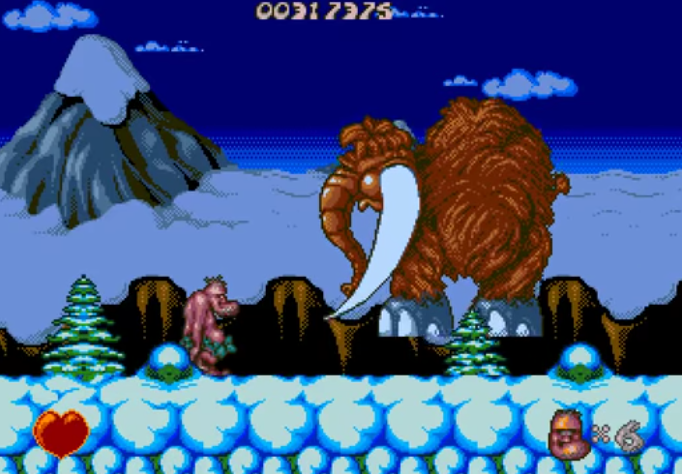
Screenshot taken by the author

Super Hang-On is a single-player motorcycle racing game developed and published by Sega. Originally released in the arcade in 1987 as a sequel to Hang-On, it would later be released for the following:

1987 – Amstrad CPC, Arcade, Commodore 64, and ZX Spectrum.

1989/1990 – Atari ST, Commodore Amiga, Macintosh, DOS, Sega Megadrive, and Sharp X68000.

2003 – Game Boy Advance (Sega Arcade Gallery)

2010 – Wii’s Virtual Console (2012 in North America)

2012 – Xbox Live Arcade (Sega Vintage Collection)

I chose to review the Sega Mega Drive version found on the Mega Games I (1992) package.

Gameplay

Whilst still similar to Hang-On, there is now a choice of four new tracks, based on the continents of the world. Each continent contains a different number of stages to increase difficulty (Africa = 6 stages, Asia = 10 stages etc.). A turbo button is also available should you need an extra boost. For those that are interested, the motorbike you are riding is the SGR-500(R).
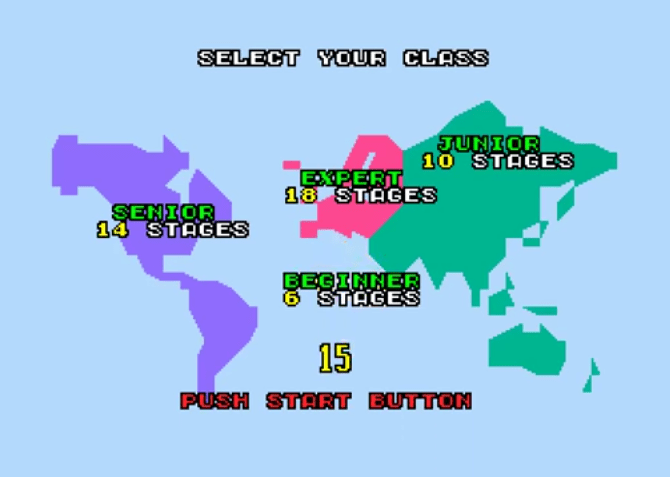
Screenshot taken by the author

The Mega Drive version contains both the full Arcade Mode, and an Original Mode. In the Arcade Mode, you race against the clock. You have a limited amount of time to clear each stage. If you fail to reach the checkpoint within the allotted time, it is game over. The Original Mode is a bit more in-depth and allows you to gain sponsorship and earn money to upgrade your motorbike. Any time you crash, you damage your motorbike which affects its performance until you end the race and you mechanic can fix it. Like in real life, your bike is also subject to wear nd tear and so parts will need to be replaced anyway. You continue to compete against other racers until you have beat every opponent.
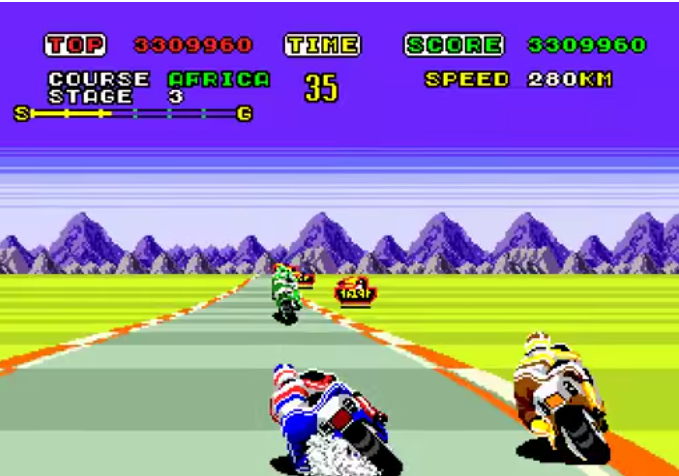
Screenshot taken by the author

How Does It Handle?

The bike is easy to control, and the game is easy to learn. However, the game can become frustrating when you crash in Arcade Mode as there is no way to make the time up again, so you may as well restart the game. I also dislike the time countdown in Arcade Mode too. In the arcade one can understand a time limit as you want games that are “quarter guzzlers”, but for gaming at home, it’s just plain annoying. Admittedly I didn’t spend that much time on this game as I’m not a racing fan, but if you are, I am sure that you will enjoy the challenge of this game.

Graphics

The graphics are clean, with brightly coloured sprites making it easy to distinguish yourself from other riders. The backgrounds and time of day change as you move through the stages of the races giving you a real sense of location and distance. At the top of the screen you have information telling you your score, speed, what course and stage you are on, and a countdown dial.

Music and SFX

Interestingly, the music only begins when you select a mode to play. You then get the option of four tracks to listen to whilst you play. The music does fit the game but is not very memorable for me.

SFX are limited to the beep of the changing lights on the starting line, the low thrum of the motorbike’s engine, and crashing. A nice little touch is that if you overtake another bike closely, you can hear their engine.

Replay Value

It is a pity there is no two-player mode for this game as racing against a friend is always fun. The Original Mode adds a lot of replay value to the game though.

Personal Memories

I have vague recollections of playing this in the arcade at Folkestone Rotunda Amusement Park when I was a pre-pubescent imp. It had the full arcade set up complete with a replica motorbike that you could sit on and use your weight to lean left or right. Being small at the time, my father would stand at the back of the bike and help me lean it, ensuring I didn’t go flying off.

I’m unsure if this is the exact one I played as a kid, but this was the sort of machine I remember form the arcades.

Did I Complete The Game?

Nope, nowhere near.

What The Critics Said:

Mean Machines: “A high quality racing game which is a must for speed freaks. Overall 86%.[1]

Mean Machines: “This cart manages to contain all of the playability of the coin-op, coulpled with slick audio-visuals. Definitely worth getting if you enjoyed the coin-op, or if you’re after a decent Mega Drive game at a bargain price. Overall 90%.”[2]

Sega Power: “Brilliant biking coin-op conversion. Terrific sensation of speed and movement, with good graphics and smooth 3D update. Thrilling to play and lasts for ages. Overall 5/5.[3]

Sega Power “Another coin-op classic of yesteryear. Fine, but a bit mouldy. Overall 4/5.”[4]

MegaTech: “Converted from the Sega coin-op, this is an excellent copy and has all the features of the original machine plus an extra challenge game thrown in for good measure! The graphics and sound are both excellent, and with playability to match, this is a race game that no Megadrive owner should be without. Overall 89%.[5]

My Verdict:

“I’m not a fan of racing games but if you are, this may prove a challenge. Beautiful graphics and scenery too, and enough replay value to make it worth adding to your collection.”

Ratings:

What are your memories of Super Hang-On? I would love to hear your thoughts, and don’t for get to follow and subscribe so that you don’t miss my latest reviews! You can also find me on Instagram: @nicklovestogame.


[1] ‘Mega Drive Review – Super Hang-On’. Mean Machines. (October 1990). Issue 1:82-4.

[2] Leadbetter, R.,’Review: Mega Drive – Super Hang-On’. Mean Machines. (October 1992). Issue 1:127.

[3] Jarrett, S., ‘The Hard Line – Super Hang-On’. Sega Power. (April 1991). Issue 23:54.

[4] ‘The Hard Line – Review: Mega Drive – Super Hang-On’. Sega Power. (September 1993). Issue 46:98.

[5] ‘Game Index – Super Hang-On’. MegaTech. (May 1992). Issue 5:78.

Chuck Rock – Review

He may not be the sharpest flint in pre-history, but Chuck Rock has a head as hard as a granite and a belly that is deadly. So get ready to navigate jungles and swamps, battle dinosaurs, and rescue your wife before Garry Gritter has his way with her. Unga Bunga!!!

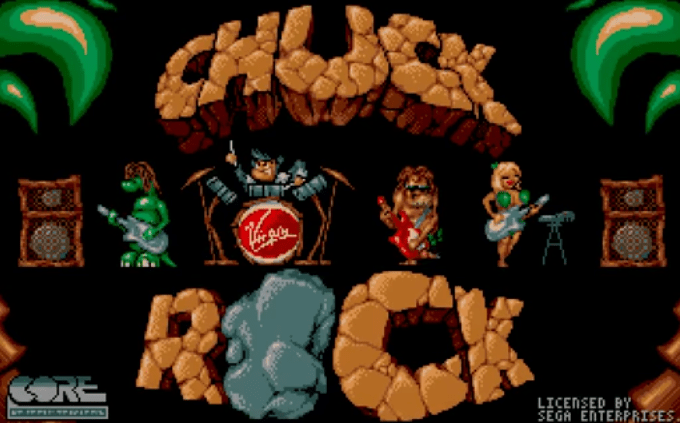
Title screen (screenshot taken by author)

Chuck Rock is a single-player side-scrolling platform game developed by Core Design. It has been published and ported to many other platforms including:

  • Core Design – Atari St and Amiga (1991), Commodore 64 (1992), and Amiga CD32 (1994)
  • Krisalis Software – Acorn Archimedes (1991)
  • Virgin Interactive – Sega Megadrive (1991), Sega Master System (1993) and Game Gear (1992)
  • Sony Imagesoft – Sega Mega-CD (1993), SNES (1992) and Game Boy (1993).

I chose to review the Mega Drive version.

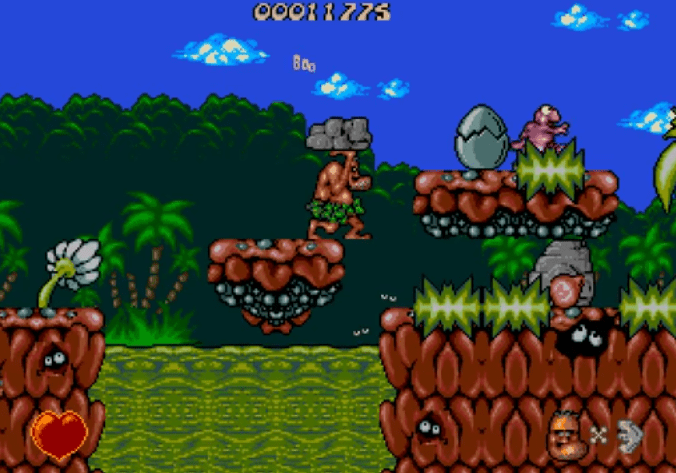
Beautiful level design (screenshot taken by author)

Plot

Set in a fantasy prehistoric Stone Age, Chuck is enjoying a lazy day in front of his TV drinking beer (root beer that is). His wife, Ophelia, is going about her daily chores unaware that she will soon be kidnapped by the evil Gary Gritter, who has designs on her. Chuck hears the commotion and investigates, only to find a pile of crumpled, dirty clothes and signs that something heavy has been dragged away. Since he has no clothes to wear, he ducks behind some nearby bushes and fashions some leafy pants to cover his modesty. He must now rescue his wife.

Gameplay

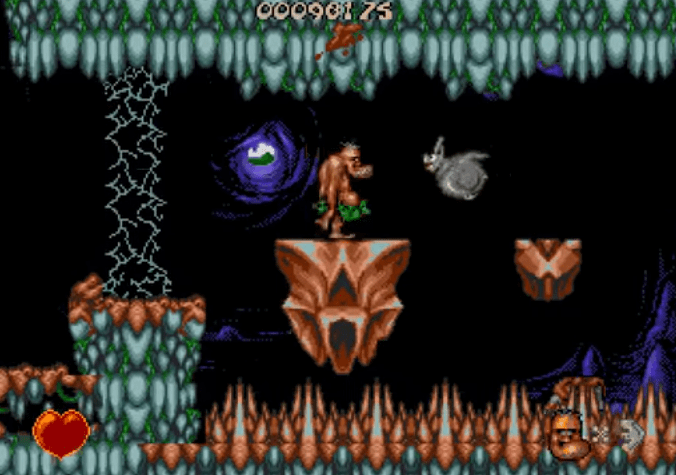
Chuck must navigate his way through five levels, each with three-five stages, all the while evading various dinosaurs and prehistoric animals; or if you are feeling brave, barging them out the way with your belly, performing flying kicks, or picking up huge boulders and throwing them. I’d recommend using the latter two to kill your enemies.

The levels are:

  1. The jungle scene
  2. The caves scene
  3. The water scene
  4. The Ice scene
  5. The Graveyard scene
Chuck may look like a everyone’s least favourite uncle, but he is the hero of this tale (screenshot taken by author)

How Does It Handle?

The controls are easy to learn and are nice and responsive. The game is challenging with some tough levels. Oddly, the end of level bosses are all very easy to defeat with the exception of the third boss. The only boss that you need a strategy to defeat is the first boss, but other than that, it is simply a case of button mashing. One nice little touch is that when Chuck is carrying a large rock, he won’t move as fast.

Graphics

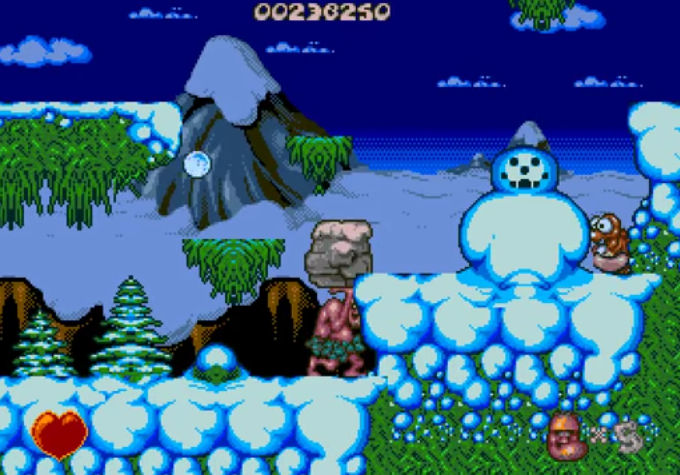
Throughout the entire game the graphics look fab. The overall feel of the graphics is more on the whacky side than the realistic side. The background look great, and I particularly like the snowman on The Ice scene level. There’s plenty to catch the eye and make you think “That looks cool!”, like a T-rex with boxing gloves…awesome!

The levels look gorgeous (screenshot taken by author)

Music & SFX

The music is good throughout the game. The opening musical number on the title screen is awesome and I found myself delaying playing the game in order to listen to the song the whole way through. It seems that even though Chuck isn’t the sharpest tool in the box, he has aspired to lead singer of a rock band. The music speeds up during the boss battles.

There are plenty of SFX throughout the game as Chuck jumps, throws rocks, and bounces enemies of his belly.

Replay Value

Sadly, this game lacks replay value. There is only one difficulty setting and once completed you may only wish to revisit it once or twice before turning your attention to the next challenge.

(screenshot taken by author)

Did I Complete The Game?

Yes, I completed the game without the use of cheats. Sadly, upon completing the game you are met another example of an anti-climatic ending to a game that deserved more.

What The Critics Said:

Mean Machines: An excellent and quite original platform game that’s highly recommended to all Megadrive players. Overall 91%.[1]

Mean Machines Index: “A brilliant, humorous Megadrive platform game with real character. Its graphics are out-of-this-world, the sound completely brilliant, and the game play pretty good too! A must have for your Megadrive collection. Overall 91%[2]

Sega Power: Groovy goings-on 100 million years B.C. with wild sonics and graphics as Chuck rescues his wife from the evil Garry Glitter. Overall 4/5.”[3]

Electronic Gaming Monthly: “The gameplay could use a little fine tuning, but it is still very fun to play. The graphics are comical and the music jams. Overall 7.75/10.[4]

Megazone: “Graphics wise this game is a hit (as good as the Amiga on the Mega Drive), the sound is pretty good (not quite up to the Amiga, but still pretty hot) and some imaginative sprite drawings have been added to this game. Overall 85%.[5]

GamePro: “The game’s worth the bucks for the music and graphics alone. From standpoint of challenge and gameplay, it’s middle of the road – not too hard and not too easy. Overall 4.6/5.”[6]

My Verdict:

“Unga Bunga – The game has nice graphics and is fun to play. The simple button mashing as oppose to a strategy needed to defeat end of level bosses, is a mark against this game. The lack of replay value means that once completed I doubt you will want to play through again.”

Rating:

What are your memories of Chuck Rock? I would love to hear your thoughts, and don’t for get to follow and subscribe so that you don’t miss my latest reviews! You can also find me on Instagram: @nicklovestogame.


[1] ‘Review: Mega Drive – Chuck Rock’. Mean Machines. (June 1992). Issue 21:76-8.

[2] ‘Review: Mega Drive – Chuck Rock’. Mean Machines. (October 1992). Issue 1:137.

[3] ‘The Hard Line – Review: Mega Drive – Chuck Rock’. Sega Power. (September 1993). Issue 46:96.

[4] ‘Review Crew: Genesis – Chuck Rock’. Electronic Gaming Monthly. (March 1992). 32:26.

[5] ‘Review: Mega Drive – Chuck Rock’. Megazone. (December 1992/January 1993). Issue 25:36.

[6] Feline Groovy. ‘Genesis Pro Review – Chuck Rock’. GamePro. (December 1991). 29:70.