
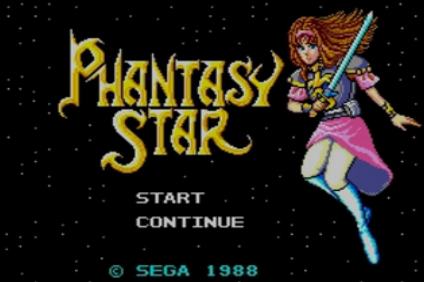
Before the 1990s, RPGs were a niche genre in the video game world. They take a lot of time and effort to play, and not everyone has the patience or desire to attempt such gargantuan games. However, those that do play RPGs cherish every moment of their journeys through fantastical universes. They take great care in building up their warriors and magic users in order to defeat hordes of enemies. Phantasy Star was one such RPG which was highly praised by critics, even though it did push the Sega Master System to its limits.[1] The successor to the Master System, the Mega Drive, offered the creators of Phantasy Star II more to work with.
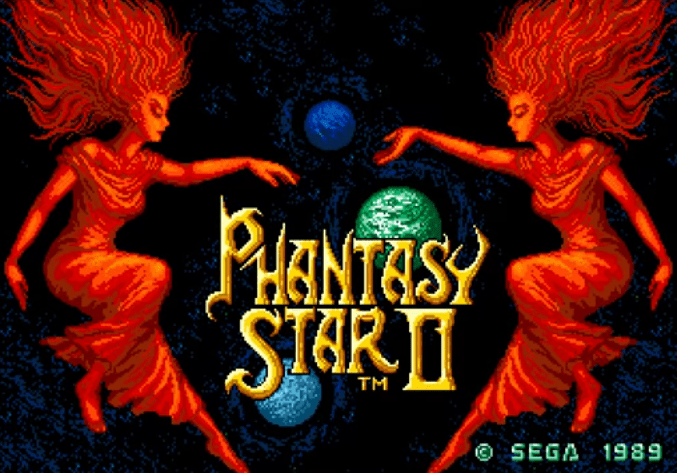
Phantasy Star II is a single-player RPG developed and published by Sega. It was released for the Mega Drive in 1989, but it wouldn’t reach North America and Europe until 1990. It was later re-released on the Sega Saturn and Game Boy Advance as part of the Phantasy Star Collection, and the Dreamcast as part of the Smash Pack Volume 1. In 2005, an updated remake was released in Japan for the PlayStation 2 and PlayStation Portable. For this review, I played was the Mega Drive version on Sonic’s Ultimate Genesis Collection (2009) on the PlayStation 3 (also available on the Xbox).

Plot
The game is set 1000 years after the events of Phantasy Star and takes us back to the Andromeda galaxy and the Algo star system. Orbiting the Algo sun are three planets: Palma – where the government reside; Mota – once an arid desert planet that has since been transformed into a tropical paradise; and Dezo – an inhospitable ice planet.
The Algo star system has prospered under the control of Mother Brain, a computer that regulates the climate, and is responsible for terraforming Mota. However, Mother Brain has started malfunctioning, producing increasingly strong monsters. One night, Rolf (our main protagonist) awakes from a nightmare, where a young girl whom he doesn’t recognise is battling a demon. It is suggested that this girl is Alis from Phantasy Star. After being informed of Mother Brain’s malfunction, Rolf, along with Nei, a humanoid with cat-like features, sets off to investigate why Mother Brain has seemingly turned against its creators.
Gameplay
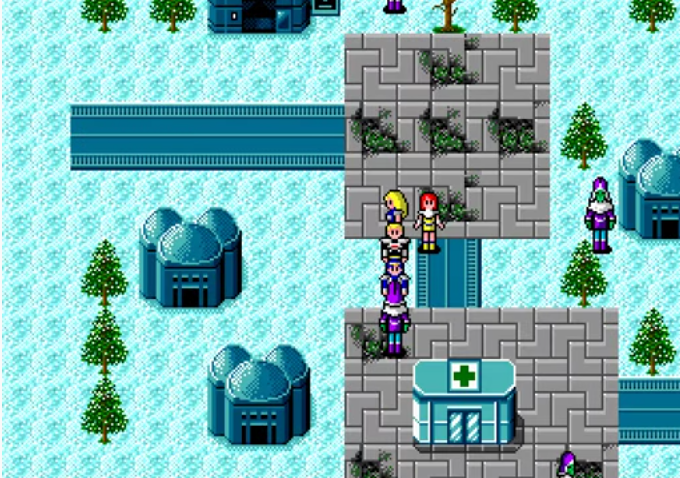
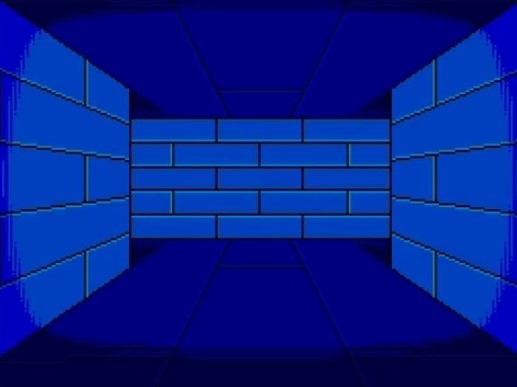
Phantasy Star II is first video game to use a mega 6-bit cartridge. This enabled the designers to create the largest world yet seen in a video game.[2] They have dispensed with the dungeon crawling parts of the game (much to the chagrin of many who love dungeon crawlers), and have focussed on the overworld views when trawling through the dungeons.
How Does It Handle?
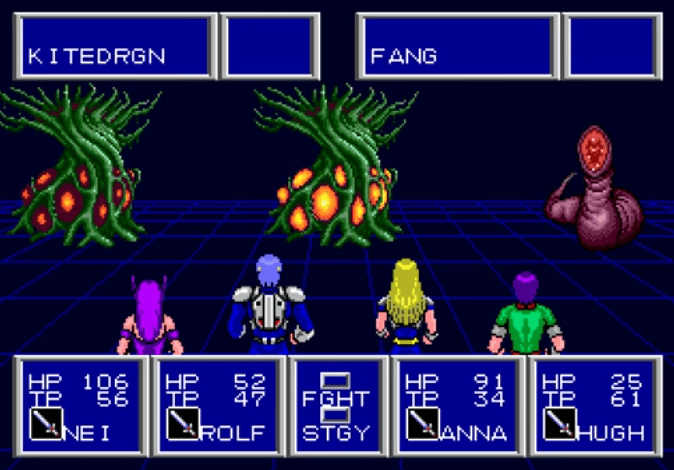
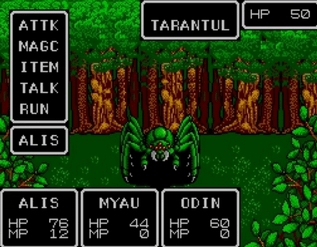
They have still yet to fix the fighting menu. Annoyingly, you still need to scroll through the menus to target individual monsters which is tiresome.
There are two further irritating aspects to this game which I would have hoped they’d have resolved by now. The first is that many of the names of the plethora of spells you are able to use do not indicate what type of spell it is. The manual doesn’t have any information on this either, so you need to experiment during battles to find out what the oddly named spells do.
“That’s part of the fun!”, I hear some of you cry. Not really. One would assume that a magic user would know what the spell was they were using. Hopefully this will be resolved in Phantasy Star III.
The second irritating aspect is that you do not have a combined inventory, so you need to constantly scroll through the menus in order to exchange items between your fighters. Its exasperating!
Graphics
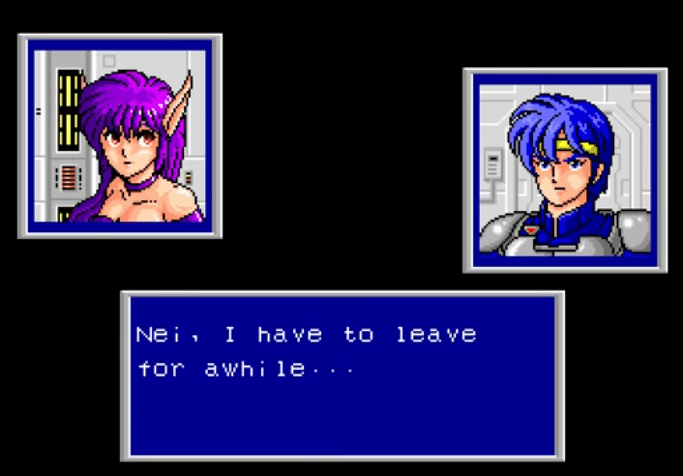
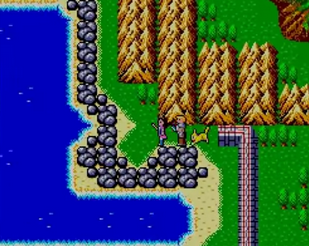
As expected, the overall graphics have been improved, creating three very distinct worlds. The sprites in the overworld maps are more individualised and are brightly coloured. The dialogue screens have also been greatly updated to anime-style character screens.
The battles screens are greatly improved. Firstly, you can now see your characters attacking animations, and the enemies are more varied and detailed. Sadly, they decided to take away the scenic backgrounds and replace them with a blue grid. I’m not sure what the thinking was behind that decision.
Music & SFX
I don’t really recall much about either. They clearly aren’t very memorable.
Did I Complete The Game?
Yes, it felt like a slog at times, and needed a walkthrough on occasion.
Dragon: “The animation, especially for battles, is superb. There are over 50 spells available. Even weapons and armor can give benefits to characters beyond their normal effects. For example, special armor found in one dungeon allows the wearer to cast a healing spell every so often. The battle system enables more than one type of creature to attack and allows the characters to attack specific creatures instead of idiotically going after one creature at a time. This game is definitely a winner. Overall 5/5”.[3]
Electronic Gaming Monthly: Martin – “RPG’s aren’t my thing., but this one has a monstrous quest anyone can get involved with and lost in…I wish the battle scenes were on landscapes instead of boring blue grid, but all in all PS2 is presented well. Overall 8/10”.[4]
Raze: “Large combat sprites, wonderful scenes and backdrops. Great in-game effects and unobtrusive background music. A challenging quest packed with gameplay. Overall 90%”.[5]
Video Games and Computer Entertainment: “It’s very user friendly, with a simple but extensive menu system, and a battery back-up that allows you to save numerous games in progress. The plot advances quickly, providing a constant stream of new subplots…Phantasy Star II is a complex and eminently enjoyable game that will give you more variety and challenge for your buck than any other video game. Overall 9/10”.[6]
Zero: “Phantasy Star II is definitely not just any old thing. In fact, it’s just about everything you could want from this kind of game – big (very big), involved, exciting and challenging. Overall 89%”.[7]
Sega Power: “Long-awaited sequel to the MS RPG. With a massive quest set over different worlds and four characters to control, you should be thankful for your battery back-up! Overall 5/5”.[8]
My Verdict:
“Graphically, a great improvement on the first, with an engaging story and plenty of action to keep you quiet for many hours. They just need to sort out that poxy battle menu! RPG fans will love this game!”
Rating:

What are your memories of Phantasy Star II? I would love to hear your thoughts, and don’t for get to follow and subscribe so that you don’t miss my latest reviews! You can also find me on Instagram: @nicklovestogame.
[1] Tracy, T., (16th December 2002). ‘Phantasy Star Collection Review’. Gamespot.com. (https://www.gamespot.com/reviews/phantasy-star-collection-review/1900-2901862/ Accessed 15th March 2020).
[2] Adams, R., ‘Wishing on a Phantasy Star II’. Computer Gaming World. (November 1990). Issue 76:85.
[3] ‘Phantasy Star II’. Dragon. (August 1990). Issue 160:51.
[4] ‘Phantasy Star 2’. Electronic Gaming Monthly. (April 1990). Issue 9:18.
[5] ‘Reviews: Phantasy Star 2’. Raze. (April 1991). Issue 6:34-5.
[6] ‘Sega Genesis – Phantasy Star 2’. Video Games and Computer Entertainment. (March 1990) Issue :34 & 49.
[7] ‘Review Console: Mega Drive – Phantasy Star II’. Zero. (March 1991). Issue 17:88.
[8] Jarrett, S., ‘The Hard Line – Phantasy Star II’. Sega Power. (April 1991). Issue 23:54.
#/media/File:Phantasy_Star_MS_cover.png)
 Nick Loves to Game